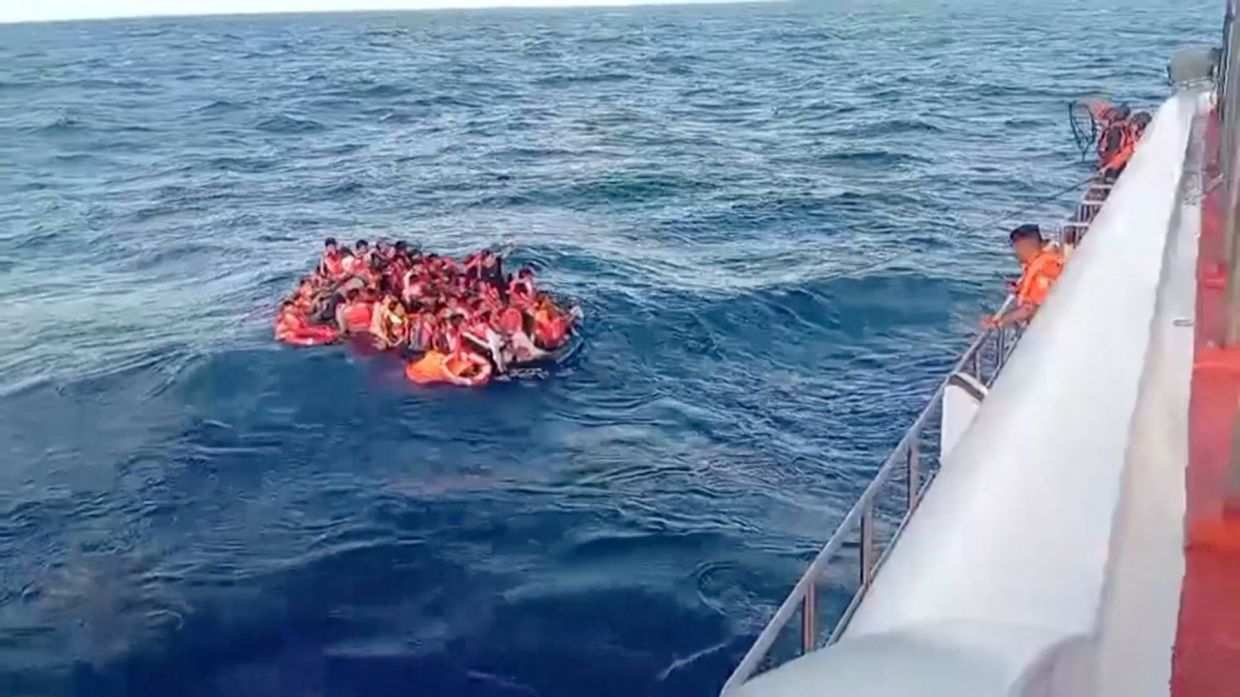
A passenger ferry erupted in flames in Indonesian waters near Bali on Wednesday morning, leaving one woman dead but allowing authorities to successfully evacuate more than 200 people from the vessel. The Putri Yasmin caught fire at approximately 4:15 a.m. local time while navigating between Bali and the nearby island of Lombok, triggering what officials described as a swift and coordinated emergency response that prevented what could have been a far more catastrophic incident.
Indonesian authorities confirmed the fatality on Thursday morning, though the full circumstances surrounding the death remain under investigation. The successful rescue of 211 survivors marks a significant achievement in maritime emergency response, particularly given the scale of the crisis and the challenging conditions that typically accompany such incidents in the region. The rapid deployment of multiple agencies and the involvement of civilian vessels passing through the area proved instrumental in containing what could have developed into a major maritime disaster.
The rescue operation demonstrated the coordination between several key maritime and security institutions. The National Search and Rescue Agency, Indonesian Navy, maritime police, and crews from nearby commercial vessels all mobilised to extract passengers and crew from the burning ferry. These coordinated efforts ensured that survivors were distributed safely across ports in both Bali and Lombok, preventing overcrowding at any single evacuation point and facilitating more efficient medical assistance and passenger processing.
However, the incident has exposed significant discrepancies in passenger manifest procedures, raising questions about safety oversight in Indonesia's ferry system. While official ship records indicated that 131 people were aboard—comprising 114 passengers and 17 crew members—authorities later confirmed that the actual number of people on the vessel substantially exceeded this figure. The presence of unregistered passengers represents a serious regulatory concern, as it complicates emergency response procedures and raises safety questions about vessel capacity management and passenger accounting.
These manifest irregularities are not unusual in Indonesia's maritime sector and highlight persistent gaps in enforcement mechanisms. Unregistered passengers—whether stowaways or those who boarded through informal arrangements—create challenges for rescue operations because emergency planners cannot accurately assess how many people require evacuation or whether all survivors have been accounted for. The Putri Yasmin incident underscores how such administrative failures can compound the dangers inherent in maritime travel across the archipelago.
Investigators have begun examining what triggered the fire aboard the ferry. Indonesia's National Transportation Safety Committee, working alongside the Lembar Port Authority, is conducting a comprehensive inquiry into the incident's origins. Preliminary investigations must determine whether the blaze resulted from mechanical failure, electrical malfunction, improper cargo handling, or human error. Understanding the cause will be essential for implementing preventive measures across Indonesia's substantial passenger ferry fleet.
Beyond the immediate investigation into this specific incident, authorities are also conducting damage assessments that will examine losses to the vessel itself, vehicles being transported as cargo, and other freight aboard the ferry. These preliminary evaluations will inform insurance claims and help determine whether the Putri Yasmin can be salvaged or must be written off entirely. Such assessments typically take weeks to complete, particularly when vessels have suffered significant structural damage from fire.
The incident reflects broader maritime safety challenges that have long plagued Indonesia's vast archipelago. With more than 17,000 islands scattered across three time zones, ferry transport remains an essential lifeline for millions of Indonesians and tourists, yet the sector has become synonymous with recurring tragedies. Safety enforcement remains inconsistent, and many operators prioritise cost reduction over infrastructure maintenance and crew training, creating conditions where accidents become statistically predictable rather than exceptional occurrences.
Weather volatility in Indonesian waters compounds these structural safety deficiencies. Sudden storms, unpredictable currents, and challenging sea conditions regularly complicate navigation and emergency response efforts. The fact that the Putri Yasmin fire occurred in predawn hours when visibility was severely limited meant that rescue efforts had to rely heavily on radio communication and coordination rather than visual identification of survivors.
The Bali to Lombok route is among Indonesia's busiest maritime corridors, carrying thousands of passengers weekly alongside commercial cargo. Both islands attract significant tourism, and the ferry service is essential for island-hopping tourists as well as local populations requiring regular transportation. Future incidents on this route could disrupt economic activity across both islands, making safety improvements not merely a regulatory concern but an economic imperative.
Looking ahead, maritime safety advocates in Southeast Asia will closely monitor how Indonesia's authorities respond to this latest incident. The comprehensive investigation and any subsequent regulatory reforms will likely influence maritime safety standards across the region, as Indonesian policies often set precedents that other countries in the area eventually follow. Enhanced crew training requirements, stricter passenger manifest enforcement, improved fire suppression systems on ferries, and more rigorous vessel inspections could emerge from this tragedy.
The successful evacuation of 211 people demonstrates that effective coordination can minimise casualties even when fires break out at sea. Yet this positive outcome should not obscure the fundamental vulnerabilities that persist throughout Indonesia's maritime transport system. As the nation continues to expand its ferry fleet to accommodate growing populations and tourism demand, sustained investment in safety infrastructure and enforcement remains essential for preventing future tragedies.

