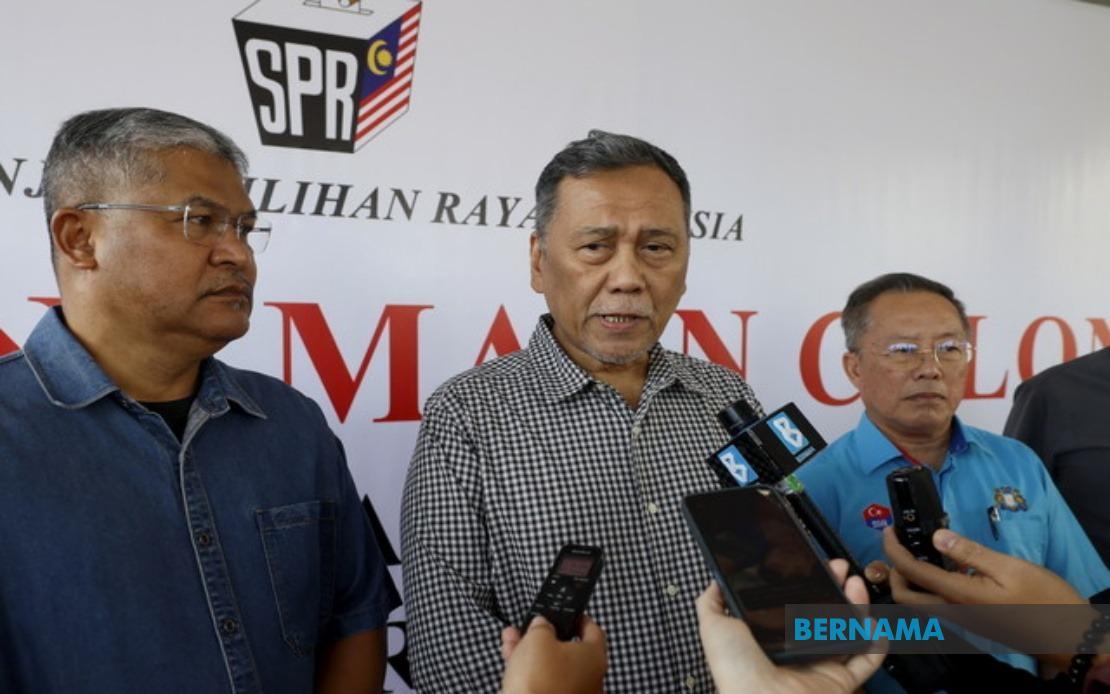
The race for Johor's 56 state seats is gaining momentum as the Election Commission reported significant interest in the contest, though final candidate numbers remain fluid ahead of tomorrow's crucial nomination deadline. As of Wednesday morning, the EC had distributed 593 nomination forms across returning officer offices throughout the state, indicating strong demand from individuals considering a run for office. However, this enthusiasm has not fully translated into formal commitments, with only 133 candidates having submitted their required deposits to confirm their candidacy so far.
Election Commission chairman Datuk Seri Ramlan Harun emphasised that the submission window remains open through tomorrow morning, suggesting the final tally of competing candidates could rise substantially before the nomination process officially commences. The gap between forms distributed and deposits paid reveals a pattern common in Malaysian elections, where interest in candidacy does not always materialise into concrete commitments once prospective candidates confront the financial, administrative, and political realities of mounting a campaign. Ramlan urged those seriously considering contesting to complete their formalities promptly, as early payments would streamline the nomination process and reduce congestion at centres across the state.
The Election Commission has invested considerable resources in ensuring the nomination process functions smoothly. All 56 nomination centres distributed throughout Johor have undergone two consecutive days of trial runs to test procedures and identify potential bottlenecks. This preparatory work reflects lessons learned from previous elections and the Commission's commitment to managing what could be a crowded and complex nomination day involving multiple candidates, party officials, and supporters converging on centres simultaneously.
Security and crowd management have emerged as critical concerns, given the potential for friction between rival political camps. Returning officers have established detailed protocols to prevent confrontations and maintain order. At the Maharani constituency centre in Muar, returning officer Zainal Eran outlined arrangements that strictly limit who may enter each nomination centre. Only the candidate, their proposer, and a single designated supporter will be permitted inside, while other party supporters will occupy cordoned-off areas separated by physical barriers. This compartmentalisation aims to reduce face-to-face tensions while allowing supporters to demonstrate their backing in designated spaces.
The three major political coalitions have committed substantial resources to the Johor contest, each fielding candidates across all 56 seats. Pakatan Harapan's multiparty strategy allocates 20 seats to PKR, 19 to Amanah, and 17 to DAP, reflecting the coalition's attempt to balance influence across its component parties while maximising vote efficiency. Barisan Nasional maintains its traditional approach with UMNO fielding the largest contingent at 36 candidates, supplemented by 16 from MCA and four from MIC, demonstrating the coalition's enduring structure despite recent political turbulence.
Perikatan Nasional presents a more complex picture, with PAS contesting 11 seats and Bersatu fielding 16, alongside five candidates from the Malaysian Indian People's Party and a single Pejuang representative. This fragmented distribution within the PN coalition suggests ongoing negotiations and compromises between component parties, each seeking to maximise representation while maintaining coalition cohesion. The allocation reflects the delicate balance required when multiple parties with distinct ideological positions and voter bases attempt to compete as a unified front.
Beyond the three major coalitions, several smaller parties have signalled their intention to participate, adding further complexity to the electoral landscape. The Malaysian United Democratic Alliance will contest four seats, while Parti Sosialis Malaysia enters one seat. Most notably, Parti Bersama Malaysia is preparing for its electoral debut by contesting 15 state seats, demonstrating that new political formations continue to emerge and test themselves in state-level contests. These smaller parties, though unlikely to achieve breakthrough victories, may influence outcome margins in closely contested constituencies.
The dissolution of the Johor State Legislative Assembly on June 1 set the framework for the 16th state election cycle, with the EC establishing a compressed timeline between nomination and polling. Early voting is scheduled for July 7, providing absentee voters and designated groups an opportunity to cast ballots before the main polling day on July 11. This schedule compresses the campaign period, leaving candidates and parties limited time to mobilise supporters and communicate their messages effectively.
For Malaysian readers, the Johor election carries significance extending beyond the state's borders. Johor represents one of Malaysia's most politically significant states, serving as both a bellwether for national sentiment and a crucial battleground for all major political coalitions. The state's geographic position, large electorate, and diverse demographic composition make its electoral outcome influential in shaping perceptions about federal politics and coalition strength heading into potential future national elections. The candidate registration process now underway will clarify the precise lineup contesting these 56 seats and reveal which parties have successfully recruited competitive candidates in key constituencies.

