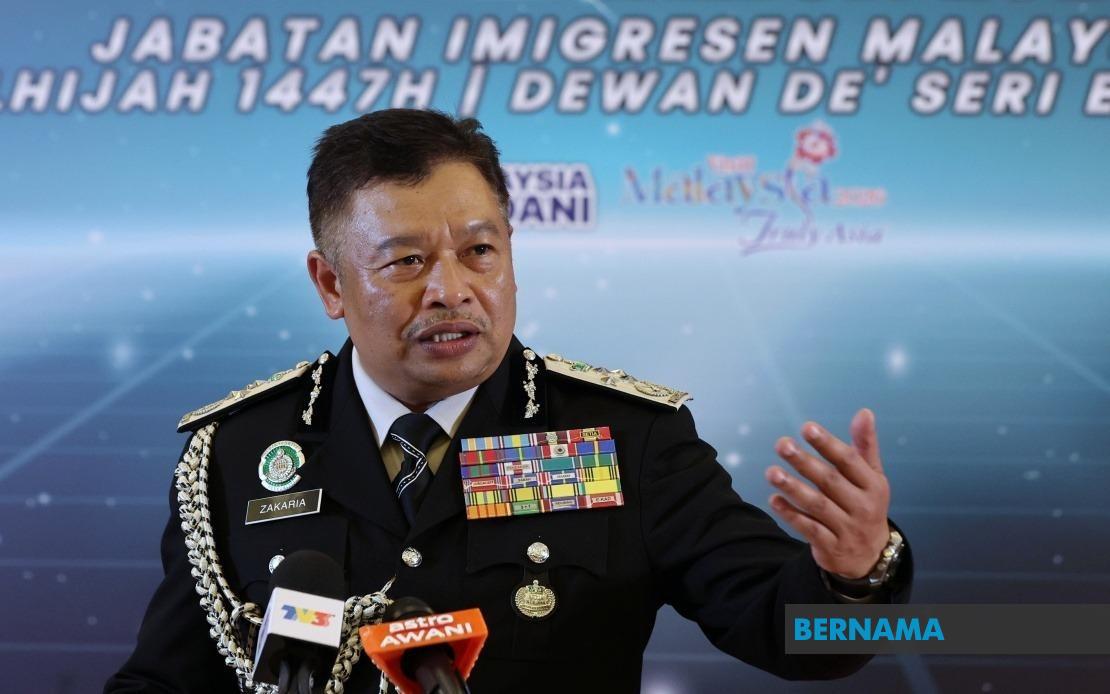
The scope of Malaysia's temporary suspension of extended passport validity appears narrower than initially perceived, with only two airlines globally experiencing technical complications when processing travel documents valid beyond the standard 10-year period, according to Immigration director-general Datuk Zakaria Shaaban. Speaking at a press conference in Putrajaya on August 13, Zakaria clarified that the issue affecting Malaysian passport holders is fundamentally a technical problem embedded within specific airline reservation and document-processing systems rather than any international rejection or non-recognition of Malaysian travel credentials.
The distinction between system incompatibility and diplomatic or regulatory non-acceptance is crucial for Malaysian travellers and policymakers alike. Zakaria emphasised that the problem does not reflect a loss of confidence in Malaysian passports among international carriers or aviation authorities. Rather, the two airlines identified appear to operate legacy or incompatible booking and passenger processing systems that cannot accommodate passport validity dates extending beyond the traditional decade-long period. The vast majority of global airlines process Malaysian passports with extended validity without encountering any technical barriers, suggesting the issue is isolated rather than systemic across the aviation industry.
The uncertainty acknowledged by Zakaria about whether additional airlines face similar difficulties but have not yet reported them introduces an element of caution into the official narrative. Immigration Department officials may only be aware of problems when airlines proactively communicate issues to authorities or when sufficient numbers of Malaysian travellers report booking or check-in complications. Some carriers may quietly implement workarounds or restrictions without formally notifying Malaysian authorities, creating a potential blind spot in the department's understanding of the problem's true scope. This possibility underscores why the Immigration Department's decision to suspend extended validity was precautionary, designed to prevent Malaysian citizens from encountering unexpected travel disruptions.
Malaysia's decision to extend passport validity beyond the standard 10 years represents a relatively recent enhancement to its travel document programme. Previously, when applicants renewed their passports with substantial remaining validity on their existing documents, the Immigration Department granted an additional six-month extension to compensate for this remaining period. This practice recognised that citizens who had maintained their previous passports in good condition should not lose the unused validity they had already paid for when transitioning to a new passport. The extended validity arrangement was thus a customer-friendly measure rather than an arbitrary administrative change, making the temporary suspension a genuine inconvenience for affected Malaysians.
The International Civil Aviation Organization (ICAO) features prominently in efforts to resolve this technical impasse, highlighting that the matter extends beyond bilateral discussions between Malaysia and individual airlines. ICAO standards and recommendations govern how passports are formatted, encoded, and processed throughout the global aviation system. If ICAO-compliant Malaysian passports with extended validity are triggering problems in specific airline systems, the resolution may require technical amendments that align with ICAO protocols or updates to individual airline systems to handle extended validity dates correctly. The involvement of this international body suggests a collaborative, standards-based approach rather than unilateral action by Malaysia alone.
The Immigration Department's offer of free replacement for passports already issued with 10-year-and-six-month validity demonstrates accountability toward citizens who obtained extended-validity documents in good faith before the suspension took effect. This measure prevents citizens from bearing financial costs for a technical problem they did not create and acknowledges that the suspension, while necessary, represents a temporary disruption to a service that had been legitimately provided. Citizens holding such passports retain valid travel documents; the free replacement programme simply provides an alternative for those concerned about potential airline processing issues during the interim period.
For Malaysian business travellers, tourists, and migrant workers, the suspension introduces temporary uncertainty around whether their passports will process smoothly at airline counters and during online check-in procedures. Passengers travelling with extended-validity passports may experience delays or complications with specific carriers, potentially forcing them to contact airlines in advance or seek alternative routing through carriers without system issues. This operational friction, while hopefully temporary, highlights how technical incompatibilities in modern aviation systems can directly affect individual travel experiences and access to international mobility.
The suspension's temporary nature hinges on successful coordination between Malaysia, the identified airlines, ICAO, and potentially other international aviation stakeholders to modernise or update systems to accommodate extended passport validity. Depending on the technical complexity of the underlying issue and the responsiveness of the airline systems in question, this resolution could take weeks or several months. During this period, the standard 10-year validity period remains fully available and functional, ensuring that Malaysians can continue obtaining new passports without delay or complication.
This incident reveals the hidden dependencies embedded within global aviation infrastructure, where individual countries' passport policies must align with dozens of airlines' proprietary systems, many of which operate on legacy technology foundations. As Malaysia and other nations explore ways to enhance passport utility and convenience, compatibility testing with major airline systems becomes an essential precursor to rollout. The temporary suspension serves as a reminder that innovations in travel documentation, though well-intentioned, require extensive coordination and testing across the international aviation ecosystem to avoid disrupting the travel experiences of millions of citizens.
For Malaysian policymakers, the incident underscores the value of maintaining open communication channels with airlines and international aviation organisations before implementing document changes that affect passenger processing workflows. The Immigration Department's swift acknowledgment of the problem, transparent communication about its limited scope, and proactive offer of replacements demonstrate responsive governance. Moving forward, resolving the technical issues with the two affected airlines while preventing similar problems with other carriers will require sustained coordination and a commitment to ensuring that Malaysian citizens enjoy seamless international mobility regardless of which airline they choose.

