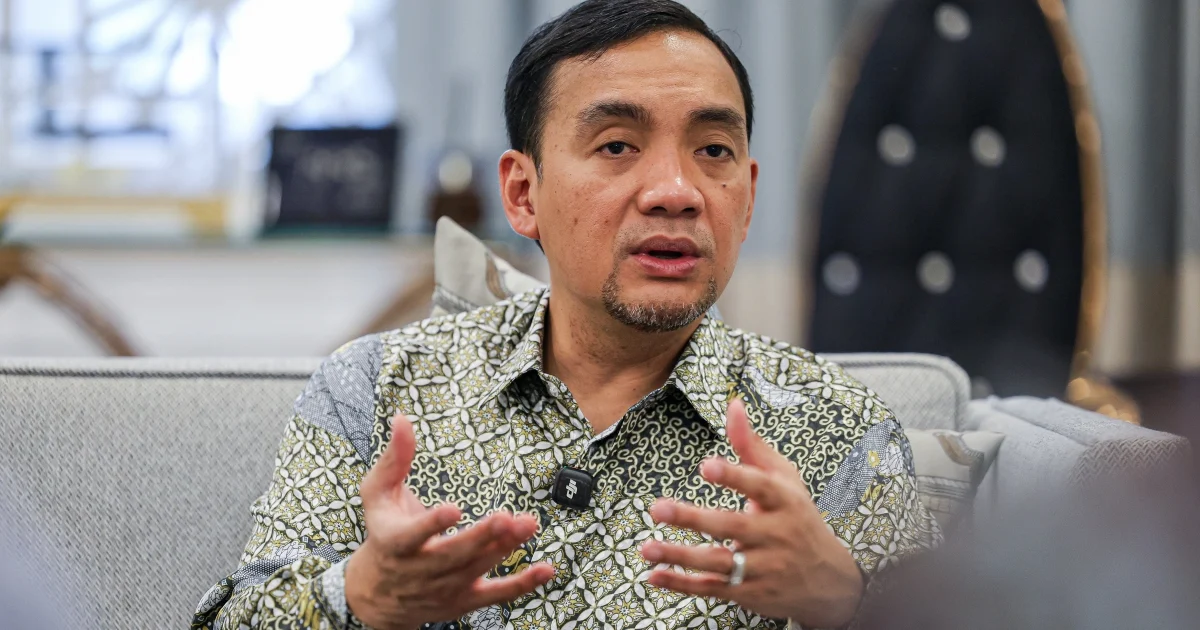
Caretaker Johor Menteri Besar Datuk Onn Hafiz Ghazi has moved to dispel mounting allegations that he suggested the state palace orchestrated the dissolution of the Johor assembly, directly contradicting recent claims circulated by fellow politician Datuk Dr Mohd Puad Zarkashi.
The denial strikes at the heart of ongoing political turbulence in Johor, where questions surrounding the assembly dissolution have spawned competing narratives among state leaders. The apparent friction between political figures underscores the delicate constitutional position of state executives and the role of traditional institutions in Malaysia's political machinery. Such disputes carry particular weight in Johor, given the sultanate's historical prominence and the symbolic importance of the institution within the state's governance framework.
Onn Hafiz's categorical rejection of Puad Zarkashi's characterisation reflects broader sensitivities around how state assemblies are dissolved and the respective authorities involved in such constitutional decisions. In Malaysia's federal system, the discretion to advise dissolution of a state legislature remains a politically charged matter, with implications for how power transitions occur and who wields influence over timing and electoral readiness. The distinction between palace involvement and governmental decision-making carries constitutional significance that extends beyond mere political theatre.
The controversy emerging between these two political figures reveals fissures within Johor's leadership structures at a moment when the state faces electoral uncertainty. Such public disagreements, particularly when they concern the mechanics of assembly dissolution and institutional prerogatives, can undermine public confidence in the clarity and transparency of state governance. For voters attempting to understand how decisions affecting their representation are made, conflicting accounts from senior officials create confusion about the actual distribution of power and responsibility.
Context matters substantially here. Johor has long occupied a distinctive position within Malaysian politics due to its size, economic significance, and the traditional authority vested in its royal institution. State elections carry implications not merely for Johor's local administration but for the broader political balance within Malaysia, as the state accounts for substantial representation within national parliament. Events unfolding in Johor thus attract scrutiny from political actors well beyond the state's borders.
The timing of these claims and denials also deserves consideration. Political actors sometimes leverage constitutional ambiguities and institutional relationships to advance particular narratives during periods of electoral transition or uncertainty. When multiple senior figures offer competing versions of who decided what and when, the underlying question becomes whether this reflects genuine disagreement or calculated positioning ahead of fresh polling. Understanding the motivations behind public statements requires examining each figure's political standing and their respective electoral prospects.
Onn Hafiz's position as caretaker Menteri Besar places him in a particularly sensitive situation. Caretaker administrations occupy a liminal constitutional space where their authority is intentionally circumscribed to prevent outgoing governments from making irreversible decisions that bind incoming administrations. The credibility of this restraint depends partly on how caretakers comport themselves and what they claim regarding decisions made during this interregnum period. Allegations that major institutional actors—including the palace—drove decisions rather than the caretaker framework functioning as intended could undermine confidence in this constitutional arrangement.
The palace's relationship to state governance in Malaysia operates within carefully defined constitutional boundaries, yet popular understanding of these boundaries often remains hazy. Traditional institutions in Malaysian states possess important ceremonial and, in limited circumstances, discretionary roles. Yet the suggestion that a palace "ordered" assembly dissolution rather than advised or consented to a constitutional recommendation requires unpacking. Onn Hafiz's denial may therefore hinge partly on semantics and the precise framing of palace involvement versus executive initiative.
For Southeast Asian observers monitoring Malaysian constitutional practice, these disputes illuminate ongoing tensions between traditional institutions and modern democratic governance. Malaysia's constitutional framework attempts to preserve ceremonial roles for sultanates while restricting their involvement in day-to-day political decisions. Disputes like the current one suggest this balance remains contested and sometimes unclear even to senior political actors themselves. The region's other constitutional monarchies and traditional polities will likely observe how such conflicts are resolved and what precedents emerge.
The broader implication extends to public trust in institutional clarity. When senior officials offer conflicting accounts of how significant decisions transpired, citizens reasonably wonder whether governmental processes operate transparently or whether decisions emerge from opaque interactions between formal office-holders and traditional authorities. This matters for Johor's governance legitimacy and the public's sense that electoral processes and constitutional procedures function as designed rather than obscured by competing power centres offering contradictory explanations.
Moving forward, clarification of precisely what occurred and who recommended or decided upon assembly dissolution will matter for establishing precedent. Future caretaker administrations, palace advisors, and state executives will reference how this situation was handled as guidance for their own conduct. The public record will influence whether Malaysia's constitutional framework governing state assembly dissolutions strengthens in clarity or remains vulnerable to varying interpretations that depend partly on which political actor is offering the account.

