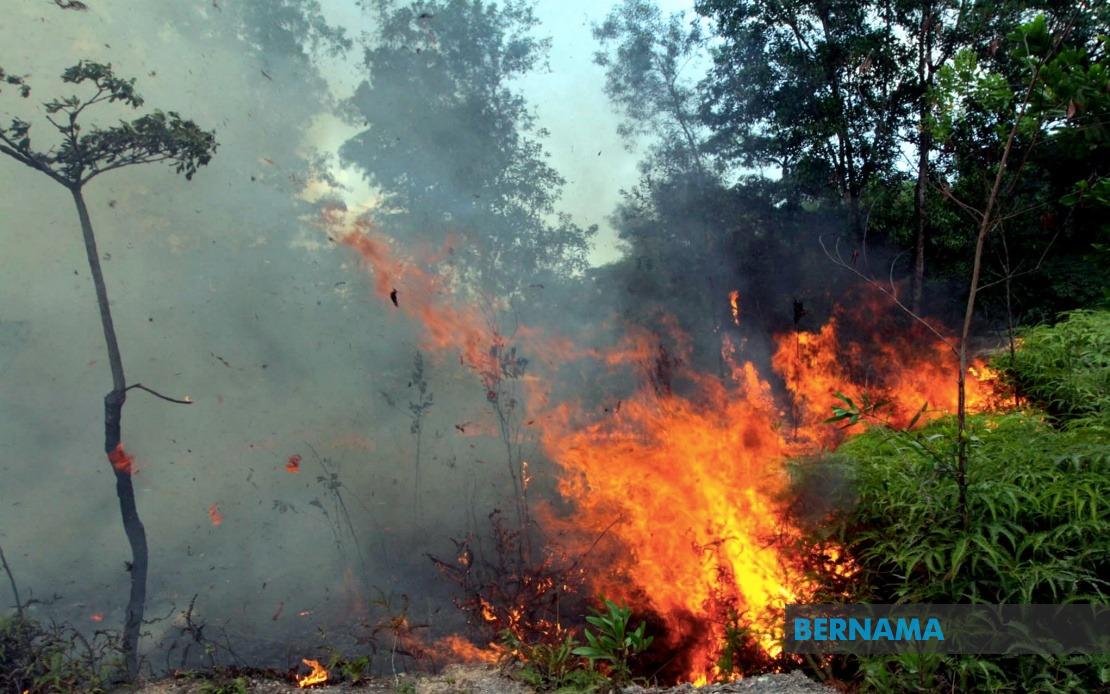
Malaysia's fire management authorities are confronting a significant escalation in open burning incidents, with the Malaysian Fire and Rescue Department documenting 18,432 cases across forests, shrubland, and waste areas during the first seven months of 2025. This represents a concerning jump from the 9,941 incidents logged during the corresponding period in 2024, signalling a worsening trend that demands immediate attention from both government agencies and the public.
According to JBPM director-general Datuk Seri Nor Hisham Mohammad, the latest figure also surpasses the 16,294 cases recorded during the same timeframe in 2023, indicating that this year's spike is not merely a cyclical fluctuation but rather part of an alarming upward trajectory. The repetition of record-breaking numbers underscores the mounting difficulty faced by authorities in controlling unregulated burning practices that continue to plague multiple states across the country. This persistent escalation has prompted the department to adopt more sophisticated monitoring strategies to mitigate future disasters.
Responding to the crisis, JBPM has expanded its surveillance network to encompass 183 locations identified as historically vulnerable to open burning incidents based on patterns observed over the past five years. This comprehensive mapping initiative represents a shift towards predictive fire management, allowing the department to concentrate resources on areas with proven susceptibility rather than responding reactively to emergencies. However, the discovery that 62 of these monitored sites carry the potential for large-scale fires—those affecting areas exceeding 25 hectares—has exposed a critical vulnerability in the department's operational capacity and emergency response infrastructure.
The geographic distribution of fire risk reveals significant regional disparities, with Sarawak currently experiencing the most acute challenges. Large-scale burning events have become a recurring phenomenon in Sri Aman and Mukah, straining local fire-fighting resources and threatening both ecosystems and communities. Meanwhile, Peninsular Malaysia has recorded numerous incidents, though predominantly smaller in magnitude, suggesting that while the Peninsula experiences more frequent burning events, they remain generally more contained and manageable compared to the explosive conflagrations observed in East Malaysia.
Sabah presents a particularly complex fire management scenario due to its distinctive vegetation patterns and challenging terrain, both of which create conditions conducive to rapid fire spread and intensified difficulty in containment efforts. Around Kota Kinabalu alone, seven major fire locations were documented during 2024, and these sites have been incorporated into JBPM's expanded list of 62 high-priority monitoring zones. The convergence of geographical vulnerability and proven historical incident rates makes Sabah a focal point for departmental attention and resource allocation in the coming months.
Environmental and meteorological factors play a substantial role in driving the acceleration of open burning cases, with elevated temperatures in certain regions creating ideal conditions for uncontrolled fires to ignite and propagate. The department attributes much of the increase to hot weather patterns that lower the ignition threshold and enable rapid combustion once fires begin. This dependency on weather conditions has prompted JBPM to shift its strategic planning towards anticipating climatic shifts rather than simply managing their aftermath.
Most significantly, the department is preparing for potential weather disruptions stemming from the anticipated Super El Niño phenomenon, a climatic event expected to manifest in the Pacific region in November with cascading effects anticipated across Malaysia beginning in late January next year. Early preparations are already underway, incorporating weather forecasting data and climate impact assessments into contingency planning protocols. The third and fourth weeks of January represent a critical window when El Niño effects could intensify existing fire risks and create unprecedented challenges for fire management operations across multiple states simultaneously.
The implications of the current fire situation extend beyond immediate ecological damage to encompass broader environmental and public health dimensions. Large-scale burning incidents generate significant air pollution, affecting air quality across state and even national boundaries, with transboundary haze becoming an increasingly persistent feature of the regional environment. This pollution creates cascading health impacts on vulnerable populations, including elderly residents and individuals with respiratory conditions, while simultaneously disrupting economic activity in affected regions through reduced visibility and operational constraints.
The 85 percent increase in open burning cases compared to the previous year reflects not only environmental pressures but also potential gaps in enforcement and public compliance with burning regulations. While JBPM's expanded monitoring framework demonstrates governmental recognition of the problem's severity, the continued surge in incidents suggests that awareness campaigns and regulatory measures may not be achieving desired deterrent effects. The department faces a dual challenge: strengthening its reactive firefighting capacity while simultaneously improving preventive mechanisms that could reduce ignition sources and encourage voluntary compliance among communities engaging in agricultural or land-clearing burning.
Moving forward, the convergence of rising incident rates, climatic uncertainty, and operational resource constraints necessitates a comprehensive strategy encompassing enhanced inter-agency coordination, technology-driven early warning systems, and community engagement initiatives. The identification of 62 high-risk locations provides a strategic framework for resource concentration, but the effectiveness of this approach ultimately depends on adequate staffing, equipment, and financial investment. As Malaysia approaches the challenging months ahead, particularly with El Niño effects looming, the fire department's preparedness and public cooperation will prove decisive in preventing the current trend from escalating into a national crisis.

