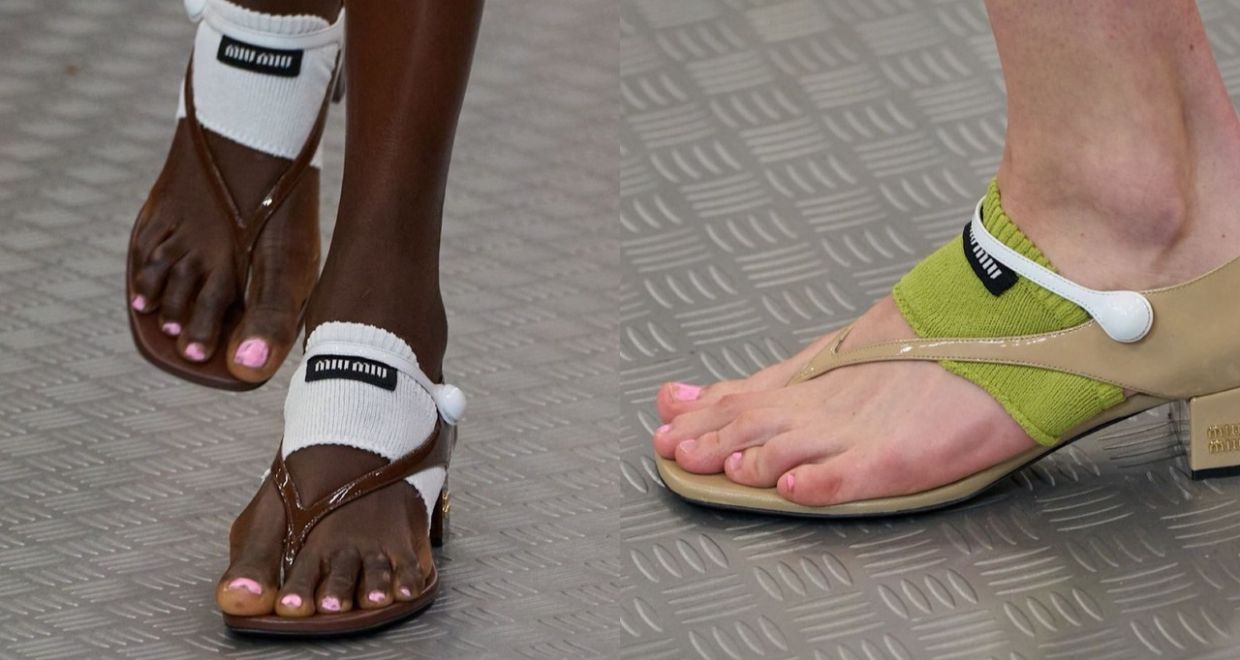
When the mercury rises and fashion choices become less about warmth and more about finding that sweet spot between comfort and style, a curious trend is gaining traction across Asia: open-toe socks. These unconventional hosiery items leave the toes exposed while wrapping around the arch and top of the foot, creating an intriguing hybrid between going barefoot and wearing full socks. What initially appears impractical has struck a chord with consumers navigating the uncomfortable middle ground where exposed feet feel underdressed yet conventional socks feel suffocating in tropical heat.
The momentum behind this trend is undeniable. South Korean fashion commerce platforms have documented explosive growth in this category, with one platform reporting a staggering 1,664 percent increase in transaction value for socks designed to pair with flip-flops between mid-May and mid-June. Search interest climbed even more dramatically, soaring 3,227 percent over the same month-long period. These figures reflect more than casual curiosity; they indicate genuine consumer adoption. The broader summer footwear market has equally benefited from accelerating seasonal demand, with sales of mules, slides, and flip-flops surging 80 percent during a comparable seven-day window compared to the previous year.
The fashion narrative traces back to an unlikely source: Miu Miu's 2025 Spring/Summer collection, where the Italian luxury house introduced socks that only covered the arch rather than the entire foot. This unconventional departure from hosiery convention signalled to the wider fashion industry that experimentation with sock styling could drive aspirational trends. Celebrity endorsements amplified the signal when prominent figures, including actor Cha Jung-won, showcased the look on social media by pairing sky-blue flip-flops with beige knit leg warmers. These high-profile validation moments transformed what might have remained a niche design choice into a mainstream moment worth exploring.
The genius of modern open-toe socks lies in their fundamental reimagining of what summer hosiery should accomplish. Unlike their winter counterparts designed primarily for thermal insulation, current versions prioritise breathability above all else. Manufacturers have adopted sheer fabrics, mesh construction, and loosely knit materials that allow air circulation while still providing the coverage that prevents chafing and friction. This engineering shift transforms the humble sock from a purely functional winter necessity into a genuinely useful summer accessory. For Malaysian and Southeast Asian consumers particularly, where humidity and monsoon seasons create specific footwear challenges, such socks offer tangible practical benefits alongside aesthetic appeal.
Practical advantages extend beyond simple comfort. The arch coverage that open-toe socks provide reduces the irritation caused by flip-flop straps rubbing against bare skin during extended wear. During monsoon periods common throughout Southeast Asia, these socks can be paired with rain boots to prevent moisture-related skin issues without sacrificing ventilation. This functionality addresses real wardrobe problems that retailers and consumers have identified, moving the trend beyond mere novelty into the realm of sensible innovation. The timing of this trend's emergence in regions experiencing early heat waves demonstrates how fashion often responds organically to environmental pressures and genuine consumer needs.
Styling open-toe socks requires understanding that they fundamentally alter how feet communicate within an outfit's visual hierarchy. Neutral shades including grey, black, and white serve as accessible entry points for cautious adopters. Pairing grey socks with black flip-flops or ballet flats complements denim, Bermuda shorts, and satin skirts through tonal cohesion. However, the trend's more adventurous practitioners embrace bold colour combinations, selecting vivid yellows, pinks, or sky-blue shades that deliberately clash with footwear colour. This intentional mismatch registers as deliberately cooler and more fashion-forward than matched sets, signalling sartorial confidence to observers.
The visual principle underlying successful open-toe sock styling emphasises restraint in other areas. Since the socks and shoes already demand visual attention, the remaining outfit should stay understated. Simple combinations like t-shirts and shorts or basic shirts paired with skirts allow the footwear styling innovation to serve as the statement piece. Patterned fabrics featuring dots or florals pair especially effectively with this trend, as the socks complement rather than compete with existing visual interest. This compositional approach ensures the overall look remains balanced rather than appearing chaotic or over-styled.
Retailers and fashion editors increasingly frame open-toe socks not as temporary gimmick but as a legitimate seasonal solution. Officials from major online fashion platforms emphasise that these socks function as a "summer cheat code" for transforming mundane footwear into intentional style statements. The messaging resonates particularly with consumers who find completely bare feet insufficient from a styling perspective yet cannot tolerate full socks in warm climates. For flip-flops, sandals, and ballet flats—summer staples across tropical regions—open-toe socks provide the missing styling tool that previous generations lacked.
The broader cultural significance of this trend reflects contemporary fashion's movement toward playfulness and rule-breaking. Traditional sock etiquette dictated that hosiery should remain hidden, invisible scaffolding supporting proper dressing. Modern fashion increasingly challenges such arbitrary conventions, suggesting instead that functional garments can simultaneously express creativity and personality. Open-toe socks embody this philosophy by taking an entirely utilitarian item and reimagining it as an accessory worthy of deliberate display. For younger consumers particularly, embracing trends that previous generations would dismiss as bizarre represents a form of sartorial self-expression and rebellion against outdated conventions.
For Malaysian fashion consumers observing this trend's development in neighbouring South Korea, the practical relevance proves substantial. Local humidity and monsoon conditions create identical footwear challenges that sparked the trend's emergence abroad. The infrastructure of Malaysian e-commerce platforms and physical retail environments means adoption timelines may follow regional patterns. As these socks become more readily available through online and offline channels, the trend's accessibility will likely accelerate. Early adopters within Malaysian fashion communities can expect to see wider mainstream adoption as seasonal demand for summer footwear peaks and as younger consumers seek differentiation through unexpected styling choices that nonetheless address genuine comfort concerns.

