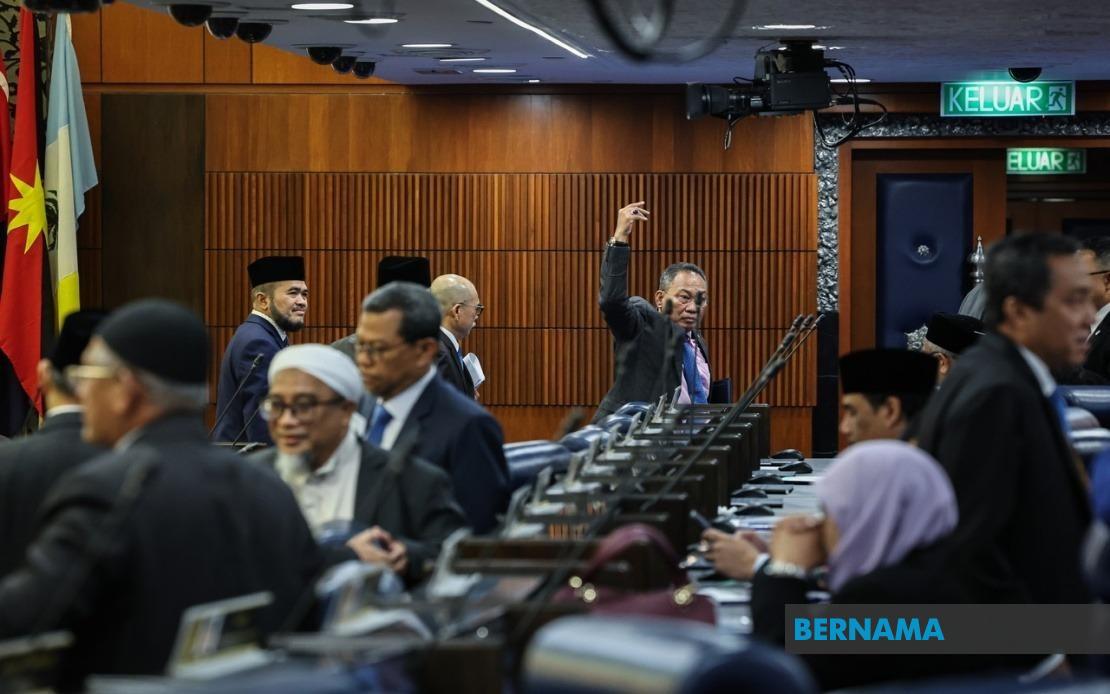
The opposition's withdrawal from parliamentary proceedings on the Royal Commission of Inquiry report into Tabung Haji has drawn sharp criticism from governance experts, who argue the move represents an abdication of lawmakers' fundamental responsibility to serve as an institutional check on executive power. Perikatan Nasional MPs, led by Opposition Leader Datuk Seri Hamzah Zainuddin, abandoned the Dewan Rakyat during a special sitting meant to examine findings related to the institution, which safeguards the savings of approximately 10 million Malaysian Muslim depositors. This collective absence undercuts the legitimacy of parliamentary opposition and raises questions about political commitment to protecting public interests, observers contend.
The boycott was ostensibly triggered by the non-attendance of Prime Minister Datuk Seri Anwar Ibrahim and Deputy Prime Minister Datuk Seri Fadillah Yusof, both receiving medical treatment at the time. Perikatan Nasional Chief Whip Datuk Seri Takiyuddin Hassan formally proposed postponement of the sitting at the outset, citing their absence. However, this reasoning has prompted scrutiny from academic observers who note that ministerial briefings need not be delivered by the Prime Minister himself to retain parliamentary validity and substantive merit. The Minister in the Prime Minister's Department (Religious Affairs) Dr Zulkifli Hasan, who ultimately conducted the briefing on Tabung Haji's findings and remedial measures, possessed sufficient portfolio authority to address legislative questions comprehensively.
Associate Professor Dr Mazlan Ali from Universiti Teknologi Malaysia has articulated a particularly pointed critique of the opposition's strategy. In his assessment, lawmakers should have prioritized substantive engagement over symbolic gestures, remaining in the chamber to absorb the ministerial presentation and subsequently pose direct challenges to the government's narrative. This approach would have allowed opposition members to build a public record of critical inquiry, demonstrating to constituents and depositors alike that their elected representatives were vigorously defending institutional interests. The walkout, by contrast, conveyed a perception of political theatre prioritized above fiduciary duty—a troubling message for an institution managing assets belonging to millions of ordinary Malaysians saving for religious obligations.
The Tabung Haji RCI report detailed management and operational deficiencies spanning 2014 to 2020, a period encompassing multiple administrations and representing systemic governance failures with potentially serious consequences for depositors' financial security. The parliamentary sitting had been specifically convened to allow legislators to interrogate these findings, examine proposed remedial frameworks, and assess government accountability for the institution's recovery. By absenting themselves, opposition MPs forfeited an irreplaceable institutional platform through which to amplify depositor concerns and demand transparent explanations from the government bench. The Dewan Rakyat remains the primary venue where such scrutiny can be conducted on the legislative record, creating a permanent documentary foundation for future oversight and public reference.
Dr Nazreena Mohammed Yasin, senior lecturer in the Department of Social Sciences at Universiti Tun Hussein Onn, emphasizes that substantive participation in parliamentary debate represents a more effective mechanism for exercising check-and-balance functions than symbolic gestures or boycotts. Parliamentary engagement generates accountability through structured questioning, ministerial response, and documented discourse that can be revisited and referenced by media, civil society, and the broader public. Through this institutional process, government representatives are compelled to articulate justifications for their decisions, explain gaps in governance, and outline concrete corrective measures. The transparency this creates reinforces the principle that elected governments are answerable not to political allies or opposition rivals, but to the citizenry they serve.
Concerns about the Prime Minister's absence warrant contextual consideration. Anwar Ibrahim's receipt of medical care at the time represented a legitimate reason for non-attendance, and observers acknowledge that rest and recovery for any sitting premier should not be compromised for political theatre. Moreover, the convention of parliamentary governance does not demand the Prime Minister's personal presence at every ministerial briefing; the relevant subject portfolio minister bears responsibility for answering legislative questions within their departmental remit. Religious affairs and Tabung Haji operations fall squarely within Dr Zulkifli Hasan's purview, rendering his briefing authority and capacity to address inquiries wholly adequate from both constitutional and procedural perspectives.
The boycott risks creating a damaging political narrative that may ultimately disadvantage the opposition. Depositors and the broader Malaysian public may perceive the walkout as reflecting insufficient commitment to safeguarding their interests, particularly regarding an institution serving the Muslim community that requires sustained, rigorous oversight. The sustainability and financial health of Tabung Haji extend far beyond partisan political cycles; they represent enduring concerns affecting millions of households with long-term savings exposure. For opposition parties seeking to build credibility as custodians of public trust, demonstrating consistent engagement with governance matters—particularly those with direct implications for vulnerable constituencies—proves essential to political legitimacy and electoral prospects.
The institutional implications of parliamentary boycotts deserve deeper examination within Malaysia's Westminster-derived system. When opposition lawmakers unilaterally withdraw from legislative proceedings, they effectively surrender their platform for public advocacy and transparent debate. Media coverage shifts from substantive interrogation of government policy to coverage of political conflict itself, diminishing the informational value available to citizens attempting to understand complex governance issues. The Tabung Haji RCI report addresses technical matters of financial management and institutional oversight; these require careful legislative scrutiny by informed representatives capable of translating specialized findings into policy implications comprehensible to ordinary depositors.
More broadly, the walkout illuminates tensions within Malaysia's contemporary opposition politics. Perikatan Nasional, as a major parliamentary faction, bears heightened responsibility to demonstrate that its legislative function transcends partisan positioning. The opposition's credibility depends partly on its willingness to engage seriously with government initiatives, distinguish between matters warranting criticism and those requiring constructive participation, and subordinate short-term political advantage to longer-term institutional integrity. Boycotting parliamentary proceedings—particularly on matters with substantial public impact—risks inverting this calculus, suggesting that political optics matter more than substantive governance accountability.
The timing and coordination of the walkout, involving senior opposition figures including the chief whip and party chairman, underscores that the absence represented deliberate political strategy rather than individual protest. This organized character suggests calculation regarding media impact and party messaging, yet leaves unanswered whether such tactical considerations genuinely serve constituent interests or primarily advance intra-parliamentary positioning. For Malaysian depositors and the broader public, the relevant question concerns not which political faction controls parliamentary seating, but whether sufficient scrutiny is being applied to an institution managing their savings and fulfilling a religiously significant social function.
Governance scholars emphasize that check-and-balance systems function effectively only when opposition parties view parliamentary participation as a primary avenue for exercising power and influence. When opposition lawmakers perceive electoral prospects as dim or institutional constraints as insurmountable, incentives to participate meaningfully in legislative debates diminish accordingly. Yet abandoning the Dewan Rakyat as a platform for serious engagement essentially guarantees that opposition influence will remain marginal and reactive. Conversely, sustained, forensic interrogation of government policies—particularly on matters affecting ordinary Malaysians—builds opposition credibility and demonstrates to voters that legislative seats translate into tangible advocacy on their behalf.
The Tabung Haji RCI report and subsequent parliamentary proceedings represent a test case for how effectively Malaysia's opposition can fulfill its constitutional role. The depositors affected by the institution's governance challenges warrant representation that transcends partisan calculation. By withdrawing from the parliamentary process, Perikatan Nasional forfeited an opportunity to demonstrate that its legislators take seriously their obligation to scrutinize executive actions, question administrative explanations, and safeguard institutional integrity. Whether future parliamentary occasions will prompt more constructive opposition engagement remains uncertain, but the current boycott has certainly reinforced among observers the concern that political theatre sometimes displaces substantive governance accountability in Malaysia's legislative practice.

