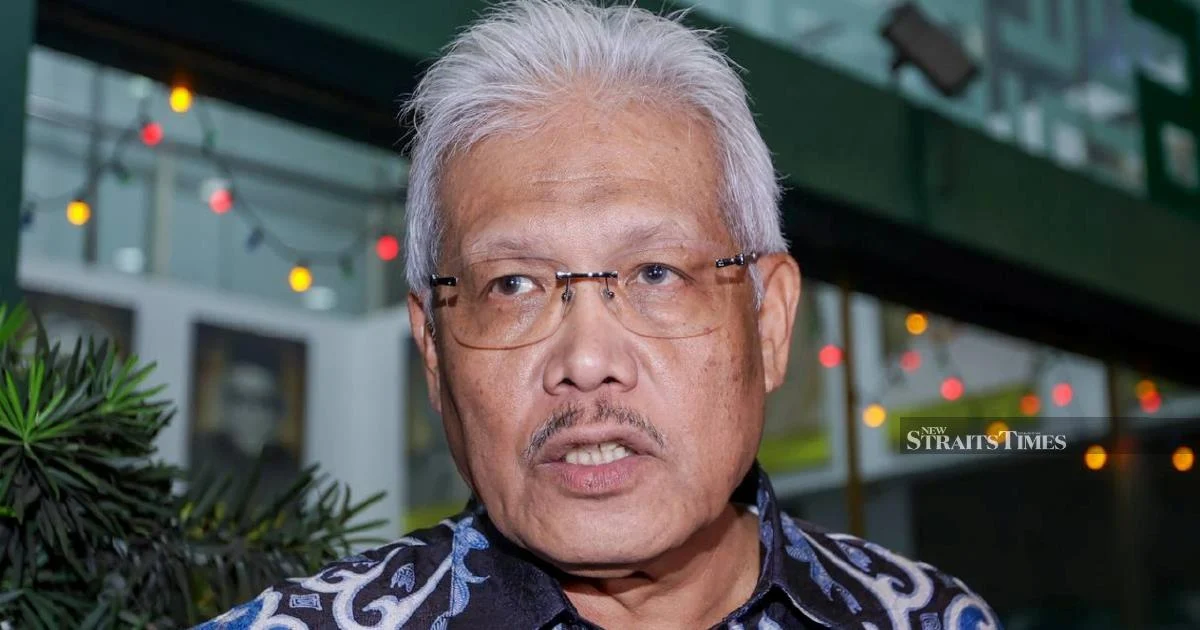
The opposition coalition will lodge official documentation with the Dewan Rakyat Speaker confirming Datuk Seri Hamzah Zainudin's role as the new opposition leader, with the submission scheduled to occur before lawmakers reconvene for their next sitting. This procedural step represents a formal ratification of leadership changes within the opposition bloc, establishing Hamzah's position within Parliament's institutional framework.
The timing of this notification underscores the administrative requirements governing parliamentary operations in Malaysia. The Speaker of the Dewan Rakyat must be formally apprised of opposition leadership appointments to ensure proper protocol during legislative sessions, including procedural recognition and allocation of speaking time. Such notifications are standard practice whenever significant shifts occur within either government or opposition structures, creating an official record within Parliament's institutional machinery.
Hamzah Zainudin's appointment signals a reconfiguration within the opposition camp, though the specific circumstances surrounding this leadership transition were not elaborated in available statements from Kota Baru. His ascension to the opposition leader position carries implications for parliamentary dynamics, as this role traditionally carries responsibility for coordinating opposition responses to government policies and presiding over opposition parliamentary business.
The formal nature of this notification requirement reflects Malaysia's Westminster-influenced parliamentary system, where procedural transparency and institutional recognition of leadership roles maintain parliamentary order and accountability. The Dewan Rakyat Speaker, as the chamber's presiding officer, must maintain current records of both government and opposition leadership to facilitate smooth parliamentary operations. This administrative function ensures that all stakeholders understand the chain of command and responsibility within Parliament's formal structure.
For Malaysian voters and political observers, understanding opposition leadership structures remains crucial to comprehending how legislative oversight functions. The opposition leader serves as the principal voice challenging government policy proposals, raising parliamentary questions, and coordinating the minority's legislative strategy. The formal recognition of Hamzah's position therefore represents a defined accountability mechanism, ensuring clarity about who speaks authoritatively for the opposition.
The submission before the next parliamentary sitting maintains continuity in opposition parliamentary operations. Delaying such notification until lawmakers reconvene could create procedural ambiguity or require interim arrangements that might complicate parliamentary business. By completing this formality in advance, the opposition ensures that Hamzah can immediately exercise his full authority and responsibilities upon Parliament's resumption, including participation in parliamentary debates, submission of formal motions, and engagement in legislative questioning of government ministers.
This development occurs within Malaysia's broader political context, where opposition cohesion and leadership clarity directly influence parliamentary effectiveness. A clearly designated opposition leader strengthens the minority's ability to mount sustained criticism of government initiatives, table alternative proposals, and represent constituent concerns that the ruling coalition may overlook. Institutional recognition through formal notification amplifies the opposition's parliamentary voice and legitimacy.
The procedural requirement also reflects constitutional and parliamentary conventions that govern Malaysia's legislative branch. Unlike some democracies where opposition leadership emerges informally, Malaysia's system requires explicit notification to ensure that parliamentary staff, government members, and media understand the operational chain of command. This clarity prevents disputes about who legitimately represents opposition interests in parliamentary proceedings.
Looking forward, Hamzah's formally confirmed position as opposition leader will shape parliamentary dynamics throughout the legislative session. His authority to speak on behalf of opposition members, coordinate joint responses to government proposals, and determine opposition parliamentary strategy becomes institutionally recognized and protected. This recognition carries practical implications for how debate is structured, how questions are prioritized, and how parliamentary time is allocated between government and opposition business.
The notification process also serves as a transitional marker for observers tracking Malaysia's political evolution. Leadership changes within opposition structures often reflect shifts in coalition dynamics, factional realignments, or strategic recalibrations in response to government initiatives or electoral considerations. Hamzah's appointment and formal recognition therefore represent a defined moment when opposition direction potentially shifts, whether due to tactical adjustments or internal consensus about optimal parliamentary strategy.
For Southeast Asian observers monitoring Malaysia's democratic institutions, this procedural step illustrates the importance of institutional continuity and administrative transparency in maintaining legislative integrity. Even routine notifications reinforce parliamentary norms and prevent the kind of ambiguity that can undermine democratic processes. The opposition's adherence to formal procedures when appointing leadership demonstrates institutional discipline and respect for parliamentary conventions.
The forthcoming parliamentary session will present Hamzah's first extended opportunity to operate as formally recognized opposition leader, with his legislative initiatives, parliamentary questions, and strategic positioning subject to scrutiny from government members, fellow opposition parliamentarians, and the Malaysian public. The formal notification thus initiates a new phase in parliamentary opposition dynamics.

