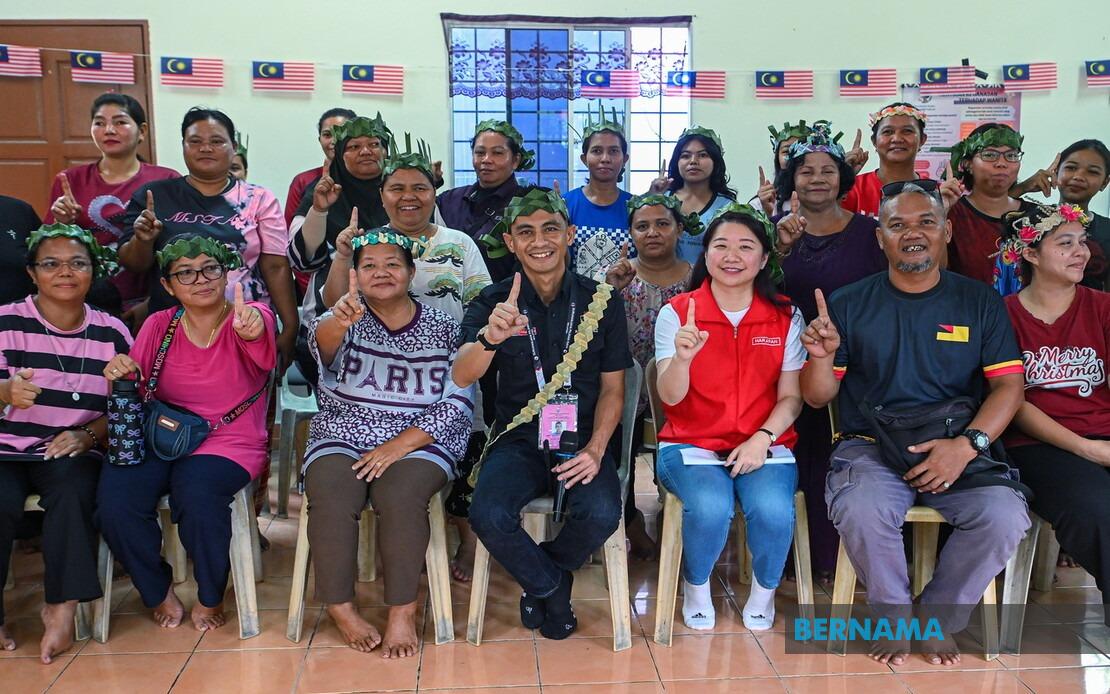
Datuk Ahmad Faez Abdul Razak, the Pakatan Harapan candidate contesting the Labu state seat for the first time, has positioned indigenous community development as a cornerstone of his campaign strategy for the upcoming Negeri Sembilan state election. Speaking during an Orang Asli Women Empowerment programme at Kampung Orang Asli Tekir, he outlined plans to tackle longstanding grievances whilst creating pathways for sustainable economic growth within the constituency's marginalised populations.
The candidate's election platform reflects a strategic acknowledgment of the Orang Asli demographic's historically overlooked political voice and material needs. Ahmad Faez committed to escalating the contentious matter of customary land ownership in Kampung Orang Asli Tekir to the State Legislative Assembly, recognising that land security remains fundamental to community stability and economic development. This pledge carries particular resonance in Negeri Sembilan, where indigenous land claims have lingered unresolved for decades, creating legal uncertainty that hampers long-term planning and investment within Orang Asli settlements.
Infrastructure deficiencies represent another critical dimension of Ahmad Faez's manifesto. He pledged to upgrade essential amenities, specifically targeting road networks and internet connectivity, recognising that inadequate infrastructure perpetuates economic isolation. For a village of 796 residents, such improvements would facilitate market access for local produce, enable digital commerce participation, and improve educational opportunities for younger residents. The absence of reliable connectivity has particularly disadvantaged youth seeking employment beyond subsistence agriculture, a gap the candidate views as addressable through targeted investment.
Education and youth empowerment feature prominently in his developmental vision. Ahmad Faez stressed that the Orang Asli population possesses considerable latent potential that remains underutilised due to insufficient support structures. By targeting skill development and income-generation programmes, he seeks to transition youth from dependency on traditional livelihood sources towards more remunerative occupations. This approach acknowledges both the aspirations of younger Orang Asli residents and the demographic imperatives facing rural communities across Malaysia.
Economic diversification forms the intellectual foundation of his broader strategy. The candidate identified handicraft production as a viable commercial opportunity within the village, proposing enhanced marketing channels to expand consumer reach beyond local markets. Simultaneously, he advocated modernising agricultural practices through introducing fertigation systems—precision irrigation technology that maximises water efficiency and crop yields. Such technological adoption could substantially improve agricultural sustainability whilst reducing the sector's vulnerability to climate variability, a concern increasingly relevant across Southeast Asian farming communities.
Ahmad Faez's campaign narrative emphasises consistency and genuine community engagement rather than transactional electoral politics. He underscored that his involvement with Labu constituents predates the election announcement by two years, framing his candidacy as a natural extension of sustained grassroots work. This positioning attempts to differentiate him from potential accusations of parachuting into communities solely during electoral cycles—a criticism that resonates across Malaysian politics where politicians' sudden appearances before elections followed by subsequent absence generates considerable cynicism.
Village chief Nasir Musil's public endorsement lends local credibility to Ahmad Faez's development agenda. Nasir expressed hope that the elected representative would prioritise infrastructure and economic advancement, whilst also highlighting the persistent problem of stray cattle posing road hazards—a seemingly parochial issue that reflects the gap between urban-centric policymaking and rural realities. By acknowledging such practical concerns, Ahmad Faez demonstrates attentiveness to community-identified priorities rather than imposing externally-designed development blueprints.
The electoral context shapes the stakes surrounding indigenous representation in Negeri Sembilan. Ahmad Faez faces a three-cornered contest against incumbent Mohamad Hanifah Abu Baker of Parti Pribumi Bersatu Malaysia and Siti Nur Umaira Hasim representing Barisan Nasional, fragmenting the opposition vote but also complicating the incumbent's position. The multiplicity of candidates may mobilise previously disengaged Orang Asli voters, particularly if Ahmad Faez succeeds in framing his campaign as specifically responsive to indigenous priorities rather than diluting such concerns within broader political messaging.
The Election Commission's scheduling—with early voting on July 28 and polling day on August 1—provides a compressed campaigning window that necessitates concentrated ground engagement. For a candidate targeting a small, geographically defined community like Kampung Orang Asli Tekir, such a timeline actually favours direct interpersonal campaigning over costly mass media strategies, potentially advantaging candidates with established community relationships.
Ahmad Faez's platform reflects broader shifts in Malaysian electoral politics acknowledging that development gaps between urban and rural areas, and particularly the persistent marginalisation of Orang Asli populations, present both moral imperatives and strategic political opportunities. By centering indigenous development rather than subsiding it within generic developmental promises, his campaign recognises that effective political mobilisation requires addressing specific community grievances with credible, community-informed solutions.
The Orang Asli vote, whilst numerically modest in Labu, carries symbolic significance within Malaysia's political landscape. Parties demonstrating genuine commitment to indigenous rights and material advancement may gradually consolidate support within Orang Asli constituencies, challenging the historical pattern of marginalisation and transactional political relationships. Ahmad Faez's campaign represents one manifestation of this potentially transformative dynamic, though success ultimately depends on translating electoral promises into implemented policy following his potential election.

