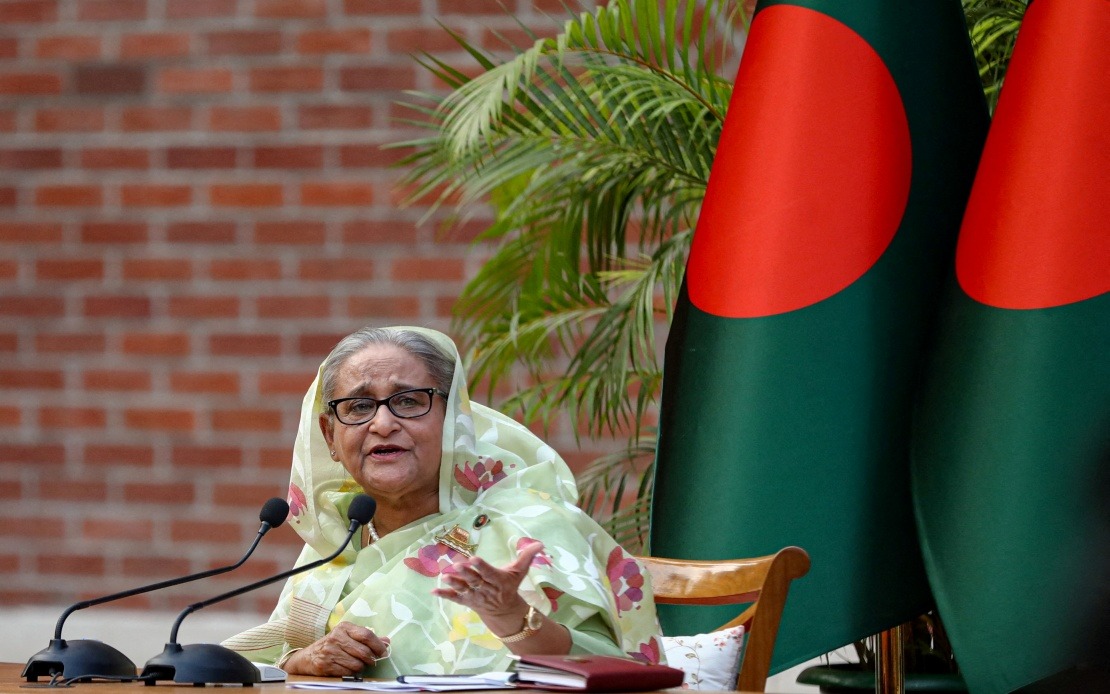
Sheikh Hasina, the 78-year-old former Prime Minister of Bangladesh now living in exile in India, has broken silence on her future by insisting she will voluntarily return to her homeland and submit to judicial proceedings, irrespective of the severe legal jeopardy she faces. In a recent written interview with Kyodo News, Hasina acknowledged the gravity of her situation with striking candour, stating that authorities "may send me to prison" or "may even try to hang me," yet she remains resolute in her determination to face Bangladesh's courts. Her statement carries profound implications for the region's political stability and for how Southeast Asian nations handle the return of exiled leaders embroiled in mass violence allegations.
Hasina's public declaration arrives more than a year after she fled Bangladesh in August 2024, when massive student-led protests transformed into a full-blown political uprising that ultimately toppled her government. The immediate trigger for the unrest was a high court decision in June 2024 that reinstated a 30 percent employment quota reserved for descendants of those who fought in Bangladesh's 1971 independence war. What began as agitation over civil service recruitment policies rapidly metastasized into a broader rejection of Hasina's authoritarian governance, with demonstrators clashing violently with security personnel and party activists aligned with her Awami League administration.
The human toll of the crackdown proved catastrophic. According to United Nations estimates, approximately 1,400 individuals lost their lives during the unrest, with the overwhelming majority shot by security forces operating under government orders or sanction. The scale of fatalities positions the 2024 crackdown among the deadliest episodes of state violence in recent South Asian history. Hasina has consistently denied authorizing the lethal response, instead contending that opposition political forces deliberately orchestrated the movement to destabilize her government. She has furthermore suggested that comprehensive forensic examination by independent international experts could establish the truth about individual deaths and the specific weapons or ammunition involved.
In November 2025, Bangladesh's war crimes tribunal proceeded to sentence Hasina to death in absentia, convicting her of crimes against humanity related to the crackdown. The tribunal's judgment represents an extraordinary escalation in the political rupture between Hasina and the successive governments that have assumed power since her departure. Bangladesh has formally requested India to extradite her to face prosecution, yet New Delhi has indicated it is carefully evaluating the extradition petition in accordance with applicable legal and judicial frameworks. This diplomatic standoff places India in a delicate position, as it balances its historical ties with Hasina and its broader relationship with Bangladesh's new authorities.
The political landscape in Bangladesh has shifted dramatically since Hasina's flight. An interim administration helmed by Nobel Peace Prize laureate Muhammad Yunus was initially established following her departure, with student protest leaders nominating him for chief adviser. Subsequently, a general election held in February 2026 resulted in victory for the opposition Bangladesh Nationalist Party, and its leader Tarique Rahman assumed office as Prime Minister. The new government has pursued aggressive measures against Hasina's legacy, including an outright ban on all activities of the Awami League since May 2025. Rahman's information adviser has publicly stated that the government remains committed to bringing Hasina back for trial while guaranteeing her the opportunity to mount a legal defence.
International human rights organizations have adopted cautious positions on the tribunal's proceedings. Human Rights Watch, while emphasizing that those responsible for abuses during Hasina's administration must be held accountable through proper legal channels, has expressed reservations about the validity of a trial conducted entirely in the accused's absence. This concern reflects broader international norms regarding fair trial guarantees and due process protections, even for leaders accused of grave crimes. The organization's stance underscores the tension between accountability imperatives and procedural legitimacy—a tension that will likely intensify if Hasina does eventually return and face prosecution.
Hasina's political career spans multiple decades of Bangladesh's turbulent post-independence history. She is the daughter of Sheikh Mujibur Rahman, Bangladesh's founding father, and has held the office of Prime Minister across five separate terms spanning from June 1996 to July 2001 and from January 2009 to August 2024. During her extended tenure, her administrations witnessed both development achievements and serious governance challenges. Notably, her third term encompassed the July 2016 terrorist attack on the Holey Artisan Bakery in Dhaka, which claimed 20 hostage victims, including nationals from Italy, Japan, Bangladesh, the United States, and India. Seven Islamist militants received death sentences in 2019, though these were subsequently commuted to life imprisonment.
The international dimensions of Hasina's leadership remain relevant to her current predicament. Japan, in particular, has maintained significant development partnerships with Bangladesh, including a major rapid railway project in Dhaka overseen by the Japan International Cooperation Agency—a project affected by the violence of 2024. In her statement, Hasina explicitly referenced these international relationships, arguing that "a stable Bangladesh is not only important for Bangladesh" but matters for South Asia broadly, the Bay of Bengal region, development partners, and countries like Japan that have invested substantial resources and diplomatic capital in Bangladesh's advancement. This framing suggests she views her potential return not merely as a personal or domestic political matter but as integral to regional stability and international relationships.
Hasina has articulated a vision for Bangladesh's future that emphasizes both accountability and reconciliation, albeit with significant nuance. She has stated that "the country needs healing" but has immediately qualified this by insisting that "reconciliation cannot mean impunity," thereby rejecting any blanket amnesty for those responsible for atrocities. This position attempts to square a difficult circle: acknowledging the nation's need for social cohesion while maintaining that genuine justice demands proper legal processes for perpetrators of crimes. Whether such a balance can be achieved in practice remains deeply uncertain, particularly given the charged political environment and the comprehensive dismantling of Hasina's political infrastructure by the new government.
For Malaysia and other Southeast Asian nations, Hasina's situation offers sobering lessons regarding the vulnerability of even long-serving leaders to sudden political reversal and the hazards of authoritarian governance. The Bangladesh case demonstrates how events initially perceived as limited policy disputes can rapidly escalate into existential political crises when they intersect with broader public grievances about democratic governance and accountability. It also illustrates the complications that arise when regional powers must navigate the extradition and return of deposed leaders facing serious criminal charges—a scenario that could potentially emerge in other Southeast Asian contexts.
The path ahead remains deeply uncertain. Hasina's commitment to return appears genuine, yet the political and legal obstacles are formidable. Her death sentence, the comprehensive ban on her party, and the hostile disposition of Bangladesh's current authorities create an environment where voluntary return would entail extraordinary personal risk. Simultaneously, the international scrutiny surrounding her trial and the questions raised by Human Rights Watch about trial fairness suggest that Bangladesh's judicial proceedings will face considerable external scrutiny. For Southeast Asia, the resolution of the Hasina question will offer important signals about whether regional governments can move beyond conflict through credible legal processes or whether political exiles will become permanent fixtures of the region's political landscape.

