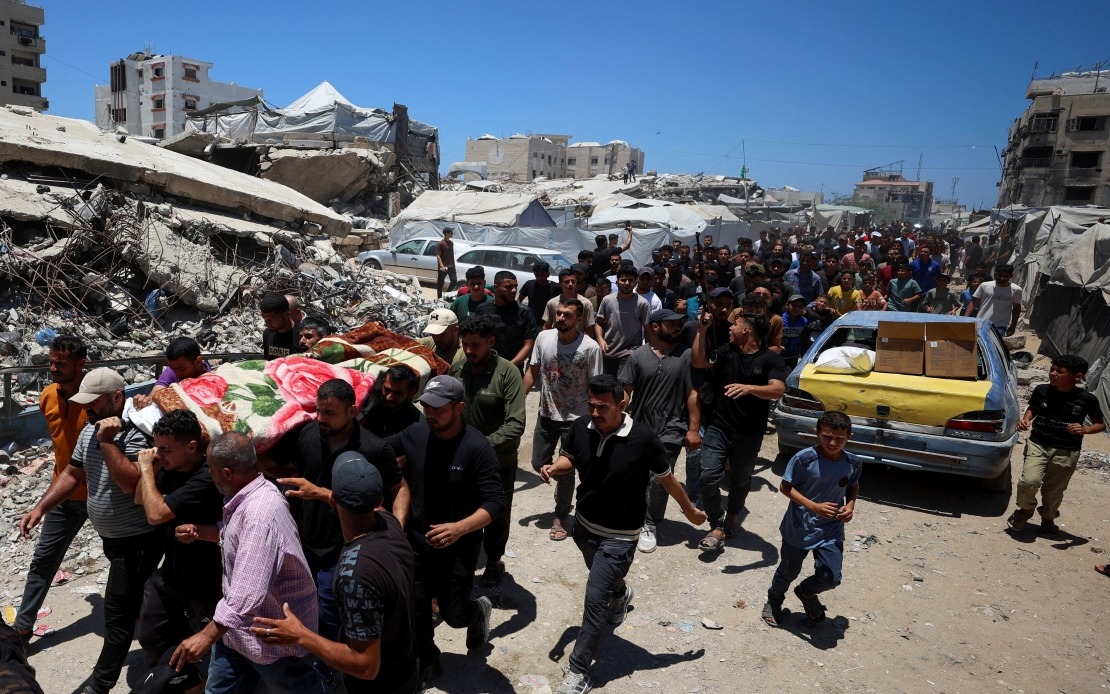
The ongoing violence in Gaza shows no signs of abating despite the implementation of a ceasefire agreement, according to a situation report released by the Palestinian Prime Minister's Office. Since the ceasefire took effect, Israeli military operations have resulted in 1,021 additional Palestinian deaths, bringing the cumulative death toll since October 2023 to 73,032. The figures underscore the continued security challenges facing the enclave and raise fresh concerns about the sustainability and effectiveness of the ceasefire arrangement, particularly for Malaysia and other Southeast Asian nations that have consistently advocated for a permanent end to hostilities and respect for international humanitarian law.
The humanitarian fallout from months of intensive military operations remains catastrophic. According to the Palestinian government's communication centre, the basic conditions of life have deteriorated significantly across the territory. The destruction wrought by Israeli bombardment has rendered approximately 76.6 per cent of Gaza's housing stock either damaged or completely destroyed, forcing nearly one million Palestinians to live in makeshift tent settlements. This displacement represents an unprecedented housing crisis that will require years of reconstruction efforts. Clean water remains critically scarce, with most residents dependent on humanitarian distribution systems that are themselves stretched to breaking point and subject to ongoing access restrictions.
The targeting of civilian infrastructure continues unabated. Recent military operations have concentrated on populated areas including Nuseirat, Al-Mawasi, Khan Younis and Gaza City, where air and drone strikes have compounded the civilian casualty toll and exacerbated already dire conditions. The targeting pattern raises questions about adherence to international humanitarian law principles governing the distinction between military and civilian objectives. For Malaysia, which has long championed Palestinian rights at international forums including the United Nations, such incidents reinforce the necessity for immediate action to secure lasting peace and accountability mechanisms.
Children remain among the most vulnerable victims of the ongoing conflict. According to United Nations Children's Fund data, 265 Palestinian children have been killed and over 400 others injured since the ceasefire announcement. These figures represent a devastating toll on Gaza's youngest population, with implications for the generation that will eventually need to rebuild Palestinian society. The psychological trauma accompanying such losses extends far beyond statistics, affecting the mental health and future development prospects of an entire cohort of young people who have spent formative years under siege conditions.
Humanitarian access continues to face systematic obstruction despite international pressure. Oxfam has specifically informed the United Nations Security Council that Israeli restrictions persist in preventing the delivery of life-saving aid throughout the enclave. This constraint on humanitarian operations contradicts international law obligations requiring occupying powers to permit the passage of essential supplies to civilian populations. The restrictions effectively weaponise access to food, medicine and humanitarian assistance, compounding the vulnerability of an already desperate population and drawing criticism from regional and international human rights organisations.
Palestinian territorial integrity faces ongoing challenges beyond Gaza itself. The United Nations High Commissioner for Human Rights office has documented a significant escalation in forced displacement of Palestinians across the occupied West Bank, including East Jerusalem, driven by a combination of settler violence, administrative home demolitions, movement restrictions and forced evictions. This pattern of displacement reflects a broader territorial strategy that extends beyond military operations in Gaza to encompass systematic efforts to alter demographic and geographic realities across occupied Palestinian territories.
Economic damage to agricultural livelihoods has reached alarming proportions. The Palestinian Ministry of Agriculture has documented the destruction of 7,258 trees by Israeli settlers and occupation forces, including 1,270 olive trees that represent generations of cultivation and livelihood security for farming families. The estimated financial losses from these agricultural attacks exceed US$5.17 million, representing a significant blow to Palestinian rural economies already devastated by broader conflict impacts. Additionally, arson attacks on religious sites, including two mosques in the villages of Jiljilya and Mazra' al-Nubani, have targeted communal and spiritual infrastructure essential to Palestinian community cohesion.
Displacement from refugee camps in the West Bank compounds the layered humanitarian crisis. Israeli military operations in Jenin, Tulkarem and Nour Shams refugee camps have displaced more than 33,000 Palestinians since January 2025 alone. These camps, established decades ago to house Palestinian refugees, have become sites of intensive security operations that further traumatise populations already living under precarious conditions. The displacement of such large numbers from established communities undermines social stability and separates families from whatever economic activities they have managed to maintain.
Detention conditions have deteriorated to concerning levels according to prisoner advocacy organisations. Overcrowding in Israeli detention facilities has reached unsustainable levels, with reports documenting the rapid spread of communicable diseases within prison populations. These conditions raise significant questions about compliance with international standards governing the treatment of detainees and prisoners of war. The deteriorating health situation in detention facilities adds another dimension to the humanitarian crisis affecting Palestinians across multiple domains of conflict exposure.
Despite these overwhelming challenges, Palestinian educational institutions have demonstrated remarkable resilience. The Palestinian government has completed preparations for the 2025 General Secondary Education Examination, which will involve approximately 91,000 students nationwide, including around 37,000 in Gaza. For the third consecutive year, Gaza students will sit examinations electronically, adapting to technological solutions necessitated by the destruction of physical educational infrastructure. This continuation of educational assessment programmes, even under such dire circumstances, reflects Palestinian determination to maintain institutional normalcy and prepare the next generation for eventual reconstruction and development, offering a measure of hope amid the devastation.

