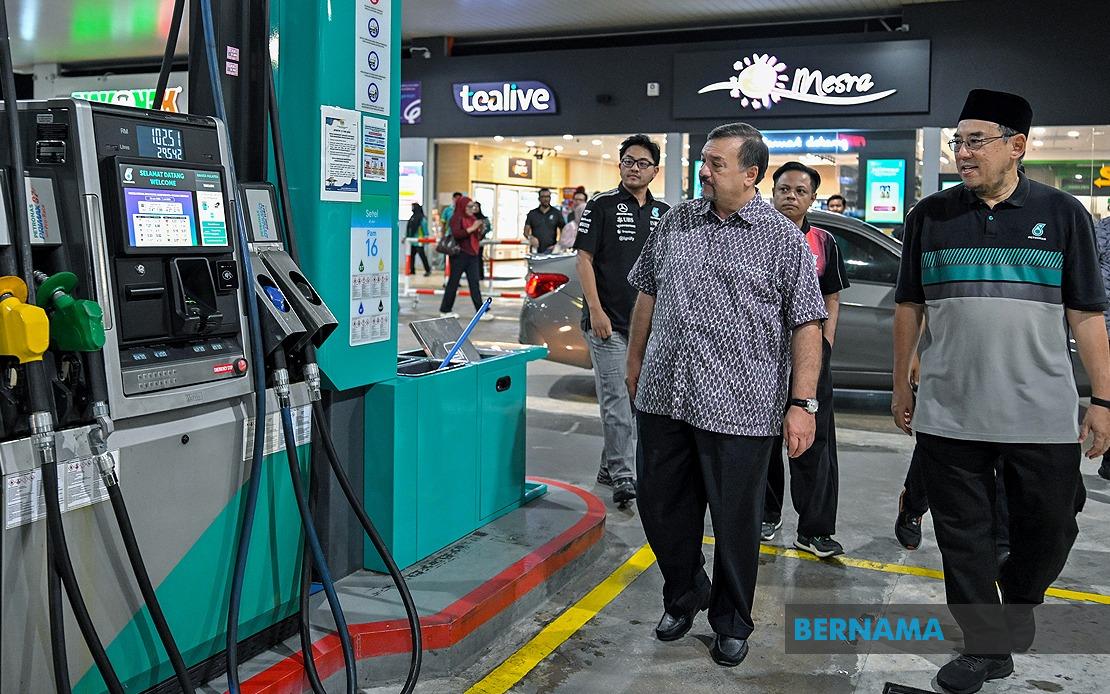
Malaysia's newly launched BUDI MADANI Diesel programme is off to a robust start, with the government's official portal receiving more than 18,000 applications for supplementary fuel allocations during its opening 48 hours. Second Finance Minister Datuk Seri Amir Hamzah Azizan revealed the figures after inspecting operations at a Petronas station along the NKVE in Damansara on June 28, emphasising that the early rollout has proceeded without disruption or system failures. The initiative marks a significant component of the government's broader BUDI MADANI framework, designed to provide targeted relief to eligible vehicle owners grappling with fuel costs.
The volume of applications underscores considerable demand among the intended beneficiary group. Eligible owners of diesel-powered pickup trucks and sport-utility vehicles can now apply through the BUDI MADANI portal for an additional 100 litres of subsidised diesel monthly, adding to their existing quota. Within the first 48 hours spanning June 27 and 28, the platform processed more than 40,000 individual transactions as users began drawing on the programme's benefits. These figures suggest both strong awareness of the initiative and a streamlined digital infrastructure capable of handling substantial concurrent usage.
Accessibility has been carefully structured to accommodate varying levels of digital proficiency among applicants. While the primary channel for quota applications remains the online BUDI MADANI portal, the government has established multiple offline support pathways for those requiring assistance. Officers stationed at Inland Revenue Board offices, Urban Transformation Centres across the country, and dedicated service counters operated by major petroleum companies stand ready to guide eligible applicants through the process. This multi-channel approach reflects recognition that not all vehicle owners possess equal comfort with digital platforms, particularly among rural populations and older demographics who may rely on traditional assistance mechanisms.
The programme's flexibility extends to a novel quota-transfer mechanism addressing real-world usage patterns. In many households and business arrangements, the registered vehicle owner differs from the primary driver who consumes the fuel. The government has introduced a transfer facility permitting quota reassignment to the actual user, with applications processed through the same digital portal. Once approved, the transferred quota becomes linked to the designated user's identity card number rather than remaining solely attached to the vehicle's registration. This administrative innovation acknowledges that ownership structures and operational realities frequently diverge, particularly in commercial contexts involving fleet vehicles or family arrangements.
Verification protocols underpinning the transfer system leverage identity-card based authentication at fuel pumps nationwide. When a motorist presents for subsidised diesel, the petrol station system cross-references the quota against the user's IC number rather than vehicle registration alone. This technological approach prevents unauthorised usage while maintaining administrative efficiency. The quota amount itself remains bound to the specific vehicle and designated user, preventing speculation or resale of allocated fuel. Such safeguards reflect the government's commitment to preventing programme abuse while preserving the intended benefit structure for eligible recipients.
The subsidised diesel pricing structure offers graduated relief over coming weeks. During the initial phase launching June 27, eligible users accessed fuel at RM2.15 per litre—a substantial discount relative to market rates—with a flexible ceiling of 200 litres monthly. Beginning June 30, the subsidised rate descends further to RM2.10 per litre, providing additional purchasing power for qualified motorists. This pricing trajectory reflects the government's calibrated approach to managing fiscal expenditure while sustaining benefit accessibility. The declining price structure also signals confidence in programme sustainability, suggesting policymakers anticipate stable implementation without requiring subsequent rate adjustments.
Operational performance during the critical launch phase has exceeded baseline expectations. Amir Hamzah's confirmation that no technical difficulties have emerged involving either the platform infrastructure or petrol station operator compliance indicates robust pre-implementation testing and coordination. The absence of reported problems within the first 48 hours is particularly significant given the complexity of integrating quota management across thousands of retail fuel outlets. Petroleum retailers have successfully incorporated the verification procedures into existing transaction workflows without creating bottlenecks or processing delays. This operational success provides confidence that the system can sustain higher volumes as awareness expands and additional eligible vehicle owners complete their applications.
The programme's geographic rollout commenced in Peninsular Malaysia, with the June 27 early implementation phase serving as a critical operational validation. The decision to launch early rather than wait for the official July 1 commencement date appears strategic, permitting system stabilisation and staff training completion before full-scale activation. Extending implementation across Sabah and Sarawak will follow the mainland launch sequence, phased to ensure comparable operational readiness. This territorial expansion strategy acknowledges differing infrastructure capacities and administrative capabilities across Malaysia's regions while maintaining equitable access timelines.
For Malaysian motorists and businesses reliant on diesel-powered vehicles, the BUDI Diesel initiative represents a meaningful reduction in transportation operating costs during a period of sustained global energy price volatility. Commercial operators and tradespersons dependent on pickup trucks and SUVs constitute a significant constituency for whom fuel expenses materially impact profitability and competitiveness. The additional 100-litre monthly allocation at subsidised rates translates to substantial cumulative savings across typical usage patterns, providing breathing room for small business operators and agricultural enterprises. The accessibility of this support through straightforward digital and offline channels enhances its practical value for intended beneficiaries.
The government's focus now shifts toward ensuring seamless scaling and sustained programme integrity as implementation advances toward the July 1 full launch. Monitoring usage patterns and quota transfer requests will provide valuable data regarding programme utilisation and potential refinement requirements. Petroleum retailer coordination and system stability monitoring remain priorities as transaction volumes potentially increase substantially once the full beneficiary population gains access. The early success metrics—strong application numbers, minimal technical issues, and high transaction volumes—suggest the BUDI Diesel component of BUDI MADANI is positioned for effective delivery of intended relief to eligible vehicle owners throughout Malaysia.

