Singapore's emerging ecosystem of community-driven social enterprises is gaining traction through a newly launched S$50 million fund designed to nurture grassroots initiatives. Since the Singapore Government Partnerships Office (SGPO) began accepting applications in April 2026, over 200 organisations and individuals have submitted proposals for grants under the scheme, signalling substantial appetite for supported pathways into social impact work. The fund, announced by Prime Minister Lawrence Wong during his February 2026 Budget speech, represents a deliberate government strategy to mobilise citizen-led solutions to community challenges rather than relying solely on top-down interventions.
The fund's structure deliberately lowers barriers to entry through a tiered grant system that recognises projects at different developmental stages. The seed tier, which awards up to S$5,000, targets individuals, unregistered ground-up groups, and newly registered Singapore organisations testing pilot concepts within their neighbourhoods. The sprout tier provides grants of up to S$50,000 for established organisations seeking to deepen sectoral impact, while the newly launched scale tier—introduced in July 2026—offers grants reaching S$1 million for mature organisations aiming to drive sector-wide transformation. This architecture reflects international best practice in social entrepreneurship funding, where diversified grant sizes accommodate everything from kitchen-table initiatives to sophisticated non-profits.
According to SGPO director Hasliza Ahmad, the seed tier has proven surprisingly popular despite its modest allocation. Ahmad attributes this enthusiasm to the fund's philosophy that meaningful social change need not require massive initial capital outlays. The accessibility of the S$5,000 threshold has encouraged individuals and small collectives to formalise ideas they might otherwise have abandoned as unfeasible. Beyond financial support, the SGPO provides applicant-recipients with mentorship, guidance on fund deployment, and crucially, connections to broader networks of service organisations and funding bodies. This wraparound support transforms the fund from a transactional grant mechanism into a scaffolding system for building sustainable initiatives.
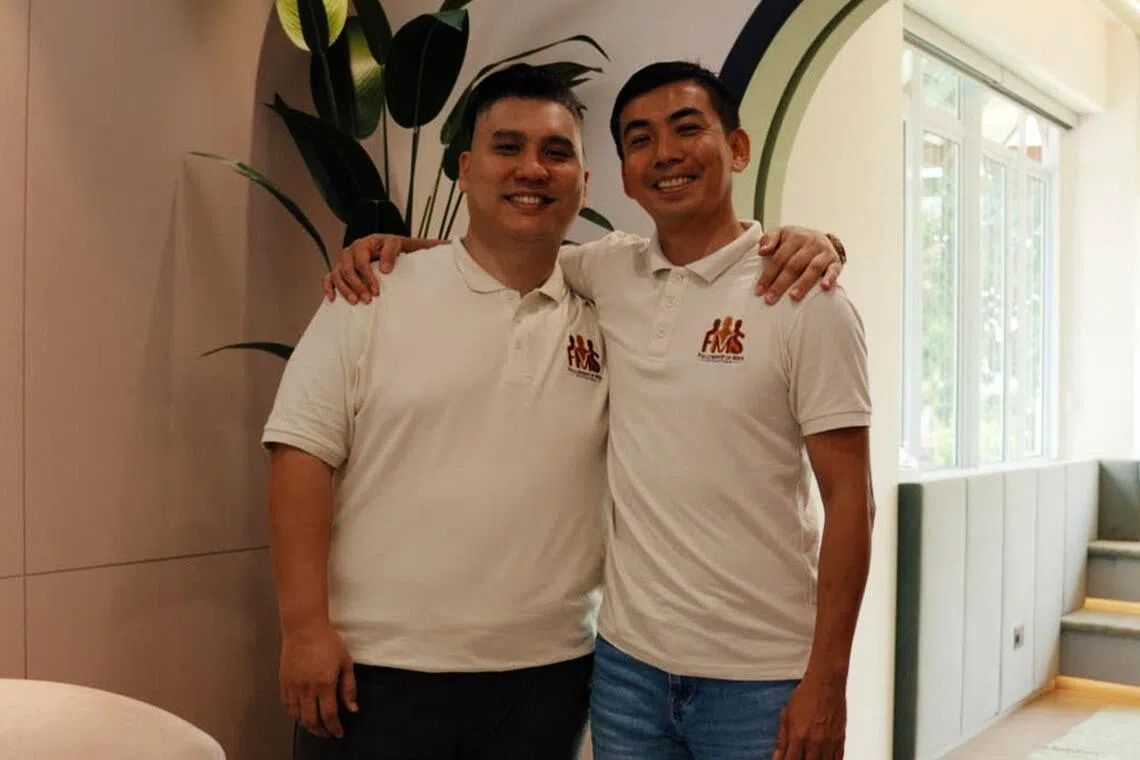
One emblematic example is Fellowship of Men Singapore, a non-profit established in January 2026 by Ben Ang, 45, and Ismail Didih Ibrahim, 41, who recognised five years earlier while working at a family service centre that men facing violence and aggression issues required preventive frameworks rather than crisis-focused interventions. Rather than pursue conventional therapeutic pathways that many men resist, the pair designed accessible entry points using hands-on activities combined with guided conversations around masculinity, emotional vulnerability, and help-seeking. Their S$5,000 seed grant funded an engagement session at a professional culinary kitchen in Geylang, attracting 24 male participants alongside their families for a three-hour experience that melded practical cooking with facilitated discussions on relationships and self-care. The initiative exemplifies how modest funding, when strategically deployed, can create dignified spaces where traditionally underserved populations feel psychologically safe exploring sensitive topics.
The gender-specific mental health dimension reflects Singapore's evolving awareness that men's emotional well-being requires targeted attention. Southeast Asian societies, including Singapore, have historically promoted breadwinner narratives that discourage men from acknowledging emotional distress or seeking support. Ang and Didih's work directly challenges this cultural template by reconceptualising masculinity beyond provision and protection to encompass emotional authenticity and human vulnerability. Their ambition to scale the initiative through successive grant applications signals confidence that the fund's architecture supports progressive growth—a critical feature for social enterprises seeking to expand from pilot to programme stage.
Another seed grant recipient, Loke Wai Yee, a 21-year-old LASALLE College of the Arts student, identified a gap in Singapore's charitable infrastructure for disadvantaged children. The annual angel tree initiative, wherein shopping mall visitors select and purchase gifts for underprivileged youngsters, has been geographically scattered and financially exclusionary—expensive gift options and mall-centric locations naturally filter out budget-conscious donors and those without ready access to commercial precincts. Loke and her 12 collaborators created Little Wishes, an online platform democratising charitable giving by enabling donors to select age-appropriate gifts within their budgetary constraints and directly match purchases to identified beneficiaries. The S$5,000 grant allowed the team to engage professional web developers, transforming what would have been a amateur digital project into a polished platform launching in August 2026.
Loke's experience illustrates how seed funding bridges the critical juncture between conceptual passion and operational viability. Without grant support, the team would have attempted website development internally, risking a substandard user interface that might have deterred both donors and social service organisations from adopting the platform. The SGPO's supplementary role—connecting the team to social service agencies, recommending complementary funding sources, and providing strategic mentorship—multiplied the grant's practical impact beyond its nominal value. Little Wishes is projected to support 80 beneficiaries through its initial operational phase, with scalability embedded into the platform's architecture.
The fund's geographical and sectoral breadth has produced initiatives addressing overlapping vulnerabilities. While Fellowship of Men Singapore targets male mental health and family dynamics, Little Wishes tackles childhood poverty and donor access disparities. The diversity of applications suggests that Singaporeans perceive the fund as legitimate infrastructure for their community concerns rather than tokenistic gesture politics. This legitimacy derives partly from transparency—the SGPO publicly communicates fund tiers, selection criteria, and recipient stories—and partly from demonstrable follow-through, where funded organisations receive sustained institutional support rather than perfunctory cheques.
For Malaysian observers, Singapore's SG Partnerships Fund offers instructive lessons regarding state-citizen collaboration models. Malaysia's own civil society ecosystem encompasses vibrant community organisations, yet systematic funding infrastructure connecting grassroots actors to capital remains fragmented. Singapore's tiered approach—recognising that S$5,000 pilot initiatives and S$1 million sector-transformation projects operate according to entirely different logics—demonstrates how properly structured funds accommodate developmental diversity. The emphasis on mentorship and networks rather than transactional grant-making aligns with contemporary international evidence that social enterprises require relational support alongside financial inputs.
The fund also signals Singapore's strategic pivot toward deprofessionalisation of certain social functions. By supporting ordinary citizens—a university student, a volunteering food vendor, a family services manager—to develop and implement solutions, the state implicitly acknowledges that expert credentials and formal institutional affiliations need not precede meaningful social contribution. This democratisation ethos, if sustained through consistent funding and institutional support, could reshape how Singapore's social sector self-identifies and recruits talent. The psychological impact of receiving official validation through government funding cannot be understated; it signals to ordinary Singaporeans that their civic impulses matter institutionally.
Looking forward, the applications pipeline and early success stories suggest the S$50 million allocation will be substantially deployed, with annual administration and growth likely required. The scale tier's July 2026 launch indicates the SGPO anticipated scalability within the fund's own design—acknowledging that promising seed and sprout initiatives would graduate toward sector-wide ambitions. This anticipatory design feature reflects mature thinking about social entrepreneurship development trajectories. Whether the funding cadence sustains beyond initial enthusiasm remains an open question, but the present trajectory indicates Singapore's commitment to experimental funding models that treat ordinary citizens as potential architects of social change rather than passive beneficiaries of state provision.

