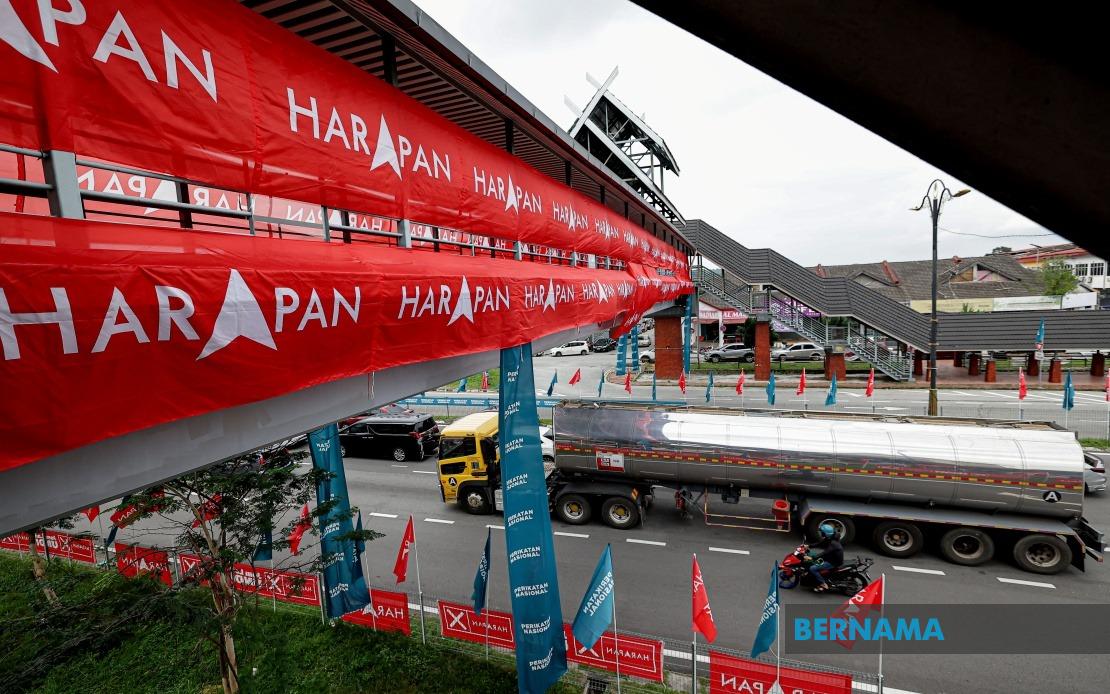
The Negeri Sembilan state election will see a significant bloc of security personnel casting their votes ahead of the general polling day, with the Election Commission facilitating early voting for over 22,000 military and police members and their families. Tomorrow's early voting exercise involves 16,884 military personnel and their spouses alongside 5,455 police personnel and their families, representing a substantial portion of the electorate with security responsibilities across the state. The Election Commission has established 38 dedicated early polling centres spanning all corners of Negeri Sembilan, each opening at 8 am with staggered closing times tailored to local conditions.
Key early voting locations include major security installations such as the Army Basic Training Centre in Port Dickson, the state police headquarters at IPK Sendayan in Seremban, the Sendayan Air Base, and the Nilai District Police Headquarters. This arrangement allows members of the security forces to fulfil their civic duty while maintaining operational readiness across the state. The EC's decision to hold early voting four days before the main polling day on August 1 reflects established protocols designed to accommodate the demanding schedules and deployment patterns characteristic of military and police personnel.
Weather conditions may present challenges for tomorrow's voting exercise, according to forecasts from the Malaysian Meteorological Department. Port Dickson is expected to experience heavy rain and thunderstorms in the morning, while afternoon downpours are anticipated across nearly the entire state. Despite these weather concerns, organisers have positioned the polling centres to ensure accessibility and maintain the integrity of the voting process across all designated locations.
The Negeri Sembilan state election has attracted a competitive field of candidates following the dissolution of the State Legislative Assembly on June 5. A total of 103 candidates will contest all 36 state seats, reflecting intense political competition across diverse constituencies. Pakatan Harapan presents the broadest slate with candidates in every single seat—16 fielded by PKR, 11 by DAP, and nine by Amanah—positioning the coalition to contest comprehensively across the state.
Barisan Nasional's presence is more selective, contesting 25 of the 36 seats through 16 UMNO candidates supplemented by seven from MCA and two from MIC. This selective approach suggests BN has identified priority constituencies and is concentrating resources strategically rather than attempting universal coverage. Perikatan Nasional fields a more modest slate of 11 candidates distributed among PAS, Parti Wawasan Negara, Gerakan, and the Malaysian Indian People Party, indicating a more targeted campaign strategy across the state.
The candidate distribution reveals significant fragmentation beyond the traditional coalition frameworks. Bersatu, contesting independently following its departure from the broader Perikatan framework, has fielded an ambitious 24 candidates, suggesting renewed confidence in its electoral appeal within Negeri Sembilan. Smaller parties including Parti Orang Asli Malaysia and Parti Sosialis Malaysia each field single candidates, while Parti Barisan Jemaah Islamiah Se-Malaysia has mounted a campaign with seven candidates, adding further complexity to the electoral landscape.
This diverse candidate field reflects the shifting political dynamics across Malaysia's smaller states, where traditional two-coalition contests have increasingly given way to multi-cornered battles. The presence of 103 candidates across 36 seats means most constituencies will feature competitive races with multiple serious contenders, potentially fragmenting votes and creating opportunities for unexpected outcomes. For Malaysian voters, particularly those in Negeri Sembilan, this election represents a genuine test of shifting electoral preferences and the sustainability of existing coalition arrangements.
The early voting provision for security personnel carries particular significance in Malaysia's democratic process, ensuring that those serving the nation can participate fully in elections despite operational constraints. This institutional arrangement acknowledges the practical reality that military and police deployments can make standard voting procedures inconvenient or impossible for serving members and their families. By enabling early voting, the system respects both democratic principles and operational necessities.
For Southeast Asian observers, the Negeri Sembilan election provides insight into contemporary Malaysian political trends. The fragmentation evident in candidate numbers and party participation reflects broader questions about coalition stability and voter sentiment that extend beyond this single state. The competitive positioning of established coalitions against increasingly assertive independent players and smaller parties suggests the region's largest democracy continues navigating complex realignments in its political landscape.
The August 1 polling date marks a significant moment for Negeri Sembilan voters to directly influence state governance following months of political transition. With early voting commencing tomorrow, the electoral process effectively begins, setting the tone for the final campaign days leading to the main polling exercise. The weather forecast, early voting logistics, and candidate diversity all converge to create conditions for a consequential election that will shape the state's political direction for years ahead.

