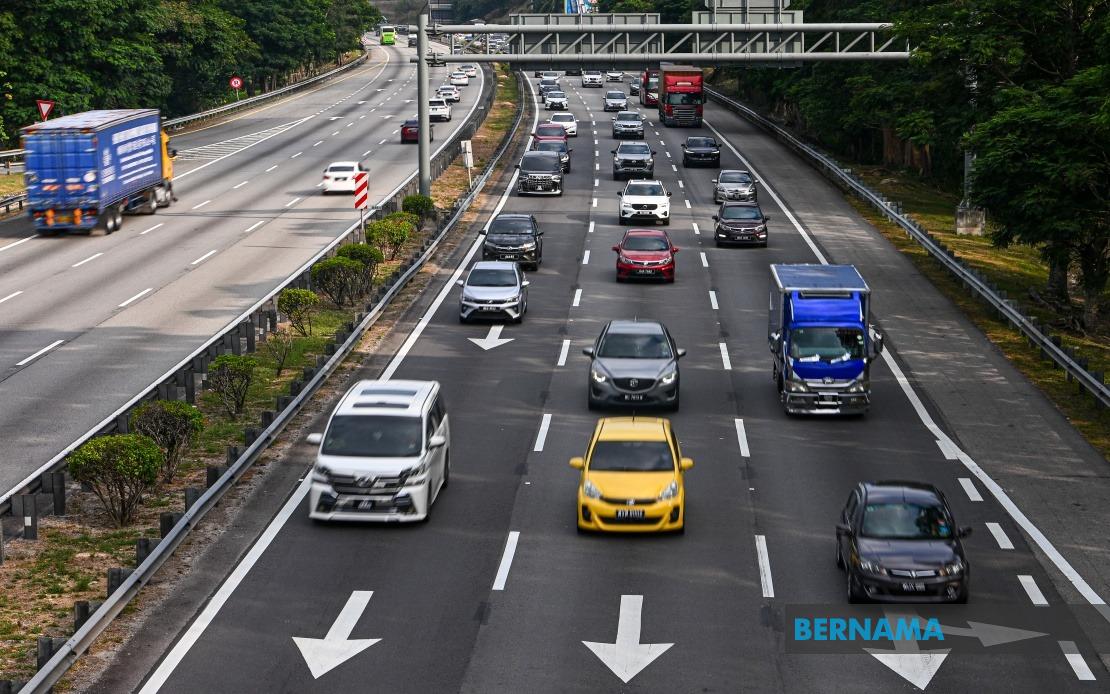
Saturday's Johor state election is poised to trigger one of the year's largest internal migration events in the country, as the Malaysian Highway Authority forecasts that more than 300,000 eligible voters will make the journey home to cast their ballots. This anticipated movement of people presents a significant logistical challenge for highway authorities and state planners, particularly given Johor's geography and the concentration of main access routes that connect the southern state to the rest of Peninsula Malaysia. The scale of voter travel underscores both the electoral importance of Johor, Malaysia's second-largest state by population, and the practical complexities inherent in conducting democratic processes across geographically dispersed populations.
Datuk Seri Hasni Mohammad, chairman of the Malaysian Highway Authority, issued a formal advisory urging travellers heading toward or transiting through Johor to exercise forward planning and adopt strategies to sidestep the anticipated congestion. His statement, released on July 8, represents a proactive effort to manage expectations and encourage voluntary coordination among highway users. The authority recognises that large-scale electoral events, where citizens feel compelled to vote in their home constituencies, can create unpredictable traffic patterns that differ markedly from ordinary weekend travel volumes. By communicating the scale of expected movement in advance, the authority aims to distribute travel demand across a wider temporal window rather than allow it to concentrate in the hours immediately preceding or following polling day.
In a demonstration of institutional flexibility, the Malaysian Highway Authority has committed to suspending scheduled lane closure and maintenance works on highways throughout Johor during polling day itself. This suspension applies to routine construction and repair activities, with the sole exception of emergency interventions that cannot be deferred without creating safety risks. The decision reflects a judgment that the disruption caused by both maintenance work and heightened traffic volume simultaneously would be compounded, potentially creating gridlock and frustrating voters attempting to reach polling stations. Such coordination between electoral and infrastructure bodies is essential in ensuring that citizens can exercise their democratic rights without encountering preventable obstacles.
The authority has encouraged motorists to leverage digital tools for journey planning, specifically recommending the TuJu application as a resource for real-time traffic monitoring and route optimisation. Beyond navigation technology, the advisory extended practical reminders about vehicle maintenance, emphasising that travellers should ensure their cars are in roadworthy condition before embarking on potentially lengthy highway journeys. Additionally, the authority stressed the importance of maintaining adequate balances in electronic payment systems—Touch 'n Go cards, e-wallets, and linked debit cards—since toll collection points operate throughout Johor's expressway network, and cash payment at some facilities may not be guaranteed.
A particular concern highlighted by the authority involves the ongoing third-lane construction project on the northbound North-South Expressway, specifically the section between Simpang Renggam and Senai. This major infrastructure development, while intended to enhance long-term capacity, currently constrains available lanes and necessitates careful speed management. Motorists traversing this construction zone during a high-traffic period must exercise heightened caution, as the combination of reduced capacity, active construction activities, and elevated vehicle volumes creates conditions favourable to accidents. The authority's specific mention of this segment suggests that traffic modelling indicates this area may emerge as a bottleneck during the election travel period.
Beyond lane management, the Malaysian Highway Authority has issued guidance regarding smart lane activation protocols, which represent a modern traffic management technique increasingly deployed on Malaysian expressways. Smart lanes are dynamically allocated to particular directions based on real-time traffic flow patterns, allowing authorities to respond flexibly to imbalances in directional demand. Travellers must remain attentive to signage and information systems indicating active smart lane configurations, as failure to comply with lane assignments can create safety hazards and contribute to congestion. The authority emphasises that compliance with these systems, though requiring active driver attention, ultimately serves the collective interest in maintaining traffic flow.
Rest and service facilities dotted along Johor's highway corridors represent another element of the authority's traffic management strategy. Drivers undertaking longer journeys are encouraged to utilise these facilities not merely for refuelling or food purchases, but for breaks to combat driver fatigue. The authority's emphasis on designated rest areas and lay-bys reflects recognition that fatigued driving during congested conditions significantly elevates accident risk. By encouraging drivers to take measured breaks in appropriate locations rather than attempting uninterrupted journeys, the authority seeks to balance journey times against safety imperatives.
To support real-time decision-making by travellers already en route, the Malaysian Highway Authority maintains multiple channels for traffic updates and incident reporting. Its official Facebook page and TikTok account (@llmtrafik) provide visual and textual information about conditions across the network, while the dedicated Traffic Management Centre telephone line (1-800-88-7752) offers direct access to human operators who can provide specific routing advice. The authority's website features live CCTV camera feeds from strategic points throughout the highway network, enabling travellers to assess conditions visually before committing to particular routes. This multi-channel approach recognises that drivers have varying technological affinities and connectivity situations, and that redundancy in information systems improves overall access to useful traffic intelligence.
For Malaysian and Southeast Asian observers, the election logistics in Johor illustrate broader regional patterns in how developing and middle-income democracies accommodate electoral participation across geographically extended territories. Malaysia's model—combining independent electoral administration, communication from infrastructure authorities, and public reliance on technological tools alongside traditional media—represents one approach to managing the tension between inclusive participation and logistical efficiency. Similar challenges confront other large democracies in the region that must accommodate substantial internal migration during electoral periods, from Indonesia's archipelago to Thailand's dispersed population centres.
The July 11 polling date, as set by the Election Commission, falls on a Saturday, a choice likely intended to facilitate voter participation by avoiding work-week constraints. However, this timing also concentrates travel into a narrower window than might occur if voting extended across multiple weekdays, when commuting and returning could occur at different temporal intervals. The Malaysian Highway Authority's preparations therefore represent a critical component of the electoral infrastructure, one that operates largely invisibly when successful but becomes conspicuous when congestion accumulates. The authority's public messaging, approximately three days before polling day, suggests a measured timeline for disseminating information sufficient to influence travellers' planning without triggering panic-driven demand surges.

