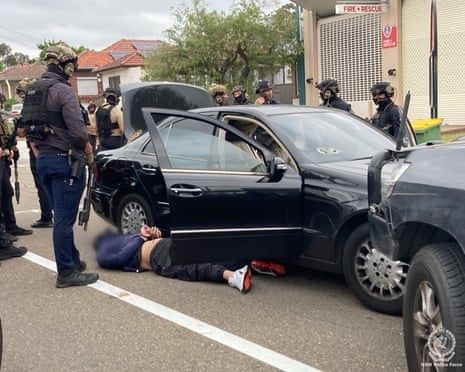
Australian law enforcement has intensified its war on public transport crime, with New South Wales Police announcing the arrest of 356 individuals during the latest phase of a coordinated regional operation designed to combat violent and sexual offences across the state's rail, bus and ferry networks. The three-day enforcement action, which concluded on Saturday, represents the sixth iteration of Operation Waratah, an initiative launched in 2024 in direct response to growing community concerns about personal safety on mass transit systems.
The scale of the deployment underscores the seriousness with which NSW authorities view the problem. More than 400 uniformed and plainclothes officers were mobilised across the state's entire public transport infrastructure each of the three operational days, conducting systematic patrols and targeting known hotspots where such offences frequently occur. This intensive visible policing strategy serves a dual purpose: it disrupts criminal activity in real time whilst also signalling to commuters that law enforcement takes their safety concerns seriously.
The cumulative impact of Operation Waratah since its inception demonstrates sustained momentum in addressing transit crime. With over 1,800 arrests logged across all six operational phases to date, the program has become a cornerstone of NSW's public safety framework. These numbers suggest that the problem remains significant enough to justify continued large-scale intervention, and that law enforcement continues to identify and apprehend offenders at a substantial rate despite previous enforcement efforts.
During the most recent three-day phase alone, officers seized 28 knives and other weapons, indicating that perpetrators of transit crimes frequently carry instruments capable of inflicting serious harm. The weapon seizures highlight why public transport safety has become a political and community priority, particularly in urban areas where millions of commuters depend on buses, trains and ferries for their daily travel. Each weapon removed from circulation potentially prevents a violent incident or escalation of an existing crime.
Drug-related detections also featured prominently in the operation's outcomes, with 137 separate instances identified during the three-day period. This enforcement focus reflects the established link between substance abuse and violent behaviour on public transport. Addressing drug-related offences alongside violent and sexual crimes acknowledges the interconnected nature of these issues and the necessity of a comprehensive approach to transit security.
The breadth of the enforcement action across the network was substantial. During the operation, officers conducted patrols encompassing 539 trains, 127 buses and 29 light rail trams. This distribution reflects the sprawling nature of Sydney's public transport system and the challenge of maintaining consistent safety across multiple modes of transport operating simultaneously across the metropolitan and regional areas of NSW.
The 356 individuals arrested during phase six were collectively charged with 645 offences, indicating that many arrested persons faced multiple charges. This average of approximately 1.8 charges per arrestee suggests that officers are not merely processing isolated incidents but are systematically documenting the full extent of criminal behaviour engaged in by those apprehended, which may strengthen prosecutions and demonstrate patterns of repeat offending to judicial authorities.
For Malaysian and Southeast Asian observers, the NSW operation offers instructive lessons regarding transit security management. Major regional cities including Kuala Lumpur, Bangkok and Jakarta operate similarly complex public transport networks serving millions of daily commuters. The systematic, large-scale deployment of officers in NSW represents one enforcement model, though resource constraints and different legal frameworks affect implementation possibilities elsewhere in the region. The explicit focus on violent and sexual offences reflects a global recognition that these categories of crime disproportionately affect public confidence in transit systems, regardless of actual incidence rates.
The establishment of Operation Waratah in 2024 itself represents a policy response to public demand for heightened security perception and tangible action. Maintaining momentum through successive operational phases requires sustained political commitment and budgetary allocation. For transit authorities across Southeast Asia, the question of whether episodic large-scale enforcement drives deliver lasting deterrence or merely displace criminal activity remains empirically contested, though NSW's willingness to continue the operation suggests perceived effectiveness.
Community perception of safety on public transport often diverges from statistical reality, yet both dimensions matter for transport usage patterns and urban livability. The highly visible nature of Operation Waratah, with hundreds of uniformed officers deployed daily, generates media coverage and public awareness that may produce protective effects beyond those attributable to arrests alone. This dimension of policing—the signalling function—merits consideration by transport authorities weighing enforcement options.
Looking ahead, the sustainability of such intensive operations depends on resource availability, political prioritisation and demonstrated outcomes. The continued iteration of Operation Waratah indicates NSW Police believe the approach remains justified, yet the relatively stable number of arrests across phases might also suggest that a threshold level of criminal activity persists despite interventions. Whether subsequent phases will target different strategies or intensify existing approaches remains to be seen.

