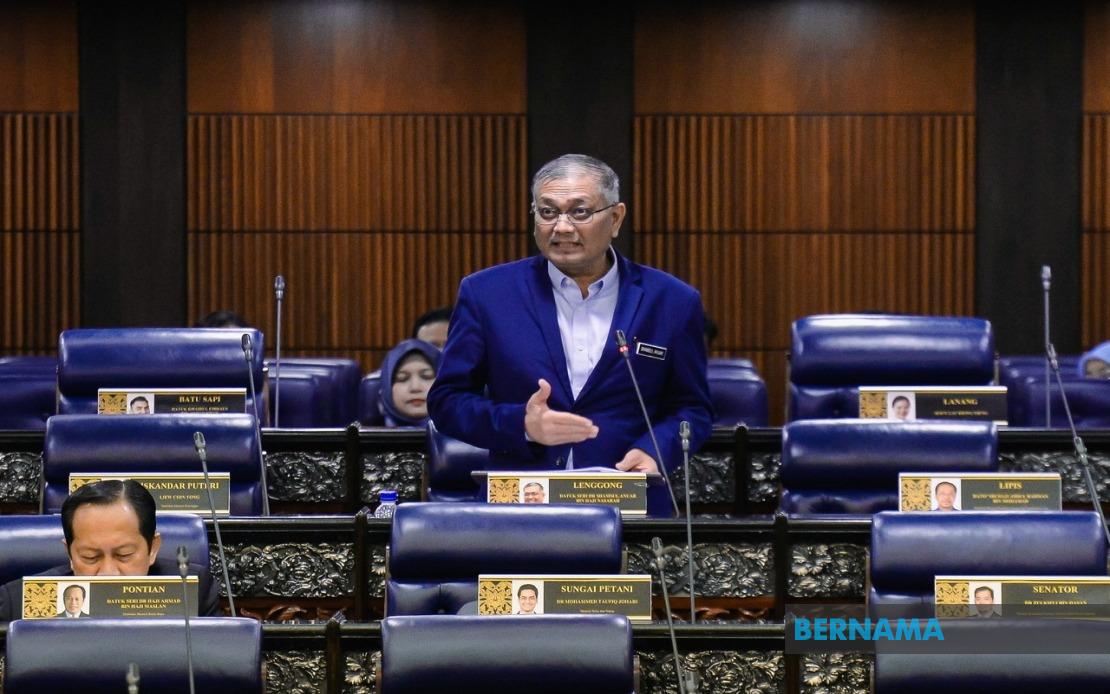
Malaysia's enforcement agencies have intensified their campaign against illegal cryptocurrency mining, dismantling over 75,000 machines through coordinated raids conducted across the country between 2022 and May 2024. Deputy Home Minister Datuk Seri Dr Shamsul Anuar disclosed that the operation, involving more than 3,000 separate enforcement actions, has resulted in 629 arrests. The scale of the confiscations underscores the persistent challenge posed by unregulated digital asset extraction operations within Malaysian borders.
The coordinated approach bringing together the Royal Malaysia Police, Tenaga Nasional Berhad (TNB), local authorities, and other government agencies reflects the multifaceted nature of the problem. Illegal cryptocurrency mining operations have become sophisticated in their methods and widespread in their distribution across the country. Rather than relying solely on reactive enforcement, the Home Ministry has adopted a more strategic posture, emphasising intelligence gathering and technological deployment to identify operational hotspots before launching targeted raids.
The underlying driver of this persistent illegal activity remains straightforward economics. Digital asset prices continue to fluctuate dramatically, creating substantial profit incentives for operators willing to circumvent the law. These operations can generate significant returns when electricity represents the largest operational cost. By illicitly accessing the grid through unauthorised connections or tampering with metering systems, mining operators can dramatically reduce their expenses and increase profitability. For many perpetrators, the financial calculus appears simple: potential gains outweigh perceived enforcement risks.
Cryptocurrency mining's fundamental technical requirement for enormous computational power translates directly into massive electricity consumption. A single large-scale operation can consume the equivalent power of a small industrial facility, which explains why such operations create visible strain on local electricity infrastructure and why TNB plays such a crucial monitoring role. The illicit miners' strategy of bypassing meter systems not only deprives TNB of revenue but also creates dangerous conditions—tampered connections pose fire hazards and put grid stability at risk across entire residential areas.
Malaysia's regulatory framework attempts to distinguish between different layers of cryptocurrency activity. While citizens may legally acquire and trade digital assets, and while the Securities Commission Malaysia has established frameworks for regulated digital asset activities, actual mining operations exist in an ambiguous space. The government has clarified that cryptocurrency mining itself is not inherently illegal, but it becomes so when operators employ unauthorised electricity access, tamper with TNB infrastructure, disrupt power systems, or operate without required permits. This distinction creates a theoretical pathway for legal mining, though in practice almost all identified operations have involved these prohibited elements.
The supervisory architecture reflects Malaysia's cautious approach to the cryptocurrency phenomenon. Rather than attempting to ban digital assets entirely, authorities have segmented responsibility among multiple regulators. The Securities Commission oversees digital asset trading and ownership from an investor protection perspective, while Bank Negara Malaysia maintains oversight regarding financial stability, payment system integrity, and money laundering prevention. This regulatory division aims to permit innovation and financial inclusion while containing systemic risks and preventing criminal abuse of cryptocurrency infrastructure.
The 629 arrests accompanying these 75,000 machine seizures suggest that enforcement is producing genuine accountability at the individual operator level. However, the continued discovery of new operations indicates that arrests alone have not deterred fresh entrants into the illegal mining sector. This pattern reflects a classic enforcement challenge: as long as profit opportunities exceed realistic punishment expectations, new operators will emerge to fill gaps created by police action. The sustainability of the crackdown depends on whether authorities can increase either the certainty or severity of consequences in potential offenders' calculations.
For Malaysian electricity consumers and TNB's operational planning, illegal mining represents an invisible cost burden. Tampered connections and system disruptions impose externalities across entire electrical networks, potentially contributing to service interruptions in surrounding neighbourhoods. The infrastructure strain from concentrated mining loads in particular areas requires TNB to invest in additional capacity to maintain service reliability. These costs ultimately transfer to legitimate consumers through tariff structures. From this perspective, the enforcement action generates economic benefits beyond simply recovering stolen electricity.
The enforcement strategy's emphasis on intelligence gathering and predictive hotspot identification suggests authorities have learned from earlier enforcement cycles. Rather than responding purely to public complaints or TNB reports of metre tampering, the Home Ministry is attempting to map operational patterns and anticipate where new mining clusters might emerge. This forward-looking approach could potentially increase enforcement efficiency, allowing limited police resources to achieve greater impact through better targeting. Technology deployment—presumably including data analysis and imaging—represents an attempt to match the technical sophistication that experienced mining operators employ.
Regionally, Malaysia's experience reflects broader Southeast Asian challenges with illicit cryptocurrency mining. Several neighbouring countries report similar enforcement actions against unregulated operations. The transnational nature of cryptocurrency creates potential complications: mining operations might coordinate across borders, or illicit proceeds could easily flow internationally through digital channels. Malaysia's enforcement efforts remain primarily national in scope, which potentially limits effectiveness if sophisticated operators develop cross-border strategies.
The legal recognition that cryptocurrency ownership remains permitted despite mining activity being restricted reflects the government's attempt to avoid heavy-handed prohibition while still preventing infrastructure abuse. This middle path attempts to distinguish between individual financial participation in digital assets and industrial-scale operations that impose genuine costs on electricity systems and public safety. However, the distinction remains somewhat arbitrary—the same technology that enables legal personal mining could theoretically be scaled up legally with appropriate permits, though authorities have not yet demonstrated what such licensing would entail.
Looking forward, the sustainability of current enforcement depends on whether the Home Ministry can maintain operational tempo and evolve tactics faster than mining operators innovate. The 3,000 raids since 2022 represent significant police resource allocation, and sustaining this intensity indefinitely presents budgetary and personnel challenges. Simultaneously, the continued emergence of new operations suggests that deterrence remains incomplete. The enforcement campaign has achieved measurable success in disrupting specific operations, but the underlying economic incentives driving cryptocurrency mining activity remain undiminished.

