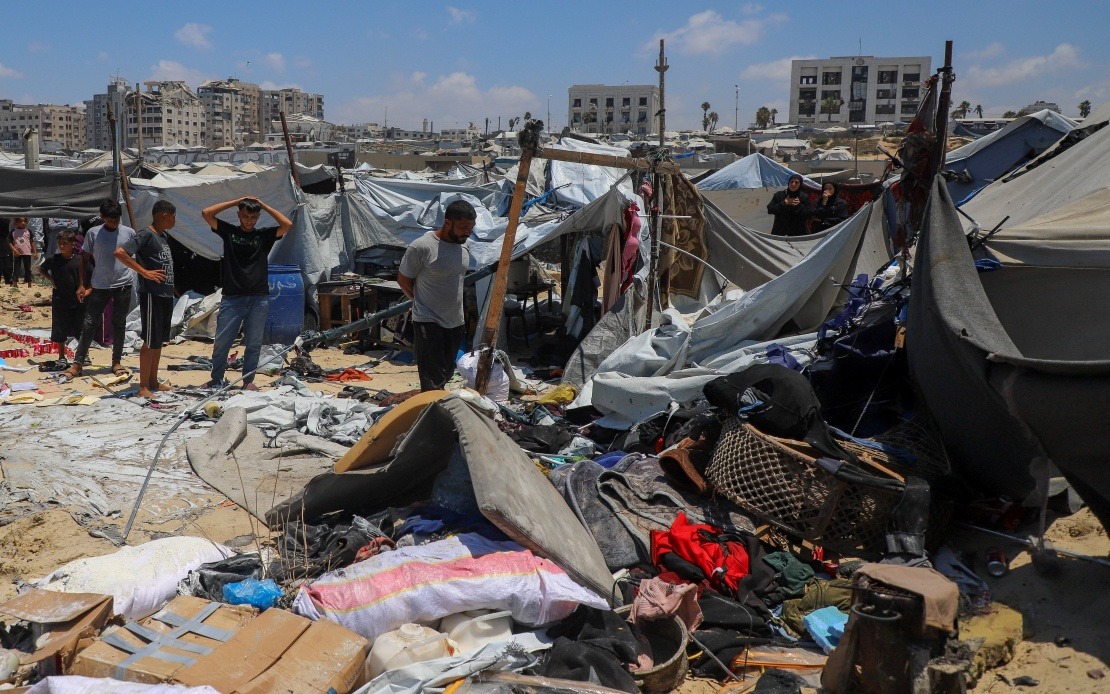
The scale of destruction across the Gaza Strip has reached unprecedented levels, with a Palestinian government weekly situation report estimating that more than 90 per cent of the territory has been destroyed by Israeli military operations. According to the Palestinian Government Communication Centre at the Prime Minister's Office, Israeli occupation forces now control approximately 80 per cent of the war-ravaged enclave, reflecting the extent of territorial control following months of military campaigns.
During the week spanning June 29 to July 6, the Palestinian report documents a marked intensification of Israeli military activities concentrated across three key urban centres: Khan Younis, Rafah, and Gaza City. The escalation resulted in at least eight Palestinian deaths according to local medical sources, though the full toll of casualties and injuries from the period remains under documentation. This concentrated campaign represents a continuation of sustained military pressure across population centres that had previously served as civilian gathering points.
Beyond direct combat operations, the report highlights systematic infrastructure destruction accompanying military campaigns. Israeli forces engaged in extensive shelling of residential neighbourhoods and the deliberate demolition of homes, actions that have displaced additional Palestinian families already grappling with displacement from earlier phases of the conflict. The targeting of civilian infrastructure compounds the humanitarian crisis affecting millions of Palestinians across the territory who face shortages of food, clean water, and medical supplies.
Operations have not been confined to Gaza alone. Across the occupied West Bank, Israeli occupation forces conducted widespread military raids throughout the week, implementing a pattern of home invasions, detention operations, and movement restrictions in major Palestinian population centres. Cities including Ramallah, Nablus, Hebron, Bethlehem, Jenin, Qalqilya, Tulkarem, and occupied Jerusalem all experienced intensified military activity, creating a climate of heightened tension and insecurity across Palestinian communities.
The report draws particular attention to activities by Israeli colonial settler militias operating across West Bank communities. During the documented period, these groups perpetrated a series of attacks targeting Palestinians and their property. Documented incidents include arson against a cafeteria in al-Lubban ash-Sharqiya village, physical assaults on Palestinian shepherds near Bethlehem, attempted livestock theft, and deliberate blockades preventing Palestinian access to village entrances such as the main road into Burqa. Such actions represent patterns of settler violence that have intensified in recent years alongside official military operations.
The Palestinian Ministry of Agriculture has documented the systematic targeting of the agricultural sector, an economic foundation for rural Palestinian communities. The ministry's weekly briefing reveals a significant escalation in operations directly affecting farming livelihoods across West Bank governorates. A total of 2,559 olive trees—integral to Palestinian culture, economy, and food security—were uprooted, burned, or damaged during the week. The damage concentrated primarily in the Salfit, Jenin, and Nablus regions, areas with substantial agricultural populations dependent on seasonal cultivation.
The agricultural destruction carries substantial economic consequences. At least 125 farmers faced direct losses from the documented incidents, with the ministry calculating approximate direct financial damage at US$11.78 million for the single week. This figure represents only officially documented losses and does not account for indirect economic impacts, lost harvests, or longer-term damage to agricultural infrastructure. For a Palestinian economy already severely constrained by restrictions and previous conflicts, such concentrated agricultural damage represents a significant setback to rural income generation and food self-sufficiency.
For Malaysian observers and policymakers, the situation underscores the deepening humanitarian crisis within Palestinian territories and the ongoing cycle of military operations, settler violence, and infrastructure destruction. The scale of destruction documented—over 90 per cent of Gaza Strip infrastructure—represents one of the most severe instances of urban destruction in recent conflict situations globally. The territorial control metrics and displacement figures carry implications for regional stability and the trajectory of Palestinian-Israeli negotiations.
The concurrent targeting of both military objectives and civilian infrastructure, combined with systematic agricultural disruption, reflects a pattern that international observers have characterized as creating conditions potentially affecting civilian populations' ability to sustain basic livelihoods. The documentation by Palestinian government agencies provides quantifiable evidence of economic damage alongside the military and security dimensions of the conflict, offering a comprehensive picture of the multifaceted humanitarian challenge facing Palestinian communities across both Gaza and the West Bank.

