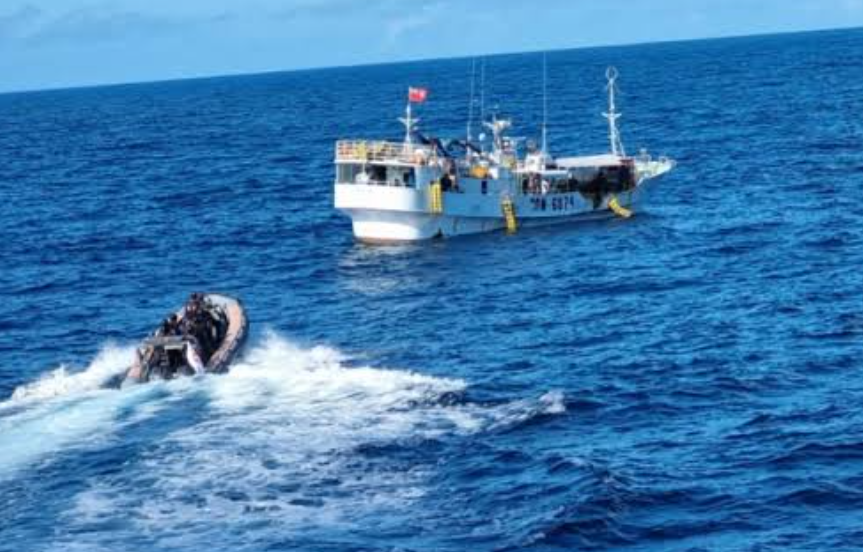
Pacific island nations have intensified efforts to combat illegal fishing in their waters, detaining multiple Chinese and Indonesian vessels this month as part of a coordinated regional enforcement operation. The Pacific Islands Forum Fisheries Agency reported that authorities in Kiribati, Palau and Papua New Guinea apprehended four vessels for either engaging in unlicensed fishing or violating the terms of their operating permits. The crackdown underscores growing frustration among island governments seeking to assert control over their vast maritime zones and secure fair compensation for access to some of the world's most valuable fishery resources.
The scale of the enforcement effort during August reflects the challenge authorities face in policing the region's enormous ocean expanse. Between August 3 and 14, a task force comprising 11 island nations conducted an intensive surveillance operation spanning 28 million square kilometres, boarding more than 100 vessels in what officials called Operation Island Chief. The coordinated initiative combined aerial reconnaissance by Australian military aircraft with patrol activities involving a United States Coast Guard vessel and various Pacific maritime police forces, representing a rare display of regional coordination on a critical economic issue.
Beyond the four confirmed detentions, authorities identified a further 16 vessels of investigative interest during the two-week sweep, though the FFA declined to provide specific details about these cases. The agency's reluctance to publicize comprehensive findings reflects the politically delicate nature of enforcement in a region where powerful fishing interests maintain significant influence. While officials in Palau and Papua New Guinea did not respond to requests for comment, Kiribati's maritime authorities similarly avoided elaborating on their role in Operation Island Chief, suggesting underlying tensions surrounding the enforcement action.
The economic stakes driving this enforcement push are substantial. The Pacific region produces roughly half of the world's tuna catch, generating approximately US$500 million annually in access fees alone alongside US$1.2 billion in export revenues. Yet despite these impressive figures, local island economies capture only a modest portion of the value chain, with just 15 percent of the tuna being processed or handled within Pacific Island countries. The remainder travels largely to Asian markets aboard the long-distance industrial fleets that operate under licence in the exclusive economic zones of small island states, meaning the lion's share of processing profits and employment benefits flow to foreign operators and distant markets.
Fishing represents a lifeline for Pacific island communities, supporting the livelihoods of approximately one-third of all households across the region. This reality makes illegal fishing operations particularly damaging, as they undermine both the sustainability of stocks and the legitimate revenues that island governments depend upon for state services and economic development. The loss to illegal operators not only represents immediate financial leakage but also threatens the long-term viability of a sector fundamental to island prosperity.
The controversy surrounding enforcement against Chinese vessels reveals the complex geopolitical dimensions of Pacific fisheries governance. Chinese companies operate extensive long-distance fleets throughout the region and maintain fisheries joint ventures with several island nations, creating economic interdependencies that complicate public enforcement actions. Naming Chinese fishing boats suspected of illegal activity remains a sensitive matter, with island governments balancing their obligation to protect marine resources against potential diplomatic and economic consequences. This diplomatic calculation differs markedly for nations with alternate international alignments, as illustrated by Tuvalu's more forthright stance.
Tuvalu's recent apprehension of a Chinese vessel caught transmitting a false location while engaged in unlicensed fishing demonstrated a willingness to act decisively against enforcement violations. The detained boat was fined and released after 24 days in custody, with the operation conducted aboard a conservation vessel operated by Sea Shepherd. Notably, Tuvalu maintains diplomatic relations with Taiwan rather than Beijing, a distinction that may provide greater operational flexibility in enforcement matters without the diplomatic complications faced by nations with formal recognition of China.
Historical enforcement data underscore the magnitude of illegal fishing challenges in the region. The Western and Central Pacific Fisheries Commission issued 278 penalty notices to Chinese fishing boats between 2008 and 2026, representing the second-largest tally of infringements among flag states. Only Taiwan recorded more violations with 319 notices during the same period, suggesting that vessels operating under these flags account for a disproportionate share of illegal fishing incidents across the broader Pacific.
The timing of this enforcement crackdown carries additional significance given upcoming regional deliberations on fisheries policy. An annual meeting of 18 Pacific Island leaders scheduled to commence August 30 in Palau is expected to address strategies for strengthening fishing rights protection and increasing revenue capture. Climate change presents an additional urgency to these discussions, as warming waters threaten to alter tuna migration patterns and potentially reduce catches across the region. Island leaders will face pressure to develop more effective mechanisms for controlling illegal activity while simultaneously negotiating better terms with legitimate commercial operators.
The underlying tension reflects a fundamental asymmetry in the Pacific fisheries system. Industrial fishing nations and private operators possess vastly greater technological capacity, financial resources and political influence than small island governments. Yet these island nations possess a critical asset: sovereign control over vast ocean territories containing the world's most abundant tuna stocks. Marshalling this leverage effectively requires consistent enforcement, regional coordination, and the political will to resist pressure from powerful external actors. The August crackdown suggests at least some island authorities are prepared to assert these rights, though sustained commitment across the region remains uncertain.
For Malaysia and other Southeast Asian nations with regional interests, the Pacific fisheries situation warrants attention. The enforcement actions reflect broader global tensions surrounding illegal, unreported and unregulated fishing that affect distant water fishing fleets from multiple countries. Regional discussions about fisheries governance, marine resource management and equity in supply chains hold implications for neighbouring Southeast Asian economies that maintain their own fishing industries and maritime interests.

