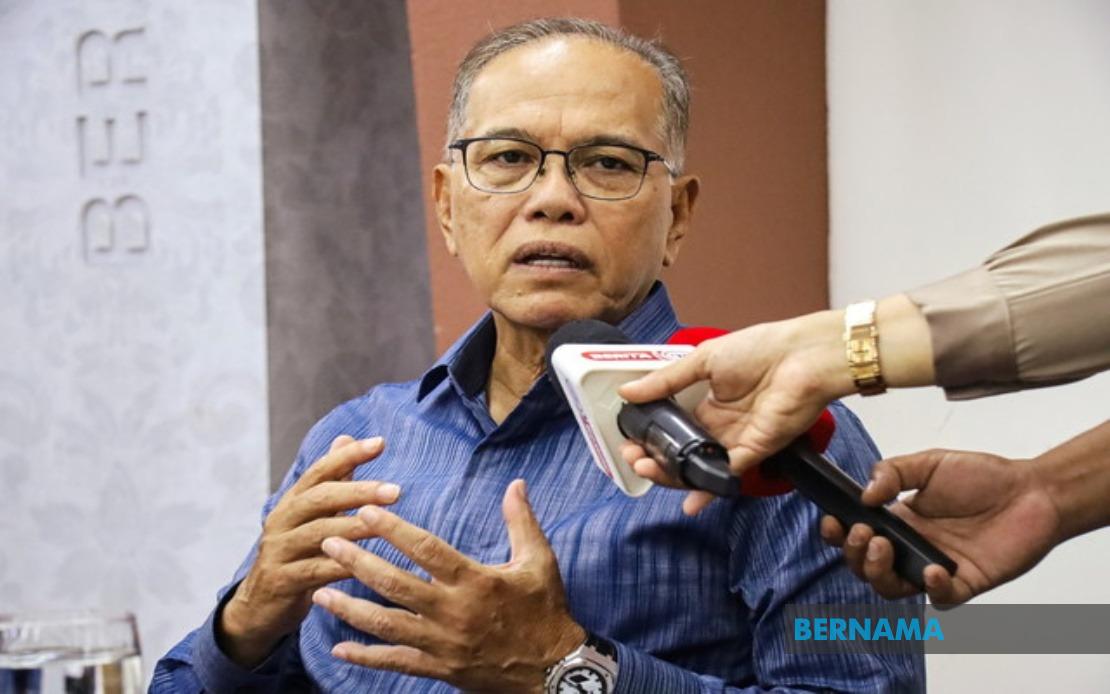
Pahang Barisan Nasional remains steadfast in its intention to preserve the Unity Government coalition with Pakatan Harapan until the next general election, according to the state's Menteri Besar Datuk Seri Wan Rosdy Wan Ismail. The commitment, made during an event in Kuantan on August 14, underscores the ongoing political arrangement that has defined Pahang's governance since late 2022, when the two opposing coalitions unexpectedly joined forces to form a state administration.
Wan Rosdy's declaration carries significance within the context of Malaysian politics, where coalition stability has proven fragile in recent years. The Unity Government itself emerged from the contested landscape following the 15th General Election, when neither coalition achieved the parliamentary dominance needed to govern unilaterally at the national level. In Pahang specifically, the balance of power has been precarious, with Barisan Nasional and Perikatan Nasional each commanding 17 seats in the state assembly, while Pakatan Harapan holds eight of the chamber's 42 seats. This arithmetic necessitated the cross-coalition partnership that currently governs the state.
The Menteri Besar's remarks suggest that Pahang's BN leadership views the ongoing collaboration not merely as a temporary convenience but as a viable arrangement worth extending into the period leading toward the next national polls. This perspective differs notably from other states where similar unity arrangements have fractured or where BN has pursued alternative partnerships. By publicly affirming continued commitment to Pakatan Harapan, Pahang's BN signals an intention to maintain stability and avoid the political volatility that has characterised other state governments.
Wan Rosdy also indicated flexibility regarding future political arrangements, noting that Pahang BN remained open to cooperation with other parties as it prepared for the general election. This measured stance reflects both pragmatism and the political realities of a state where no single coalition commands overwhelming legislative supremacy. Such openness suggests the state leadership understands that electoral outcomes remain unpredictable and that maintaining relationships across traditional political divides may prove strategically advantageous.
The formation of the current Pahang government occurred on November 27, 2022, following the consent of Pahang Regent Tengku Hassanal Ibrahim Alam Shah Al-Sultan Abdullah Ri'ayatuddin Al-Mustafa Billah Shah. This arrangement represented a significant departure from conventional Malaysian politics, where coalitions have historically remained segregated along ideological and historical lines. The willingness of both Barisan Nasional and Pakatan Harapan to govern jointly in Pahang demonstrated the degree to which electoral mathematics and pragmatic governance concerns could override traditional partisan rivalries.
Beyond coalition politics, Wan Rosdy used the occasion to highlight the Pahang state government's investment in human capital development through the Makmur Pahang Initiative. The programme allocated RM118,000 to support 118 students from higher education institutions pursuing further studies in Egypt and New Zealand during the current academic year. Additionally, the initiative channelled USD1,000 through Yayasan Pahang to students undertaking studies in Jordan and Morocco. This financial commitment reflects a policy emphasis on expanding opportunities for Pahang's youth to access international education.
The Menteri Besar's remarks emphasised the holistic approach underlying the scholarship programme, noting that the state government considered not merely financial assistance but also the quality and relevance of academic offerings. Particular attention was accorded to courses incorporating Islamic elements alongside fields of study aligned with broader economic and development priorities. This selection methodology indicates a deliberate effort to balance educational aspirations with values-based considerations that resonate within the state's cultural and religious context.
Wan Rosdy urged recipients of state scholarships to approach their studies with seriousness and dedication, stressing that overseas education presented significant personal and intellectual challenges. His emphasis on mental and physical resilience acknowledged the demanding transition that international study represents, particularly for students relocating to unfamiliar cultural and educational environments. The exhortation to uphold Pahang's reputation abroad and to return with substantial achievements reflected expectations that state-sponsored scholars would leverage their education to contribute meaningfully to the state's development.
The Makmur Pahang Initiative itself represents an evolution in state-level educational policy, with Wan Rosdy indicating that the programme would be continuously expanded and refined to respond to emerging student needs. This adaptive approach suggests recognition that scholarship schemes must remain responsive to labour market demands, technological change, and evolving professional requirements. By maintaining flexibility regarding destination countries, academic disciplines, and funding mechanisms, the initiative positions Pahang as proactive in developing its human resources.
The confluence of these developments—the reaffirmation of political coalition stability and the continued investment in educational opportunity—suggests a state government attempting to project both political durability and developmental commitment. For Malaysian observers, the Pahang arrangement offers a case study in how traditional antagonists might govern cooperatively when electoral outcomes produce fragmented legislatures. The state's approach to international scholarships demonstrates similarly that political divisions need not preclude aligned policy objectives around youth development and human capital formation.
As Pahang approaches the general election cycle, the state's political leadership faces the challenge of maintaining coalition cohesion while preparing for electoral competition. Wan Rosdy's public statements indicate an intention to navigate this paradox by emphasising shared governance responsibility and long-term policy commitments transcending partisan boundaries. Whether this arrangement withstands the pressures inherent in electoral politics remains an open question, but the Menteri Besar's unambiguous commitment suggests the Pahang leadership views continuation of the Unity Government as strategically and operationally preferable to alternatives.

