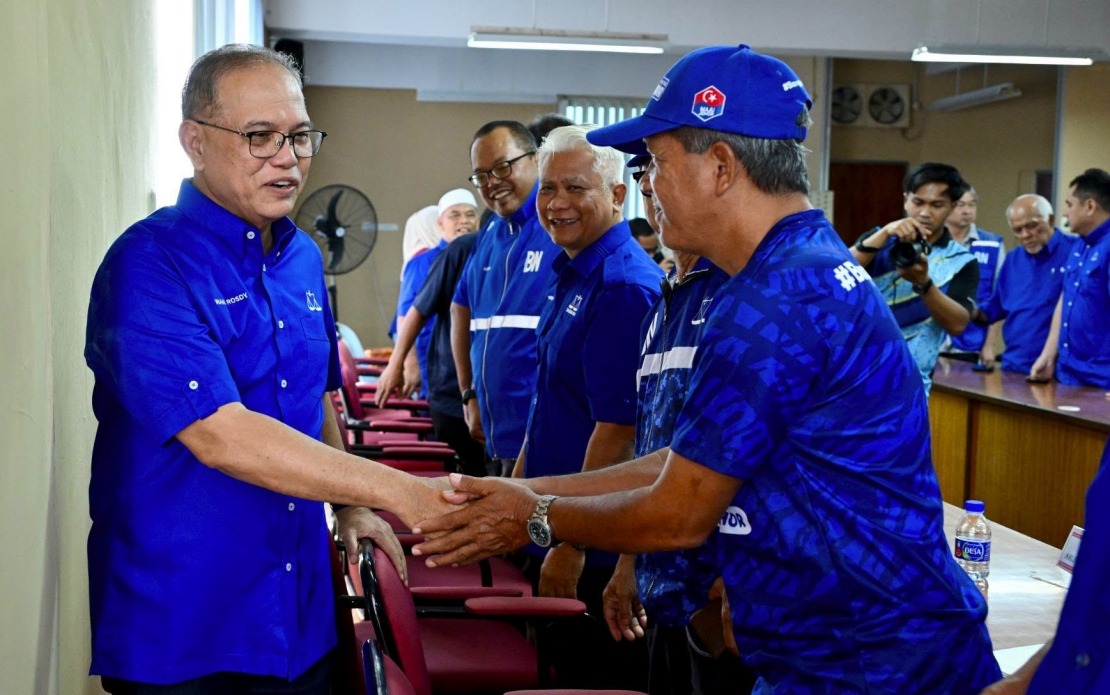
Pahang's Barisan Nasional machinery is throwing its weight behind the Johor state election campaign, with party leaders deployed to bolster efforts in four strategically significant constituencies. Datuk Seri Wan Rosdy Wan Ismail, Pahang's Menteri Besar and state BN chairman, confirmed the cross-border assistance during a ceremony in Kuantan on Tuesday, underscoring the coalition's determination to maintain its electoral foothold in the southern state as the July 11 polling day draws near.
The targeted seats—Pekan Nanas, Pulai Sebatang, Benut, and Kukup—all fall within the Tanjung Piai parliamentary constituency, a region that has traditionally witnessed keenly contested elections. By concentrating resources on these four seats, Pahang BN appears to be adopting a surgical approach, recognising that marginal constituencies often decide overall electoral outcomes. The decision to deploy external party machinery from a neighbouring state demonstrates the coalition's seriousness about preventing opposition gains in what analysts view as a competitive contest.
Wan Rosdy's announcement came at the Pahang 1st 2026 Teachers Appreciation Ceremony and the 2025 Sijil Pelajaran Malaysia excellence awards ceremony at Dewan Jubli Perak Sultan Haji Ahmad Shah, an event that highlighted the government's broader policy agenda even as the election campaign intensified. The timing allowed the Menteri Besar to address the media on multiple fronts simultaneously, framing BN's electoral push within the context of ongoing governance and public service recognition.
The Menteri Besar indicated that his involvement would extend beyond Johor's focal constituencies, pledging to visit the FELDA settlement areas in Segamat to energise the party machinery there. Such rural constituencies, particularly those with significant Felda settler populations, have historically been important voting blocs for Barisan Nasional. The explicit mention of heading to Segamat suggests party strategists have identified these agricultural communities as either vulnerable to opposition inroads or as areas where incumbent support requires reinforcement.
Wan Rosdy's recent three-day stint in Johor during the nomination period appeared to have fortified his conviction in BN's electoral prospects. He conveyed optimism about the coalition's performance, attributing confidence to the vigour displayed by party machinery and the receptiveness of voters encountered on the campaign trail. The characterisation of BN candidates as "highly driven to serve the public" represents standard campaign rhetoric, yet underscores the messaging the coalition intends to amplify in its final push toward election day.
The Johor state election involves 172 candidates contesting across 56 state seats, a field sufficiently crowded to suggest multiple contests will be decided by narrow margins. This competitive environment makes the deployment of experienced party machinery from Pahang strategically sensible. External party operatives bring fresh energy, established networks, and campaign expertise that can supplement local organisations, particularly in constituencies where BN may lack organisational depth or where opposition movements have gained momentum.
Early voting on July 7 will precede the main polling day by four days, potentially allowing party operatives to identify and mobilise supporters before the broader electorate votes. This staggered voting window has become standard in Malaysian elections and offers campaigns an opportunity to gauge real-time momentum and adjust ground tactics accordingly. Pahang BN's deployment timing suggests the coalition intends to maintain visible presence and pressure throughout the campaign calendar.
The cross-state campaign assistance also carries broader implications for BN's cohesion and strategic coordination. By activating Pahang's machinery for Johor's benefit, the coalition demonstrates its capacity to function as a unified electoral force spanning multiple state entities. This contrasts with opposition blocs that sometimes struggle with inter-party coordination, lending BN a structural advantage in mobilising resources across state boundaries.
Malaysian electoral politics increasingly feature sophisticated targeting of marginal constituencies, where election outcomes are genuinely competitive. Pahang's focused deployment in just four Johor seats suggests data-driven campaign strategy rather than blanket ground operations. Such precision reflects how contemporary Malaysian political campaigns increasingly employ electoral mapping and voter analytics to concentrate limited resources where they generate maximum impact.
The backdrop of teachers' appreciation and SPM excellence recognition at Wan Rosdy's venue choice also signals BN's attempt to connect its electoral campaign with governance narratives. By appearing at education-focused ceremonies while discussing electoral matters, the coalition attempts to associate itself with public service and institutional competence—messaging designed to reassure voters that BN remains focused on developmental priorities even amid electoral competition.
As the Johor campaign enters its final stretch, the deployment of Pahang machinery represents a calculated move to secure what party strategists evidently view as vulnerable terrain. Whether this cross-state assistance proves decisive will become apparent when voting concludes and results determine whether BN maintains or loses ground in a state that remains economically and politically significant within the peninsula's broader political economy.

