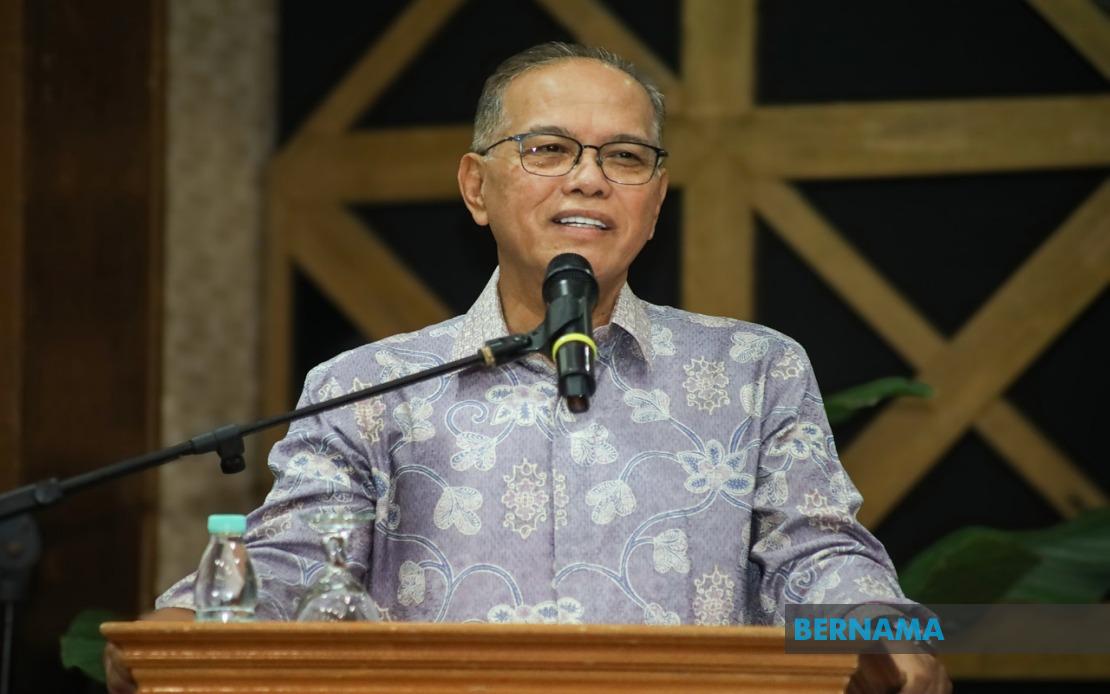
Pahang's state government is placing its faith in proactive workforce development rather than reactive hiring, committing more than RM5 million annually to strengthen its technical and vocational education landscape. Menteri Besar Datuk Seri Wan Rosdy Wan Ismail articulated this strategic pivot during celebrations marking the golden jubilee of Politeknik Sultan Haji Ahmad Shah (POLISAS), signalling a deliberate shift in how the state approaches economic readiness. The funds represent a tangible declaration that Pahang intends to build its human capital pipeline before fresh industrial opportunities materialise, ensuring that when investors arrive and employment prospects multiply, the state's younger generation will possess the requisite skills to seize them.
The investment channels resources across multiple fronts within the vocational ecosystem. Infrastructure upgrades and enhanced training facilities for Pahang Skills programmes form one pillar, while the TVET Pahang Talent Development initiative focuses on identifying and nurturing promising candidates early. Perhaps most symbolically, the Pahang Rail Academy represents the state's commitment to sector-specific excellence, positioning itself to benefit from anticipated growth in regional rail connectivity and transport infrastructure. This diversified approach reflects sophisticated understanding that modern economies demand specialisation alongside generalist technical competency.
Wan Rosdy's framing of this philosophy—develop talent first, let opportunities follow—represents a departure from traditional approaches where employers and governments often scramble to fill vacancies with hastily retrained workers. By inverting this sequence, Pahang signals confidence in its economic trajectory while simultaneously reducing the friction between education outcomes and labour market demands. This methodology has proven effective across East Asian economies, where sustained investments in vocational pipelines created competitive advantages during manufacturing booms and industrial transitions.
POLISAS itself embodies the potential of this model. The polytechnic, established in 1976, has produced 60,000 graduates over nearly five decades, many of whom have become anchors for technical workforces across Malaysian industries. Its continued role as a state government partner is crucial; institutions with such institutional memory and industry connections become force multipliers when coupled with fresh funding and strategic direction. The anniversary celebration thus functioned simultaneously as a recognition of past achievement and a recruitment of institutional weight behind future ambitions.
Yet Wan Rosdy identified a critical gap in the current ecosystem: the disconnect between classroom learning and practical workplace application. His emphasis on strengthening industry ties acknowledges that technical education often suffers when academic rigour becomes divorced from operational reality. Malaysian TVET systems have historically struggled with this alignment, producing graduates whose theoretical knowledge exceeds their familiarity with actual production processes, troubleshooting methodologies, or contemporary equipment. By explicitly prioritising industry partnerships, Pahang recognises that educators must work alongside practitioners to ensure curricula remain current and relevant.
Beyond state-level initiatives, Wan Rosdy's remarks to journalists revealed broader aspirations regarding federal support. His appeal for special consideration in Budget 2027 reflects frustration common among peripheral states—that standardised allocation formulae fail to account for geographical realities. Pahang's vast landmass necessitates disproportionate infrastructure investment merely to achieve parity with more densely populated regions. This argument, while often advanced by state governments, carries particular weight when coupled with concrete state-level commitment, as demonstrated by the RM5 million outlay.
The Menteri Besar's envisioned Budget 2027 priorities encompass education, economic development, social welfare, infrastructure, and Islamic promotion. This breadth suggests Pahang understands that workforce development alone cannot succeed in isolation; complementary investments in healthcare, transportation networks, and social safety nets create enabling environments for genuine human capital development. A young person cannot fully realise vocational training benefits without accessible transportation to training centres, family income stability reducing pressure to drop out, and healthcare ensuring consistent attendance.
Pahang's approach carries implications for Southeast Asian economic strategy more broadly. As automation and artificial intelligence reshape labour markets across the region, states that invest early in specialised, industry-aligned vocational training may establish durable competitive advantages. The state positions itself to capture manufacturing and logistics operations seeking reliable, skilled workforces rather than those chasing minimum-wage arbitrage. This represents maturation beyond competition on labour cost grounds alone.
However, execution remains paramount. Allocating capital proves simpler than ensuring programmes translate into genuine employment outcomes. Malaysian vocational institutions have sometimes struggled with graduate placement, suggesting that funding availability does not automatically resolve systemic challenges around curriculum design, instructor quality, or industry engagement depth. Pahang's commitment will ultimately be measured not by the RM5 million commitment itself, but by employment rates for POLISAS and Pahang Skills graduates within twelve months of programme completion.
The state government's November tabling of the state budget will provide further clarity regarding overall resource allocation priorities and implementation mechanisms. Budget documents typically reveal which pledges receive sustained funding versus which represent aspirational rhetoric. Observers monitoring Pahang's trajectory will watch whether the TVET commitment represents genuine strategic reorientation or tactical positioning ahead of broader fiscal discussions.
For Malaysian policymakers beyond Pahang's borders, the state's vocational emphasis offers a counterweight to over-emphasis on university expansion. While degree-level education remains vital, technical pathways increasingly offer superior employment prospects and earnings potential in contemporary economies. Pahang's signal that TVET merits serious, sustained investment challenges assumptions that vocational routes constitute second-class alternatives to academic credentials.

