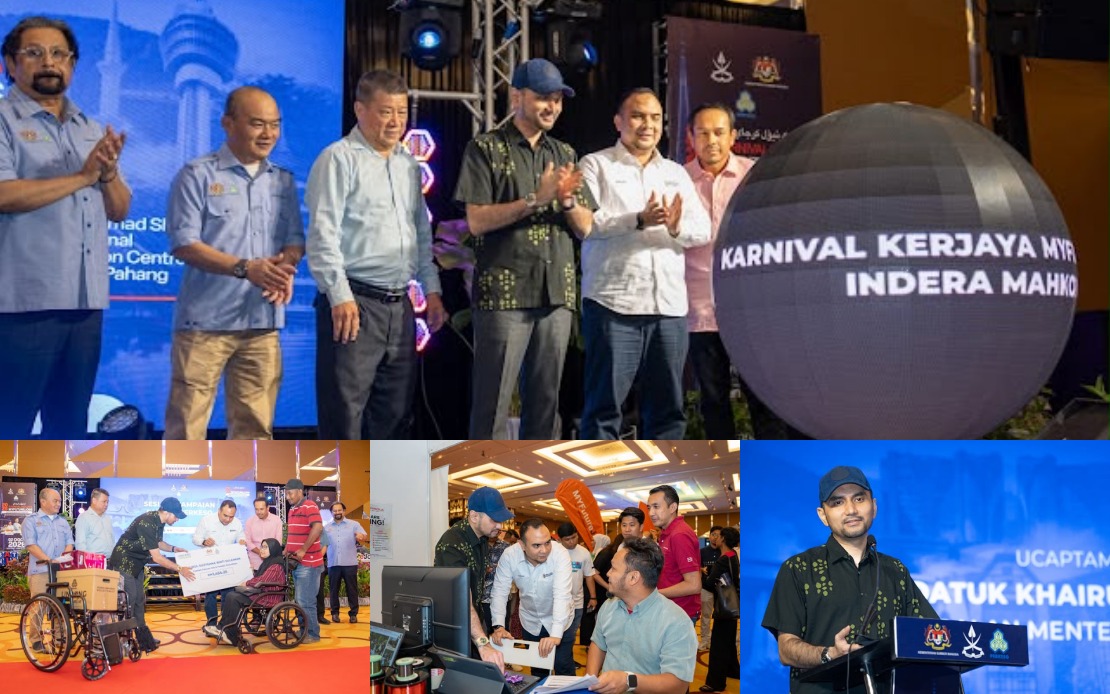
Pahang has emerged as the strongest performer on Malaysia's east coast in terms of workforce engagement, recording a labour force participation rate of 65.3 per cent during the first quarter of 2026. The state's unemployment rate has remained remarkably restrained at just 1.9 per cent, reflecting robust job market conditions and the effectiveness of targeted employment programmes. These metrics signal not only a buoyant regional economy but also successful implementation of federal strategies to connect jobseekers with available positions across multiple sectors.
Deputy Human Resources Minister Datuk Khairul Firdaus Akbar Khan attributed these gains to a suite of government-backed employment initiatives designed to broaden access to job opportunities for Malaysian workers at all levels. Speaking at the launch of a major career recruitment event in Kuantan, he highlighted the role of the MYFutureJobs programme, administered through the Social Security Organisation (PERKESO), as a cornerstone of the government's broader commitment to reducing joblessness and creating pathways for younger workers seeking to establish their careers. The platform represents a deliberate shift toward proactive labour market management rather than passive reliance on traditional hiring channels.
The tangible impact of these programmes becomes evident when examining the numbers generated over recent years. Since 2023 through to July 2026, the MYFutureJobs ecosystem has successfully matched 26,877 Pahang residents with employment, demonstrating the accumulated benefit of sustained policy focus. Complementing this placement activity, PERKESO has orchestrated 1,277 interview sessions and career carnival events throughout Pahang during the same window, while advertising more than 10,000 job openings via the digital portal. These figures underscore the scale of institutional effort required to sustain healthy labour market outcomes in a state with a population dispersed across both urban and rural settings.
On the day of the career carnival in Indera Mahkota, participating employers dangled 6,000 fresh vacancies across 30 organizations spanning diverse industries, offering immediate pathways for qualified candidates. The 2026 recruitment drive has already registered 11,857 jobseekers on the MYFutureJobs platform, signalling sustained interest among workers eager to upgrade their employment status or transition into new sectors. This concentration of opportunity at single venues reflects recognition that not all jobseekers have equal ease accessing information or making connections in an increasingly digital labour market.
Beyond simply matching candidates to positions, Deputy Minister Khairul Firdaus emphasized that the Human Resources Ministry operates a complementary training infrastructure designed to equip workers with skills demanded by modern employers. Recognizing that static qualifications quickly become obsolete, the government offers continuous upskilling programmes targeting both personal development and sector-specific competencies. He pressed workers to embrace these learning opportunities as essential investments in their career longevity, particularly as industries pivot toward automation, digital tools, and higher-value services across the Malaysian economy.
The employment strategy explicitly incorporates a geographic equity dimension through the Sahabat MADANI initiative, a government community movement launched simultaneously at the Kuantan event. Prime Minister's political secretary Datuk Ahmad Farhan Fauzi unveiled the Pahang-level iteration of this initiative, which aims to ensure that rural residents and those in geographically isolated communities do not fall behind their urban counterparts in accessing employment services and development opportunities. This geographical outreach addresses a persistent challenge in Malaysia's labour market: information asymmetries and logistical barriers that can leave workers in peripheral areas disconnected from job networks concentrated in cities.
Sahabat MADANI transcends conventional volunteer programming by positioning itself as a bridge institution between government apparatus and grassroots communities. Rather than functioning as a top-down service delivery mechanism, the initiative emphasizes reciprocal responsibility, mutual aid, and collective investment in community welfare. The underlying philosophy reflects an understanding that sustainable employment outcomes require not merely job listings but also the social infrastructure of trust, information flow, and mutual support that vibrant communities provide. Through this lens, employment facilitation becomes inseparable from broader community development.
The Pahang chapter has already achieved its initial recruitment target of 2,000 Sahabat MADANI members, though Ahmad Farhan made clear that mobilization efforts will intensify to attract even larger numbers of young volunteers. He articulated an ambitious vision wherein these volunteers serve dual functions: as frontline community helpers responding to immediate local needs, and simultaneously as embedded observers providing grassroots intelligence to government planners. This conception of volunteering merges social purpose with institutional learning, enabling policymakers to receive real-time feedback on labour market friction points and community service gaps.
For Malaysian policymakers observing Pahang's performance, the results validate a strategic emphasis on institutional job-matching platforms coupled with skills development and community engagement. The state's 65.3 per cent participation rate exceeds typical benchmarks in Southeast Asia and approaches rates seen in high-income economies, suggesting that geographic location need not constrain labour force attachment when policy architecture deliberately bridges information and logistical gaps. The low 1.9 per cent unemployment rate conversely raises questions about potential skills mismatches or underemployment masked by headline statistics, warranting closer examination of job quality alongside job quantity.
The scaling of MYFutureJobs and Sahabat MADANI across other Malaysian states offers a potential template for regional employment strategies. However, success in Pahang reflects particular demographic, economic, and geographic conditions that may not transfer straightforwardly elsewhere. States with larger informal sectors, less diversified economic bases, or greater geographic fragmentation may require customized programme adaptations. Nevertheless, the demonstrated capacity to achieve both high participation and low unemployment through coordinated platform development, training provision, and community mobilization provides an encouraging benchmark for neighbouring east coast states seeking to improve their labour market performance and create sustainable economic opportunities for their populations.

