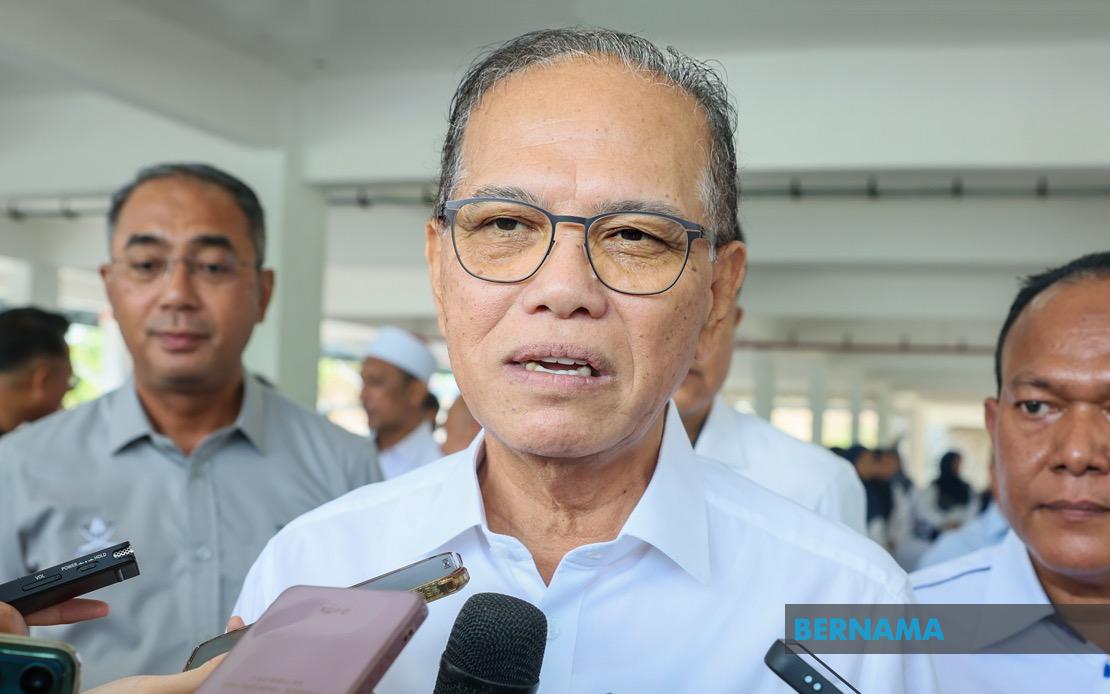
Pahang Menteri Besar Datuk Seri Wan Rosdy Wan Ismail has made a pointed appeal to Orang Asli youth in the state to pursue pathways in Technical and Vocational Education and Training, arguing that such qualifications can fundamentally transform economic prospects and reverse troubling educational trends within Malaysia's indigenous communities. Speaking at a convocation ceremony in Kuantan, Wan Rosdy underscored the urgency of confronting persistently high school dropout rates, a challenge that affects approximately 90,000 Orang Asli residents across Pahang, many of whom face entrenched barriers to conventional academic advancement.
The initiative carries particular significance given Malaysia's longstanding struggle to integrate Orang Asli populations into broader educational and economic frameworks. While national policies have repeatedly emphasised inclusive development, ground-level disparities in access to quality schooling, infrastructure, and career guidance have historically marginalised indigenous youth. Pahang, home to one of the country's largest concentrations of Orang Asli communities, faces heightened responsibility in addressing these systemic gaps. The Menteri Besar's intervention signals renewed state-level commitment to channelling young people toward skill-based qualifications that can deliver measurable employment outcomes without requiring extensive academic prerequisites.
Wan Rosdy articulated a deliberate reframing of vocational training's social standing, explicitly rejecting the notion that TVET represents a diminished alternative to university education. Instead, he positioned technical expertise as an essential contemporary competency, one that opens entrepreneurial and employment avenues in an increasingly skills-dependent economy. This rhetorical shift matters considerably for Orang Asli communities, where cultural attitudes toward non-traditional education pathways have sometimes created disincentives to vocational uptake. By lending the office of Menteri Besar to this message, the state leadership aims to legitimise and elevate skills training in community consciousness.
The convocation ceremony at Sultan Haji Ahmad Shah Silver Jubilee Hall marked the graduation of 388 students from YP Advanced Skills programmes, an institution that has emerged as a significant vehicle for delivering TVET opportunities to marginalised populations. The scale of the cohort demonstrates growing institutional capacity to accommodate Orang Asli learners, though demand almost certainly outpaces current supply given the broader population base. Wan Rosdy specifically lauded the institution's track record in nurturing graduates characterised by both technical proficiency and strong personal values—an acknowledgment that employability extends beyond certification to encompassing soft skills and cultural adaptability.
The Menteri Besar articulated a particularly strategic aspiration: that YP Advanced Skills graduates would return to their home villages and function as visible success models, inspiring peers and younger cohort members to similarly pursue qualification pathways. This community-anchored approach recognises that educational momentum within indigenous populations often requires internal champions rather than external encouragement alone. When graduates demonstrate tangible upward mobility and remain connected to their communities, they create authentic narratives of possibility that resonate far more persuasively than abstract policy rhetoric. Such peer influence mechanisms prove especially potent in Orang Asli contexts, where family and village networks significantly shape individual educational and career decisions.
Wan Rosdy further highlighted the practical flexibility that TVET qualifications confer on graduates, noting that certificate and diploma holders can pursue either entrepreneurship or formal employment with roughly equivalent prospects for success. This dual pathway is particularly relevant for Orang Asli communities, many of which have traditionally relied on small-scale enterprises and resource-based livelihoods. Skills training that equips graduates for self-employment addresses not only unemployment concerns but also respects existing economic patterns within indigenous societies, allowing individuals to leverage training within pre-existing community contexts rather than forcing wholesale occupational relocation.
The state leader's recommendation that graduates pursue further study whenever feasible introduces a progressive credentialing pathway, encouraging continuous learning rather than treating TVET as a terminal qualification. This approach acknowledges the competitive reality of Malaysia's evolving labour market, where foundational skills alone increasingly require supplementation through advanced certifications or bridging qualifications. For Orang Asli learners navigating educational systems that have historically underserved their communities, access to progression routes within vocational frameworks can mean the difference between stalled advancement and sustainable career development.
Pahang's focus on TVET for indigenous youth intersects with broader Southeast Asian trends toward skills-based development as a poverty reduction mechanism. Regional economies facing labour shortages in technical sectors have begun deliberately channelling disadvantaged populations toward training programmes, recognising mutual benefit: employers gain access to skilled workers, while trainees acquire qualifications with genuine market demand. For Orang Asli in Pahang, alignment with such macroeconomic currents potentially creates tailwinds for employment absorption, provided that training content remains responsive to actual sectoral labour needs.
The convocation ceremony itself serves as a visibility platform, generating official recognition of Orang Asli achievement and signalling state-level investment in indigenous advancement. Such ceremonial acknowledgment, though seemingly symbolic, carries psychological and social weight within communities historically accustomed to policy neglect. When Menteri Besar-level officials personally officiate graduation events for indigenous learners, it transmits an institutional message that Orang Asli educational attainment merits high-level administrative attention and celebration.
Yet the initiative's sustainability depends on factors beyond rhetoric. Infrastructure supporting TVET access—transportation, residential facilities, childcare, living stipends—remains critical for Orang Asli students who often face geographic distance and economic constraints. Labour market absorption of graduates must translate policy encouragement into actual employment opportunities. Community engagement with education systems requires sustained relationship-building between institutions and Orang Asli families. Pahang's initiative thus represents a necessary but incomplete response to entrenched educational disparities affecting indigenous youth, one that must be fortified by complementary investments in support systems and genuine labour market integration.

