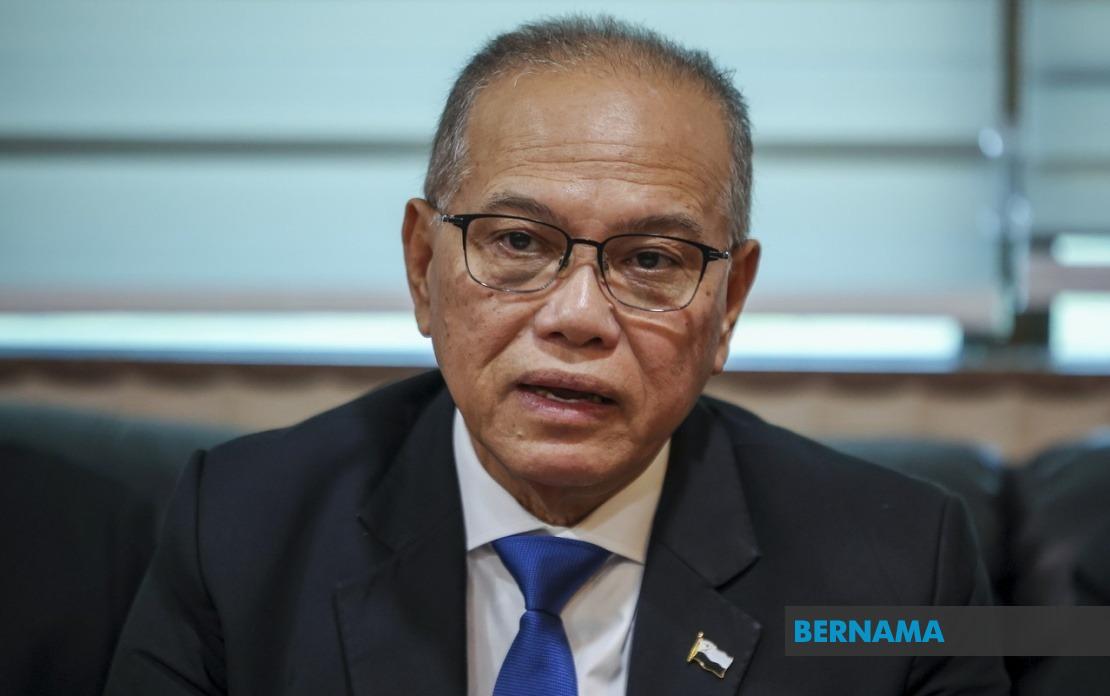
Pahang's financial trajectory appears robust, with Menteri Besar Datuk Seri Wan Rosdy Wan Ismail revealing that the state government has secured RM921.72 million in revenue collection by late August. This substantial sum represents 72 per cent of the state's RM1.279 billion revenue target for 2026, suggesting the administration is well-positioned to meet its fiscal obligations for the year. Speaking during the Pahang State Legislative Assembly sitting at Wisma Sri Pahang, Wan Rosdy presented these figures in response to parliamentary enquiries about the government's economic achievements and developmental progress under the Pahang 1st agenda.
The revenue performance underscores what state leadership characterises as a fundamentally sound fiscal position. Wan Rosdy emphasised that the current trajectory indicates Pahang remains aligned with its budgetary projections, a significant indicator of financial stability in an era when many state governments face mounting pressures from infrastructure demands and service provision costs. The achievement also reflects effective revenue administration and collection mechanisms within the state machinery, demonstrating that the bureaucratic apparatus responsible for gathering taxes and other state income streams continues to function efficiently.
Beyond immediate revenue figures, Pahang's broader economic trajectory reveals encouraging trends that inform long-term development prospects. The state's Gross Domestic Product reached RM71 billion in 2025, representing growth from RM68.8 billion in the preceding year. This expansion, though modest in percentage terms, reflects sustained economic activity across key sectors within the state and suggests diversification beyond traditional resource-dependent industries that historically characterised Pahang's economy.
Investment commitments further demonstrate investor confidence in Pahang's business environment and growth potential. The state government reported RM11.47 billion in committed investments as of August 2026, while realised investments—those actually deployed and generating returns—reached RM1.044 billion. The gap between committed and realised figures is noteworthy, suggesting a pipeline of future economic activity that could strengthen revenue bases in coming years, though the pace of realisation warrants monitoring to ensure projected growth materialises.
The financial stability achieved through these revenue and investment dynamics has enabled the state administration to expand its direct assistance programmes to residents. The Makmur Pahang Initiative, a targeted welfare and development scheme, received cumulative allocations of RM173.93 million across the 2024-2026 period. This progressive approach to allocation reflects confidence in the state's financial outlook, with annual disbursements increasing from RM38.8 million in 2024 through RM50.54 million in 2025 to RM84.59 million in 2026, demonstrating a commitment to scaling up benefits distribution alongside revenue improvements.
The upward trajectory of IM Pahang funding carries implications for households and small enterprises across the state, as such initiatives typically support poverty alleviation, skills training, and micro-enterprise development. For Malaysian observers tracking regional development patterns, Pahang's willingness to commit larger portions of improved revenues to direct welfare initiatives contrasts with some state approaches that prioritise infrastructure or administrative expenditure, potentially offering lessons in translating economic growth into tangible citizen welfare improvements.
Looking forward, state leadership has signalled intentions to further enhance allocations to the Makmur Pahang Initiative through the upcoming state budget deliberations. This forward commitment suggests confidence not merely in achieving current year targets but in projecting sustained or accelerating revenue growth into 2027 and beyond. For Malaysian readers assessing state-level fiscal management, such multi-year commitment frameworks offer insight into administrative confidence and planning horizons.
The confluence of strong revenue collection, expanding GDP, substantial investment commitments, and scaled welfare initiatives presents Pahang as a state navigating economic challenges with apparent competence. In the context of Malaysian federalism, where state governments operate with significant autonomy over certain revenue sources and expenditure priorities, Pahang's performance becomes a comparative benchmark against other states grappling with similar fiscal and developmental pressures.
For investors and businesses considering expansion or relocation within Malaysia, Pahang's financial stability and investment-friendly trajectory warrant consideration. The demonstrated capacity to collect revenues efficiently, grow economic output, attract external investment, and maintain fiscal discipline suggests a governance environment capable of supporting private sector activities through reliable infrastructure funding and policy consistency.
The parliamentary presentation of these figures also reflects how Malaysian state governments increasingly justify their administrative records through quantifiable metrics, a governance trend that enhances public accountability and allows stakeholders to assess performance against stated objectives. Wan Rosdy's detailed accounting of revenue, investment, and welfare spending represents this broader shift toward transparent fiscal communication within Malaysia's evolving political culture.

