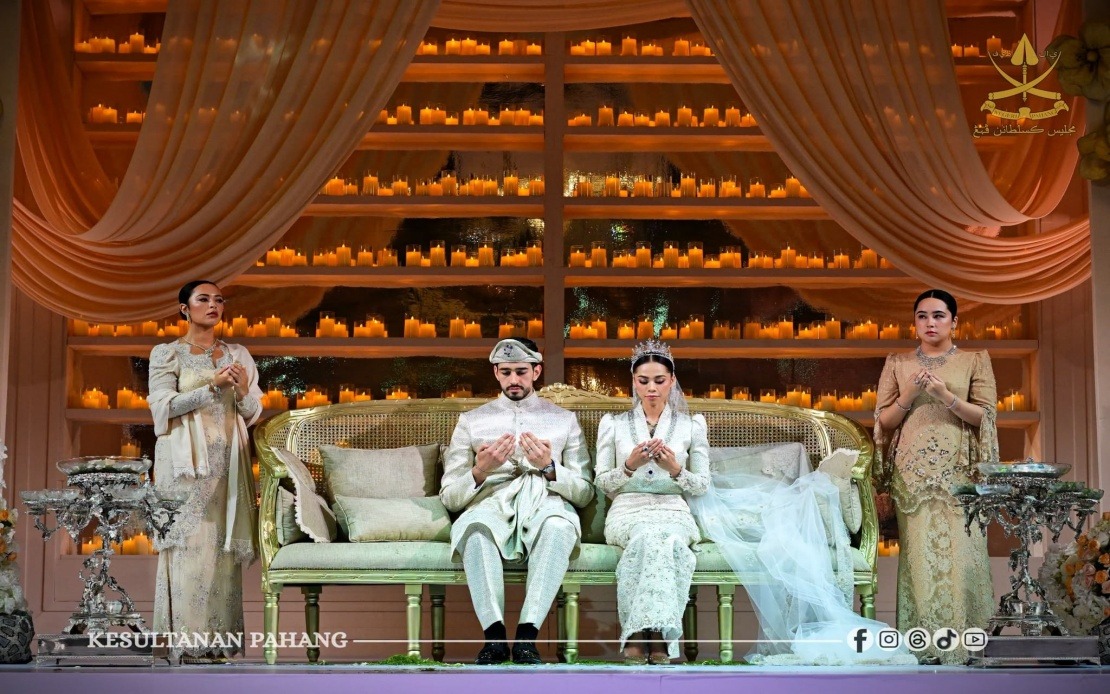
Pahang Sultan Al-Sultan Abdullah Ri'ayatuddin Al-Mustafa Billah Shah presided over the wedding reception of his daughter Tengku Puteri Raja Tengku Puteri Ilyana Alia and her husband Christopher Lionel Froggatt at a Kuala Lumpur hotel, marking a significant occasion in the state's royal calendar and reinforcing the continuing prominence of royal ceremonies in Malaysian public life.
The Sultan's attendance underscored the importance of the union, with the event drawing members of the extended royal household and notable guests from both Malaysia and the Gulf region. Accompanying His Royal Highness were Tengku Hassanal Ibrahim Alam Shah, who serves as Regent of Pahang, along with the Sultan's siblings and other family members. The presence of high-ranking officials including Pahang Menteri Besar Datuk Seri Wan Rosdy Wan Ismail reflected the significance accorded to the celebration within state and federal circles.
The guest list extended beyond domestic political figures to include international representation, with Shaikh Mohammed Hamad Tahnoon Al Nahyan attending as the representative of the President of the United Arab Emirates. This diplomatic presence highlighted the cross-border dimensions of modern Malaysian royal occasions, particularly those involving international marriages. The inclusion of Gulf representation suggests deepening ties between Southeast Asian and Middle Eastern royal families, a pattern that has become increasingly visible across the region.
The ceremony itself followed established protocols of Malay-Muslim royal weddings, with the newlyweds occupying the traditional dais while the 'Istiadat Menyuap Nasi Semangat' ritual was performed. This ceremonial feeding of rice symbolizes the nourishment and unity of the couple, and was conducted by Tengku Puteri Seri Lela Wangsa Tengku Tan Sri Meriam Sultan Ahmad Shah, emphasizing the role of senior female members of the royal family in perpetuating cultural traditions across generations.
Following this initial ceremony, the couple participated in the 'Istiadat Bersanding dan Merenjis', the formal sitting-in-state that represents one of the most visually distinctive elements of Malay wedding traditions. The Sultan himself led the subsequent merenjis, or hand-sprinkling ritual, with participating family members following suit. These ceremonies, performed in hierarchical order according to rank and family position, serve both ceremonial and symbolic purposes, acknowledging the couple's new status while demonstrating the family's cohesion and support.
The Sultan's performance of the 'Istiadat Meletakkan Panca Bicara' added particular significance to the occasion. This ritual, wherein a senior member of the royal family places ceremonial objects or performs symbolic gestures, traditionally conveys blessings and formal recognition of the marriage. By undertaking this ritual personally, Sultan Al-Sultan Abdullah expressed paternal blessing and formally honored the union before his family and assembled guests, reinforcing the religious and cultural dimensions of the celebration.
The spiritual dimension of the event received formal acknowledgment through the recitation of prayers by Pahang Mufti Datuk Dr Asmadi Mohamed Naim, grounding the celebration within Islamic practice and emphasizing that royal weddings in Malaysia remain fundamentally religious occasions despite their ceremonial grandeur. This integration of formal religious observance with dynastic ritual reflects the constitutional position of Malay rulers as custodians of Islam within their respective states.
The marriage itself represents a point of cultural intersection, with a Malaysian princess marrying a British individual. Such unions have become more common within the region's royal families in recent decades, reflecting both the globalized nature of elite networks and changing attitudes toward international marriages among Southeast Asian royalty. The elaborate ceremonial response to this particular wedding suggests that such matches, while increasingly normalized, continue to receive full ceremonial recognition from the state's highest authorities.
The public documentation of these proceedings through the Kesultanan Pahang's official channels demonstrates the continued importance of media engagement in royal communication strategies. By providing detailed accounts of ceremonial observances, the state ensures that citizens understand and appreciate the cultural significance of such occasions, maintaining public interest in royal institutions and their role in preserving Malaysian traditions. This approach has become standard practice across Malaysian state palaces in the social media age.
The attendance of Gulf state representatives reflects broader geopolitical currents within Southeast Asia, where Gulf states have become increasingly significant investors, diplomatic partners, and cultural influencers. Royal weddings serve as informal venues for such relationship-building, allowing political and diplomatic objectives to be advanced within frameworks of family celebration and cultural exchange. For Malaysia, such occasions provide natural opportunities to strengthen ties with important economic and strategic partners in the Middle East.
The involvement of Pahang's government leadership, particularly the Menteri Besar, underscores how state ceremonies function to reinforce political hierarchies and demonstrate the alignment between royal and executive authority. Such collaborative ceremonial occasions serve to legitimize government operations and remind populations of the continuing relevance of traditional institutions in contemporary governance structures. This symbolic dimension remains politically significant despite Malaysia's constitutional monarchy framework.

