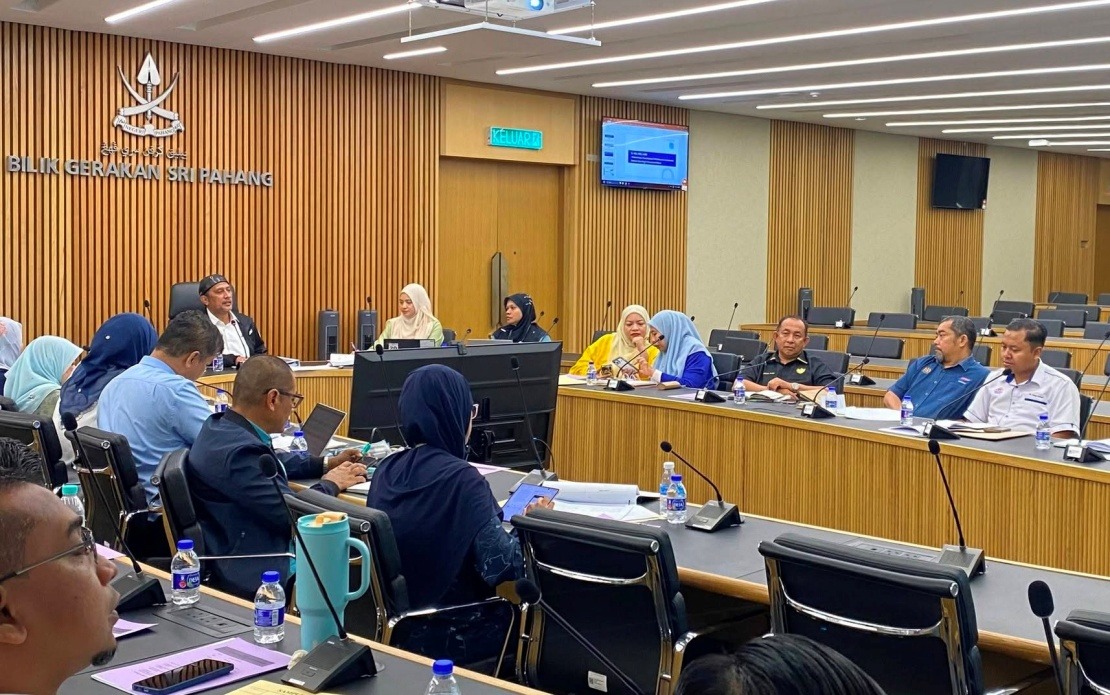
The Pahang state government is stepping up efforts to untangle a knotty land dispute affecting members of the Orang Asli community in Kampung Sungai Cot, located in Maran. State authorities have formally requested the Department of Orang Asli Development (JAKOA), the Pahang Land and Mines Office (PTG), and related land administration bodies to jointly examine the case and propose workable remedies that respect both legal frameworks and community concerns. Datuk Seri Syed Ibrahim Syed Ahmad, who heads the state committee overseeing Islamic affairs, rural development, and Orang Asli matters, emphasized that resolution will proceed carefully within established legal bounds and through dialogue with all stakeholders.
At the heart of the dispute lies a classic administrative overlap that has become increasingly common in Malaysia's land management system. Twelve members of the Orang Asli community submitted written claims to JAKOA asserting their right to cultivate land in the area, presumably based on historical use or ancestral connection. However, on November 4, 2015, the Pahang State Executive Council approved the same parcel for commercial development by a private company, creating conflicting ownership interests. The situation exemplifies the tension that can emerge when competing claims—one rooted in traditional land use and the other in formal administrative approval—collide within Malaysia's dual system of land governance.
Syed Ibrahim moved to contextualize the dispute by contending that claims circulating about the conflict were exaggerated or misrepresented by outside observers. His statement suggests awareness that the case has attracted public attention and possibly criticism of state land management practices. The framing reflects official sensitivity around how the government handles indigenous land rights, a politically charged issue across Southeast Asia where indigenous communities increasingly assert historical claims against development pressures and state land allocations.
Since the initial dispute emerged, JAKOA has conducted preliminary talks with Orang Asli representatives to explore common ground. These discussions have narrowed the claimant pool to six individuals who remain actively pursuing their case. During these consultations, the remaining claimants maintained that the contested area represents their ancestral land. However, relevant authorities found no documentary evidence or official records supporting these ancestral claims, creating an evidentiary impasse that highlights broader challenges in recognizing indigenous land rights without formal written documentation—a systemic problem affecting Orang Asli communities throughout Malaysia.
The Pahang figures on Orang Asli settlements underscore both the scale and complexity of indigenous land governance in the state. The state currently recognizes 264 Orang Asli villages with more than 90,000 registered inhabitants. Among these, 30 villages have achieved formal gazettal status under Section 6 and Section 7 of the Orang Asli Act 1954 or under Section 62 of the National Land Code, conferring stronger legal recognition and protective status. Additionally, the state has approved land ownership transfers to the Orang Asli community across 16 villages through the mechanisms provided in Section 76 of the National Land Code, demonstrating governmental willingness to formalize indigenous land rights in certain circumstances.
The processing pipeline for further recognitions reveals the magnitude of pending claims awaiting resolution. JAKOA is currently processing 75 applications seeking formal gazettement of Orang Asli lands. Of these, 31 have completed the technical assessment phase and now await consideration by the State Executive Council. A significant subset of 44 applications remain stalled due to overlapping land claims similar to the Maran case—situations where multiple parties assert rights to the same territory. Beyond these contested applications, another 143 submissions remain in the earliest stages of processing, confined to the initial measurement and survey phase conducted by JAKOA. This backlog illustrates how the formalization of Orang Asli land rights, though advancing, confronts persistent procedural and legal bottlenecks.
The Kampung Sungai Cot case illuminates fundamental tensions within Malaysia's approach to indigenous land governance. While the Orang Asli Act 1954 and subsequent amendments provide mechanisms to recognize and protect Orang Asli land interests, these instruments depend heavily on documented evidence and formal claims—requirements that disadvantage communities with oral traditions and minimal historical paper records. The reliance on written claims to JAKOA, while necessary for administrative processing, may exclude claimants unable to produce documentation supporting ancestral use, particularly when development approvals have already been granted through separate state mechanisms without consultation with potentially affected indigenous groups.
For Malaysian policymakers and regional observers, the Maran dispute underscores the need for more integrated land administration systems that alert authorities to potential Orang Asli interests before allocating land to commercial enterprises. The 2015 approval that created this conflict was issued five years before the state began seriously addressing the claimants' concerns, suggesting insufficient inter-agency communication between land allocation departments and indigenous affairs offices. Streamlining this coordination could prevent similar overlaps in the future and reduce protracted disputes that strain community relations and complicate development projects.
The consultative approach announced by Syed Ibrahim represents a measured response that acknowledges both the legitimacy of investigating Orang Asli claims and the propriety of honoring prior formal approvals. How state officials balance these considerations will signal whether Pahang views indigenous land rights as negotiable interests subject to broader development priorities or as foundational entitlements deserving presumptive recognition. The resolution of this particular case may establish precedents affecting how the state approaches the 44 other overlapping applications and influences community confidence in future land formalization efforts.
Beyond Pahang, the Kampung Sungai Cot situation reflects patterns visible across Peninsular Malaysia where rapid development and competing land claims increasingly collide. The involvement of multiple federal agencies—JAKOA, PTG, and district land offices—indicates that resolving such disputes requires coordinated action across government silos. This coordination challenge is compounded in states where land administration remains fragmented or where capacity constraints limit the thoroughness of ancestral land verification. As Malaysia continues to formalize Orang Asli land rights through the gazettement process, cases like Maran reveal that legal frameworks alone are insufficient; institutional mechanisms ensuring early identification of indigenous interests and meaningful consultation must accompany rights recognition efforts.

