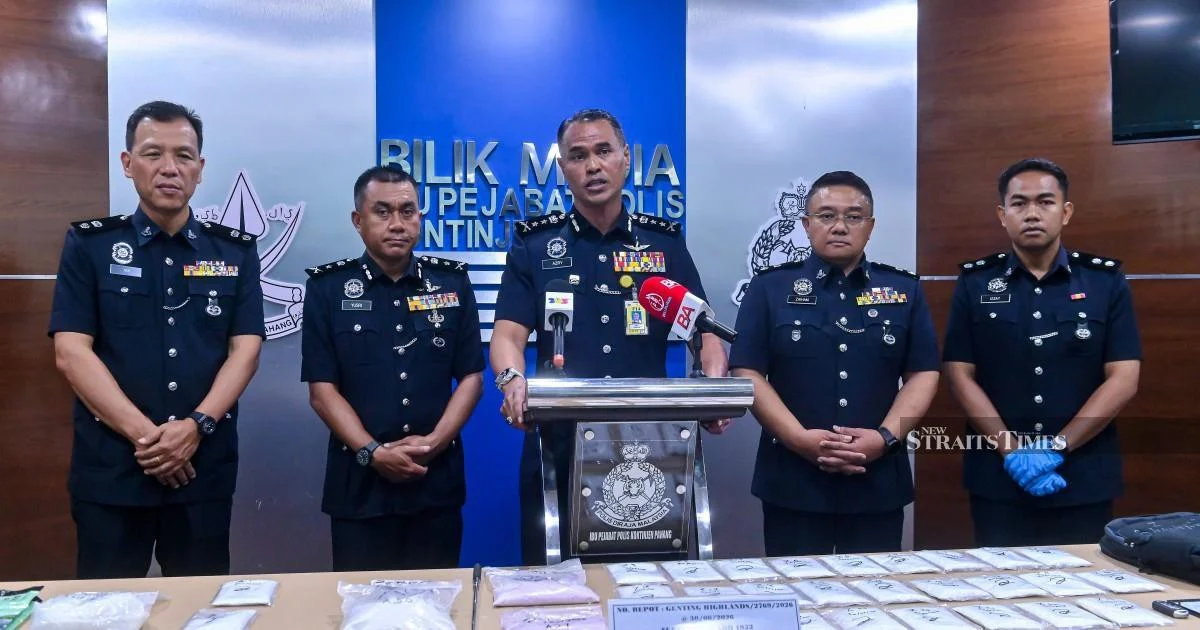
Authorities in Pahang concluded a coordinated three-day anti-drug offensive on Thursday, arresting 333 individuals and confiscating narcotics, currency and motor vehicles valued collectively at over RM500,000. The statewide operation, which blanketed all 11 districts in the peninsular state, strategically targeted locations historically associated with drug trafficking and consumption.
The enforcement action represents a significant show of force by Pahang's law enforcement apparatus in tackling the persistent narcotics problem that continues to plague communities across the state. By concentrating resources across multiple districts simultaneously, police aimed to disrupt supply chains and prevent suspects from fleeing to adjacent areas, a tactic that has proven effective in previous operations nationwide.
The scope of the operation underscores the scale of drug-related challenges in Pahang, where geographical factors including porous borders with neighbouring states and remote rural areas create vulnerabilities for smuggling networks. The involvement of all 11 districts—from coastal areas like Kuantan and Terengganu's border regions through to interior districts—suggests a comprehensive approach to combating distribution networks rather than localised enforcement.
With over RM500,000 in assets seized, the operation demonstrates the financial dimensions of drug trafficking in the state. Such seizures typically include cash derived from illicit sales, inventory intended for distribution, and vehicles used in transportation. The value of confiscated narcotics alone often constitutes the largest portion of such tallies, reflecting the high street value of drugs in Malaysian markets.
For Malaysian readers, the Pahang operation offers insight into how state police forces structure major enforcement activities. Unlike sustained patrols, concentrated three-day operations allow authorities to deploy maximum resources and personnel to predetermined locations, catching both street-level dealers and intermediate operators before they can relocate. This approach has become standard practice in larger anti-drug initiatives across the country.
The 333 arrests encompass individuals at various levels within drug distribution hierarchies. Those detained range from small-time pushers operating in residential areas to suspected mid-level traffickers coordinating supply networks. Police classification of suspects typically determines whether charges proceed under the Dangerous Drugs Act 1952, with penalties ranging from rehabilitation for users to lengthy imprisonment for traffickers depending on quantity and intent to distribute.
Pahang's anti-drug efforts occur against a national backdrop of persistent demand for narcotics and changing trafficking patterns. Synthetic drugs including methamphetamine remain particularly prevalent, alongside heroin and cocaine in certain markets. The diversification of drug types available in Malaysian markets has complicated enforcement strategies, requiring coordination between federal agencies like the National Narcotics Bureau and state police contingents.
The geographic distribution of arrests across all 11 districts suggests that drug trafficking is neither concentrated in urban centres nor confined to rural areas—a pattern consistent with national trends showing drugs penetrating both affluent suburbs and remote communities. This dispersed distribution necessitates equally dispersed enforcement resources, challenging police budgetary allocations and personnel planning throughout Pahang's law enforcement hierarchy.
Successful operations such as this three-day sweep typically generate follow-up investigations. Intelligence gathered during arrests often yields information about larger supply networks, leading to subsequent operations targeting higher-level operators and source locations. The vehicles and equipment seized may be studied for evidence linking them to other criminal activities beyond simple drug possession.
For residents and business communities in Pahang, operations of this magnitude serve dual purposes—demonstrating visible police presence while disrupting local drug markets that fuel related crimes including theft and violence. The psychological impact of sudden intensive enforcement often produces temporary reductions in street-level trafficking, though sustained long-term impact requires ongoing efforts and community cooperation.
The RM500,000 valuation encompasses both retail and wholesale estimates. Street-level seizures inflated at user prices can appear substantial, whilst narcotics valued at wholesale rates provide a more accurate picture of trafficking volume. Police typically announce totals at retail rates to emphasise the operation's community benefit, though both metrics provide relevant information about market disruption.
Moving forward, the Pahang operation demonstrates state police commitment to anti-drug enforcement despite resource constraints facing Malaysian law enforcement generally. Maintaining momentum requires sustained political backing, adequate budget allocation, and community reporting of suspicious drug-related activities. The operation's success ultimately depends on whether the 333 arrests and asset seizures result in prosecutions maintaining conviction rates and deterrent effect within Pahang's criminal underworld.

