Pakatan Harapan is riding a wave of increasing support in Johor's state election campaign, and the coalition's leadership credits this surge directly to a carefully calibrated campaign methodology that treats each constituency as a distinct battleground requiring tailored approaches. The strategic shift represents a departure from traditional broad-brush electioneering, instead emphasizing precision targeting based on real-time assessment of voter sentiment across the state's diverse districts.
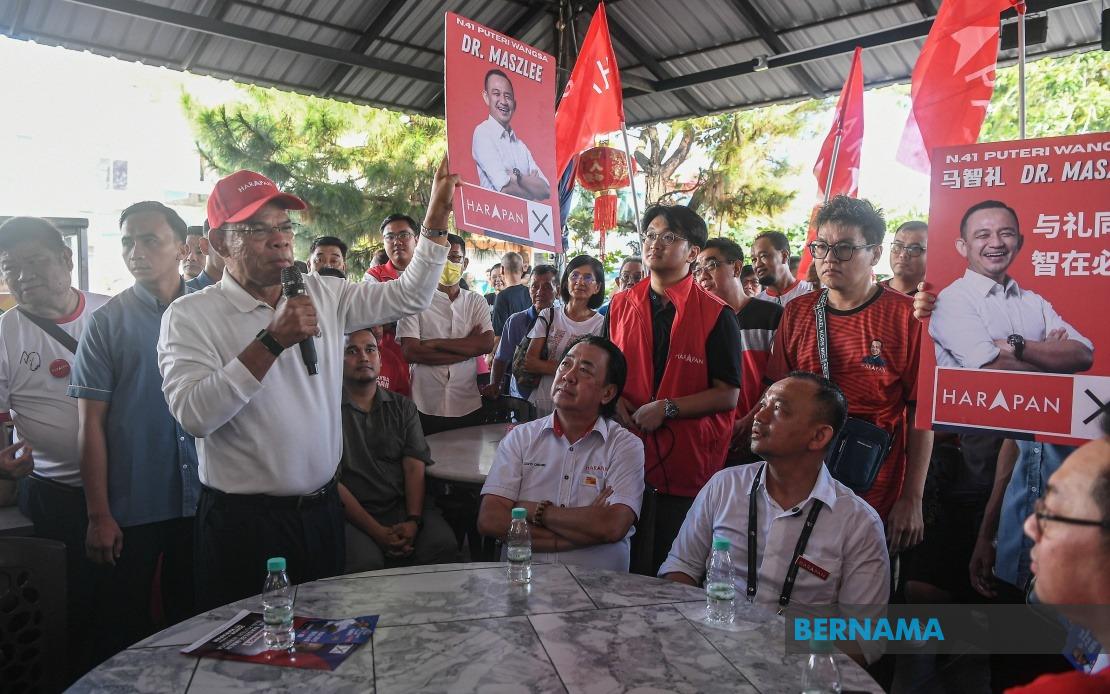
Datak Seri Saifuddin Nasution Ismail, who serves as both PH's secretary-general and PKR's joint election director, outlined the mechanics of this approach during remarks at a community engagement session in Johor Bahru. The coalition has categorized all 56 state seats into priority tiers, allowing campaign resources and messaging to be concentrated where they can achieve maximum impact. This classification system acknowledges that constituencies differ fundamentally in their demographic composition, economic challenges, and political leanings, making a one-size-fits-all campaign strategy counterproductive.
The distinction Saifuddin drew between constituencies like Puteri Wangsa and Johor Lama, or between Larkin and Endau, illustrates how granular PH's analysis has become. Each seat receives its own rating based on current support patterns, enabling the coalition to deploy candidates, senior leaders, and messaging resources with surgical precision. This methodology allows PH to protect vulnerable seats while aggressively contesting areas where it senses opportunity, a luxury that comes from maintaining robust ground intelligence throughout the state.
Beyond organizational strategy, PH's momentum has been substantially aided by tactical errors and positioning missteps from competing political forces. Most notably, PAS's decision to contest only 11 of the 56 seats while actively encouraging supporters to back Barisan Nasional in the remaining constituencies has inadvertently benefited PH. This move crystallizes for voters a clear choice between PH as a unified coalition and a more fractured opposition landscape, potentially consolidating anti-establishment votes around the coalition banner.
Saifuddin contrasted PH's ostensibly transparent approach to seat distribution and manifesto promises with what he characterized as less forthcoming strategies from rivals. The coalition has announced its candidate allocation clearly—20 seats for PKR, 19 for Amanah, and 17 for DAP—and paired this transparency with policy commitments that PH leadership insists are both ambitious and realistic. This emphasis on clarity and implementation-focused promises appears designed to differentiate PH from parties perceived as making grandiose but undeliverable claims.
The entrance of Datuk Dr Mohd Puad Zarkashi, a former UMNO Supreme Council member, into the PH coalition's orbit provides symbolic and substantive value. His recent participation in talks with Prime Minister Datuk Seri Anwar Ibrahim at Felda Ulu Tiram signals that PH retains appeal across traditional political boundaries, potentially unsettling UMNO's base in Johor and suggesting internal fractures within the opposition alliance. Such defections or realignments can shift voter psychology significantly, particularly among uncommitted voters who respect institutional credibility and cross-party respectability.
The choice of Dr Maszlee Malik as PH's candidate for Puteri Wangsa illustrates how the coalition applies its seat-specific strategy to personnel decisions. Saifuddin characterized Maszlee as a qualified and valuable candidate whose qualifications and profile match the particular requirements and voter expectations within that constituency. Rather than deploying a generic slate of party loyalists, PH's approach involves matching candidate credentials to seat-specific circumstances, theoretically increasing electoral appeal within each district.
The 56-seat contest represents a significant battleground in Malaysian politics, carrying implications that extend well beyond Johor's borders. A strong PH showing would validate the coalition's recovery following its 2022 general election setback and demonstrate its capacity to build durable majorities through methodical campaign work rather than relying solely on anti-incumbent sentiment or national political cycles. Conversely, a weak performance would intensify questions about PH's ability to maintain cohesion and capitalize on favorable conditions.
With 172 candidates in total competing across the 56 seats, the election features a substantial array of choices for voters, though the primary contest centers on PH's ability to secure majority control. The coalition's multi-tiered strategy suggests confidence in its ground organization and data capabilities, presuming that its classifications of constituencies correlate accurately with actual voter behavior when ballots are cast.
For Malaysian observers and regional analysts watching Johor's political trajectory, the election serves as a significant test of campaign methodologies and political strategy in an increasingly competitive electoral environment. Should PH's targeted approach deliver results, it may signal a broader shift toward data-driven, constituency-specific campaigning across Malaysian politics. Polling day is set for July 11, with early voting scheduled for July 7, providing the clearest answer to whether PH's strategy translates voter sentiment into seats.

