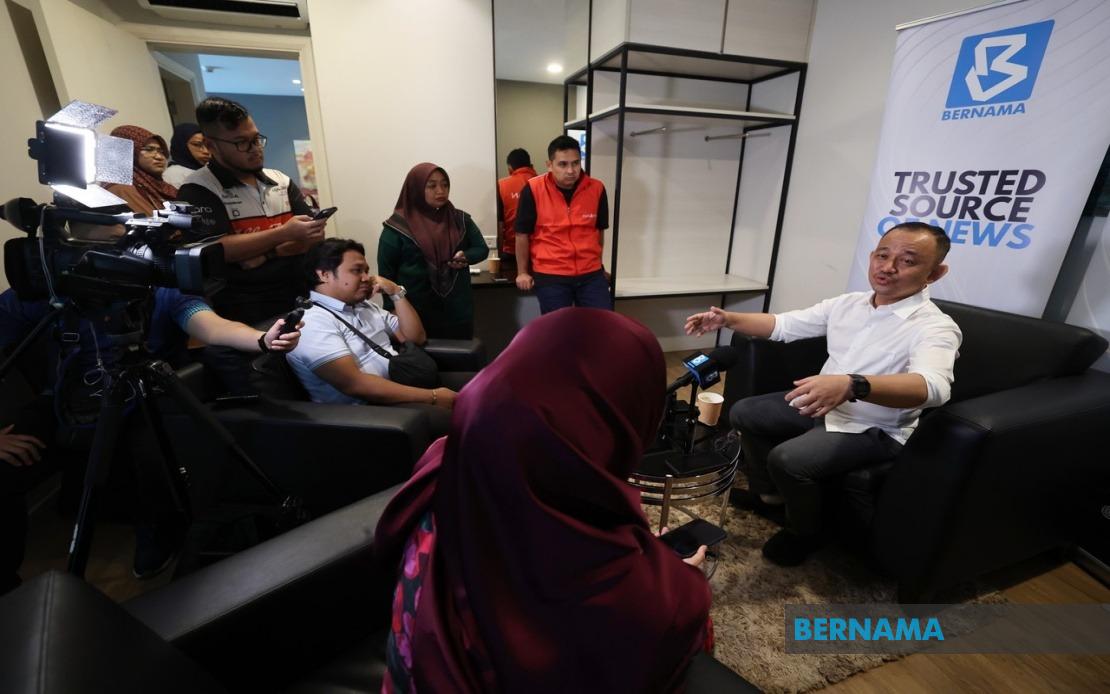
Pakatan Harapan has made clear its deference to constitutional protocol regarding the appointment of Johor's chief minister, declaring that any such decision would rest entirely with the Sultan of Johor should the coalition succeed in the forthcoming state election. The statement came from Dr Maszlee Malik, the coalition's candidate for the Puteri Wangsa state seat, during an interview in Johor Bahru on June 29. His remarks effectively distance PH from ongoing social media speculation that has linked several party figures as potential candidates for the position, underscoring instead the coalition's emphasis on collective responsibility rather than individual prominence.
The timing of PH's statement reflects the intensifying pre-election environment ahead of polling day on July 11, with early voting scheduled for July 7. By explicitly acknowledging the Sultan's constitutional authority in this matter, the coalition appears intent on forestalling any narrative that might suggest internal jockeying for top positions could distract from its campaign messaging. The move also demonstrates a degree of political maturity—recognising that in Malaysia's constitutional monarchy framework, such positions remain firmly within the prerogative of the respective state ruler, not the winning political coalition.
Maszlee's emphasis on the coalition's unwillingness to engage in premature discussions about the Menteri Besar post reveals a deliberate strategic choice. Rather than allowing speculation to dominate the final weeks of campaigning, PH is attempting to redirect public attention toward policy positions and candidate quality across the full slate of 56 seats contested. This approach suggests the coalition believes its electoral fortunes depend more on demonstrating a credible governing alternative through its candidate pool than on any single leadership personality, a positioning that may resonate with voters seeking stable, representative governance.
The acknowledgment of the Palace's constitutional role is particularly significant in the Johor context, where the sultanate maintains considerable institutional weight and public respect. By framing the Menteri Besar appointment as a matter of state constitutional practice rather than coalition prerogative, PH is both showing institutional respect and potentially avoiding any suggestion that it might attempt to circumvent traditional power structures should it win. This posture could be particularly important in securing the confidence of the Johor electorate, where deference to the monarchy remains a deeply embedded value.
Understanding the Malaysian constitutional framework illuminates why such statements matter. In each state, the ruler retains the formal authority to appoint the chief minister, typically selecting someone who can command the confidence of a majority in the state legislative assembly. While conventional practice has typically seen the ruling coalition's leader assume this role, the constitutional right remains with the monarch. Maszlee's emphasis on this point reinforces that PH, should it win, would not presume to dictate the Sultan's choice but would instead present credible alternatives from its candidate roster.
The coalition's team-oriented messaging appears calculated to counter any narrative of internal division or leadership rivalry. By describing its 56 candidates as its 'Avengers'—using contemporary popular culture reference points—PH attempts to project unity and collective strength. This language also serves a practical political purpose, suggesting that power and responsibility would be distributed across multiple capable figures rather than concentrated in a single individual, potentially appealing to voters concerned about personality-driven politics or factional disputes within government.
For Malaysian observers, PH's approach reflects lessons learned from previous electoral cycles and coalition governance. The coalition has faced criticism in the past over perceptions of internal power struggles and the outsized influence of particular personalities on decision-making. By foregrounding institutional respect for the Sultan's role and emphasizing a broad-based candidate team, Maszlee and PH signal an attempt to project greater institutional discipline and constitutional propriety than has sometimes characterised Malaysian political discourse.
The statement also carries implications for how the coalition might govern should it win the Johor election. An emphasis on collective decision-making and respect for constitutional institutions could set a tone for governance that prioritizes institutional stability and rule of law—concerns that have featured prominently in Malaysian political debates in recent years. This positioning may hold particular appeal for urban and suburban voters who have expressed frustration with personality-driven politics and governance instability.
Social media speculation about potential Menteri Besar candidates has evidently reached sufficient intensity that PH felt compelled to address it directly. This suggests the coalition views such rumours as potentially counterproductive to its campaign narrative, capable of shifting focus from substantive policy matters and candidate quality assessments to internal power calculations. By definitively stating that the coalition has not engaged in such discussions, Maszlee attempts to reset the conversation and redirect voter attention toward PH's policy platform and governance proposals.
The pre-election period typically intensifies speculation about key appointments, particularly in closely contested elections. Johor represents a crucial battleground for Malaysian politics, having historically been a BN stronghold but an increasingly competitive state in recent cycles. PH's willingness to publicly defer the Menteri Besar decision to the Sultan may be a calculated effort to remove one potential source of voter concern—that a PH-led state government might prioritize internal coalition politics over serving the broader public interest or respecting constitutional institutions.
For regional observers, PH's approach offers insights into how major coalitions in Southeast Asia navigate the intersection of democratic competition and constitutional monarchy. By framing the Menteri Besar question as a matter of institutional respect rather than political entitlement, the coalition acknowledges that electoral victory, while significant, does not grant unlimited authority to determine state leadership. This understanding reflects the constitutional realities that shape governance in Malaysia's federal system, where state rulers retain significant formal powers even in parliamentary democracies.

