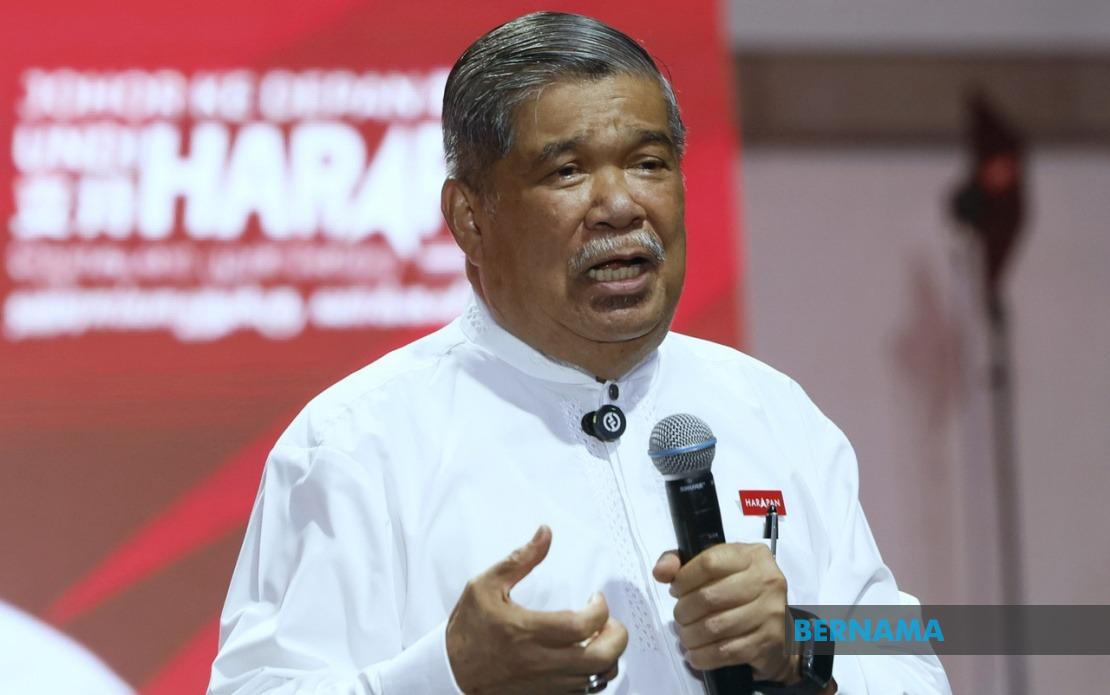
Pakatan Harapan has brushed aside a strategic move by PAS to direct its supporters toward Barisan Nasional candidates in seats the Islamic party is not contesting during the Johor state election. The opposition coalition's leadership indicated the directive would not derail its campaigning efforts or unity, with Amanah president Datuk Seri Mohamad Sabu telling reporters that PH remained undeterred and would proceed with its planned campaign activities. Speaking after a ceramah in Permas Jaya, Mohamad emphasised that provocative tactics deployed by political opponents would not distract the coalition from its core messaging to voters across the state.
Modern Malaysian politics continues to be shaped by complex coalition dynamics and shifting allegiances. PAS's decision to recommend that its voters support BN candidates in seats where the party is not fielding its own contenders represents a pragmatic calculation aimed at consolidating anti-PH support. However, PH's response underscores the coalition's confidence in its own organisational machinery and voter base, particularly in urban and semi-urban areas where multiracial constituencies tend to favour the opposition alliance. The manoeuvre by PAS also reflects ongoing tensions within Malaysia's political landscape, where parties frequently adjust their electoral strategies based on perceived threats and opportunities.
Modamad Sabu, who concurrently serves as Minister of Agriculture and Food Security, positioned PH's fundamental strength as residing in its capacity to unite voters across racial and religious boundaries. He argued this inclusive political model provides the bedrock for both governmental stability and economic prosperity, contrasting implicitly with approaches that emphasise communal interests. His remarks suggest PH intends to frame the election around shared national development priorities rather than allow the campaign to devolve into identity-based competition. This framing represents a deliberate strategic choice, given Malaysia's complex multiethnic composition and recent electoral volatility that has punished parties perceived as overly divisive.
The Amanah president called upon Johor voters to assess candidates on the basis of competence, service record, and commitment to justice rather than succumbing to racial or religious appeals. By elevating these selection criteria, PH seeks to shift electoral discourse toward substantive governance questions. Mohamad further urged voters to grant PH the mandate needed to ensure administrative coherence between state and federal governments. Such alignment, he contended, would prove instrumental in executing transformative projects across Johor, including comprehensive public transport modernisation, enhancements to facilities at international border crossings, and strategies to attract foreign and domestic investment.
The significance of coordinated governance between Putrajaya and state-level administrations cannot be overstated in Malaysia's federalised system. When the ruling coalition controls both levels simultaneously, implementation of integrated development schemes typically accelerates, reducing bureaucratic friction and enabling more efficient resource allocation. Johor, as Malaysia's second-largest economy by state gross domestic product and a crucial gateway for trade with Singapore, stands to benefit materially from such administrative synchronisation. The state's strategic importance as a logistics hub and manufacturing centre means that investment-attracting initiatives and infrastructure improvements carry consequences well beyond Johor itself, rippling through regional supply chains and employment markets.
DAP strategic director Liew Chin Tong, also serving as Deputy Finance Minister, introduced a different analytical angle by highlighting youth voter participation as potentially decisive in determining the election's outcome. Drawing from the 2022 Johor state election experience, Liew observed that depressed turnout had advantaged Barisan Nasional, a phenomenon he attributed partly to inability of Johor voters employed in Singapore to return home during COVID-19 travel restrictions. That election saw BN capture significant ground despite broader national antipathy toward the coalition, suggesting that voter mobilisation patterns significantly influence results in this state. With international travel restrictions now lifted, the 2024 campaign presumably offers different mobility conditions, potentially altering turnout dynamics that previously favoured the incumbent.
Liew advocated for the campaign's second phase to transcend purely partisan rivalry, instead emphasising policy proposals that tangibly improve living standards. He identified job creation at competitive salary levels as a paramount concern, particularly given the persistent pattern of young Johoreans seeking employment across the causeway in Singapore rather than remaining in their home state. This labour exodus represents both an economic loss and a political liability, as voters frustrated by limited local opportunities may respond negatively to incumbent administrations. Complementing employment generation, Liew highlighted public transportation networks, flood management and drainage system maintenance, and preparations for demographic ageing alongside childcare facility development as issues requiring state government priority.
These policy concerns reflect genuine challenges confronting Johor's residents and reveal where PH believes the incumbent BN administration has underperformed. Public transport inadequacy, particularly in suburban and exurban areas, constrains economic mobility and quality of life for working-class voters. Drainage and flood management issues have plagued the state periodically, with infrastructure deficiencies blamed for seasonal inundation. Demographic projections indicating an ageing population raise questions about healthcare, social support, and economic productivity that governments must address proactively. By linking federal-state cooperation to concrete delivery on these fronts, Liew positioned PH as focused on pragmatic governance rather than abstract political principles.
Liew further underscored the necessity of close coordination between federal and state administrations in accelerating development initiatives, explicitly citing the Johor-Singapore Special Economic Zone as exemplary of collaborative infrastructure requiring seamless governance. The JS-SEZ represents an economically significant binational project designed to unlock substantial job creation through coordinated investment and regulatory alignment. Such undertakings demand that federal and state authorities function in concert, pooling resources and aligning policies toward shared objectives. When political tensions divide these administrative levels, project momentum typically suffers. PH's argument that controlling both levels simultaneously would facilitate implementation resonates particularly strongly in contexts involving cross-border or regionally integrated economic schemes.
The campaign dynamics in Johor carry implications extending beyond the state itself. As Malaysia's electoral heartland and a historically important swing region, Johor's results provide indicative signals regarding national political currents. A decisive PH victory would suggest momentum for the federal government and potentially forecast favourable conditions for its future electoral prospects. Conversely, a strong BN showing would indicate residual strength in the incumbent coalition and complications for PH's national consolidation efforts. The state election thus functions partly as a mid-term referendum on federal governance quality and partly as a barometer of prevailing voter sentiment across Malaysia's political spectrum.
Both PH and BN are fielding candidates across all 56 seats in the contest, with polling scheduled for July 11 and early voting permitted on July 7. The simultaneous full-slate competition indicates both coalitions view the contest as strategically consequential and worthy of maximum resource deployment. Early voting provisions acknowledge the reality that many Johor voters, particularly those working in Singapore or temporarily absent for employment elsewhere, may otherwise be unable to participate. The logistics of administering an election in a state with significant cross-border worker populations adds practical complexity to vote aggregation and outcome prediction. Historical precedent from the 2022 election demonstrates that such logistical constraints can meaningfully affect participation rates and electoral results, making turnout management a crucial variable in this campaign.

