Pakatan Harapan has unveiled a more inclusive policy platform for the upcoming Negeri Sembilan state election, marking a significant shift in the coalition's approach to social welfare by extending benefits to the M40 middle-income group alongside traditional support for the poorest households. The announcement comes as the coalition positions itself for the August 1 polls, seeking to broaden its appeal across income strata in a state it has governed since 2018.
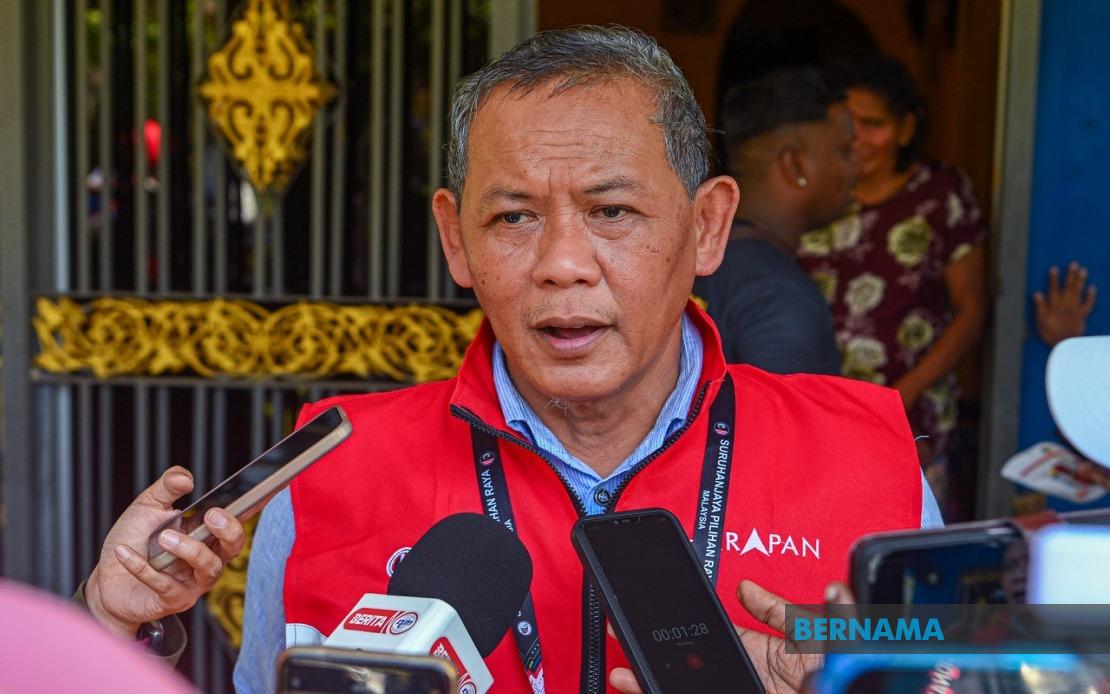
Datak Seri Aminuddin Harun, who chairs the coalition in Negeri Sembilan and serves as Menteri Besar, articulated this strategic expansion while addressing community members in Port Dickson. The manifesto, branded "Negeri Sembilan Kekal Harapan" (Negeri Sembilan Stays with Harapan), encompasses ten primary commitments designed to enhance living standards across a wider demographic spectrum. Aminuddin emphasised that this recalibration reflects a maturing understanding of the state's economic composition, where middle-income earners represent a substantial voting bloc whose concerns have historically received less targeted policy attention.
The pivot toward encompassing M40 households represents a tactical acknowledgement that in Malaysia's increasingly competitive electoral landscape, political coalitions cannot rely solely on the support of the bottom forty percent of income earners. By explicitly committing to expand educational access and welfare programmes to benefit middle-income families, Pakatan Harapan appears designed to prevent defection to competing parties and to cement support among voters who occupy the precarious middle ground—earning above absolute poverty thresholds yet struggling with rising living costs, childcare expenses, and healthcare burdens. This approach resonates with regional economic anxieties that have become pronounced across Southeast Asia.
Aminuddin underscored that the coalition's track record of implementing promised initiatives rather than merely proposing them during campaigns distinguishes Pakatan Harapan from rivals. The Menteri Besar characterised the difference between formulating manifestos and executing them as substantive, arguing that actual governance delivery demands considerably more effort and political will than assembling attractive campaign documents. This framing attempts to position the coalition as pragmatically competent, contrasting its approach with what Aminuddin implied might be empty electioneering by opposing parties.
The timing of this expanded manifesto announcement reflects the intense competition in the Negeri Sembilan contest. The state assembly was dissolved on June 5, triggering a campaign cycle that will culminate in the August 1 election, with early voting scheduled for July 28. This condensed timeline means campaigns have remained relatively compact, though the stakes remain substantial given that Negeri Sembilan represents a strategic prize within Malaysia's broader political landscape—a state where Pakatan Harapan retained power in 2023 but now faces renewed challenges from Barisan Nasional and Parti Pribumi Bersatu Malaysia.
Aminuddin himself confronts a competitive three-way battle in the Linggi state constituency, where he defends his seat against incumbent Datuk Mohd Faizal Ramli of Barisan Nasional and Zamri Md Said, 54, of Bersatu. This personal electoral pressure may have informed the coalition's strategic decision to broaden its manifestos—a signal that Pakatan Harapan recognises the fragmentation of the voter base and the necessity of appealing across traditional party lines. The Linggi contest encapsulates broader state dynamics where no single coalition commands overwhelming support.
The strategic emphasis on expanded welfare and educational access reflects broader anxieties about social mobility and economic security that increasingly preoccupy Malaysian voters across income brackets. The M40 group—defined as households earning between roughly RM4,850 and RM10,970 monthly—faces particular vulnerabilities in the current economic environment. These families often lack the social safety nets available to the B40 poorest households, yet simultaneously struggle to accumulate capital or invest in children's education without sacrificing immediate consumption. By explicitly targeting this constituency, Pakatan Harapan addresses a demographic whose electoral behaviour has grown increasingly volatile.
Aminuddin's remarks also carried an implicit appeal for electoral restraint and civility. The Menteri Besar urged all contesting parties to conduct mature campaigns while avoiding inflammatory rhetoric or issues that might fracture Negeri Sembilan's delicate communal harmony. This appeal, delivered following a community engagement with Indian residents in Linggi, suggests awareness that divisive campaigning could damage social cohesion in a state with significant ethnic and religious diversity. The restraint plea also potentially positions Pakatan Harapan as the responsible custodian of communal peace, contrasting its approach with perceptions of more antagonistic campaigning tactics.
The manifesto announcement demonstrates how electoral competition within Malaysian federalism forces coalitions to refine their policy propositions and target their messaging with increasing precision. Rather than deploying generic appeals to all voters, Pakatan Harapan has explicitly segmented its promises according to income distribution, signalling that the coalition understands modern voter behaviour increasingly revolves around specific material interests rather than abstract ideological commitments. This data-driven approach to manifestos reflects professionalisation of campaign management across Malaysian politics.
For voters evaluating competing claims during the campaign period, the manifesto expansion raises questions about implementation capacity and funding mechanisms. How will an expanded welfare and education programme be financed? Will new initiatives represent genuine resource increases or reallocation from existing programmes? These queries will likely dominate campaign discourse as Barisan Nasional and Bersatu scrutinise Pakatan Harapan's fiscal assumptions and delivery promises. The coalition's five-year governance record since 2018 will provide the primary evidence base against which voters assess credibility.
The Negeri Sembilan state election ultimately represents a significant test of voter sentiment not merely toward individual parties but toward competing visions of how Malaysian politics should balance welfare universalism against targeted assistance, and how electoral promises translate into tangible governance outcomes. Aminuddin's repositioning of the Pakatan Harapan platform toward the M40 middle-income constituency reflects recognition that sustainable political coalitions require broader social consensus and cannot rely indefinitely on narrow electoral coalitions.

