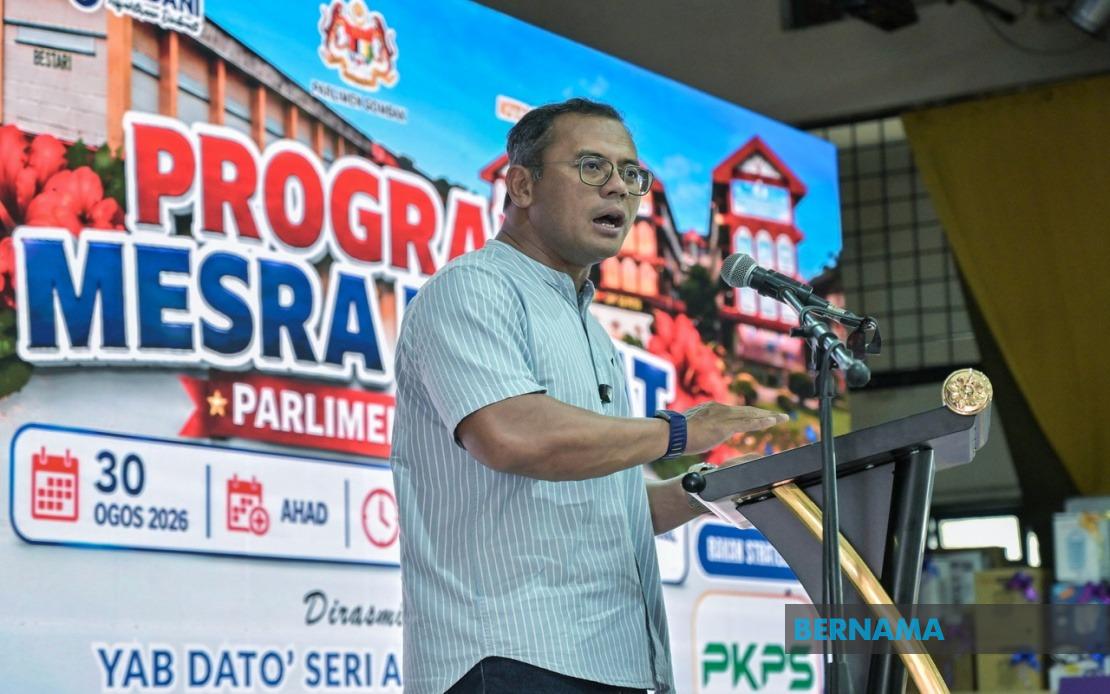
Pakatan Harapan has adopted a pragmatic stance towards the forthcoming Melaka state election, signalling both willingness to explore cooperation with Barisan Nasional and readiness to pursue an independent campaign should negotiations prove unfruitful. The coalition's election director Datuk Seri Amirudin Shari, speaking in Gombak on August 30, underscored the party's flexibility in approach, emphasizing that final strategic decisions remain pending as discussions continue at leadership levels. His comments reflect a carefully calibrated political posture that preserves maximum maneuverability for the coalition while managing expectations among party members and supporters eager for clarity on electoral arrangements.
The Selangor Menteri Besar stressed that the current political environment demands adaptive thinking from all parties involved. Rather than committing to a predetermined path, PH leadership intends to exhaust all viable options before settling on a contest strategy. Amirudin's characterization of Malaysia's political landscape as "dynamic and flexible" acknowledges the unpredictability inherent in coalition politics, where multiple parties must align interests and compromise on seat allocations and campaign resources. This framing also implicitly recognizes that no single approach guarantees electoral success, particularly in state-level contests where local factors and community-specific concerns often override national political narratives.
The backdrop to these remarks involves earlier statements from Melaka PKR's acting state leadership council chairman Adam Adli Abdul Halim, who had suggested the possibility of PH contesting without BN partnership. Such pronouncements from ground-level leadership typically reflect rank-and-file sentiment within party structures, where members may harbour reservations about sharing seats or campaign prominence with rival coalitions. By acknowledging these sentiments while maintaining strategic flexibility at the top, PH manages internal party dynamics whilst keeping bilateral channels with BN open. This balancing act is crucial for coalition cohesion, as premature declarations of going solo could alienate leaders seeking BN cooperation, while excessive deference to BN demands might frustrate PKR and DAP constituencies.
The significance of the Melaka election extends beyond immediate electoral arithmetic. As a state where BN historically retained substantial influence, a strong showing by PH—whether through coalition partnership or independent effort—would signal shifting voter preferences in a crucial swing state. Melaka's strategic position in national politics means that outcomes there resonate across the broader political landscape, influencing perceptions of coalition viability and individual party strength heading into potential general election cycles. For PH, demonstrating competitive capability regardless of electoral format strengthens its negotiating position not only in Melaka but across other state contests and future national politics.
The coalition's openness to multiple scenarios also reflects lessons learned from previous electoral experiences. PH has experimented with various partnership models—from working with Warisan in Sabah to contesting alone in certain constituencies—and has gained nuanced understanding of when cooperation enhances electoral prospects versus when it constrains them. In Melaka's context, party strategists must weigh whether BN partnership provides sufficient seat gains and resource advantages to justify sharing victory spoils, or whether independent contestation better mobilizes their base despite reduced overall seat prospects. This calculus differs sharply from peninsular politics in states like Selangor or Penang, where PH's dominance makes partnership negotiations primarily about accommodating smaller allies.
Amirudin's statement that "there is still time" suggests negotiations remain active but unhurried, allowing space for various scenarios to be explored. Political parties typically maintain parallel planning tracks during such periods, preparing independent campaign infrastructure while simultaneously negotiating partnership terms with potential allies. This dual preparation prevents either party from being caught unprepared should negotiations suddenly collapse or conclude differently than anticipated. For PH's internal organization, maintaining readiness to contest alone also demonstrates to party members that leadership is not passively dependent on BN's cooperation but retains agency in determining electoral strategies.
The broader implication of PH's stance concerns the evolving nature of Malaysian coalition politics. The apparent normalization of contingency planning and public acknowledgement of multiple electoral pathways contrasts with earlier periods when coalition arrangements were largely settled behind closed doors before public announcement. Contemporary Malaysian politics increasingly involves transparent strategic positioning, with parties publicly signalling flexibility while negotiating substantive deals in private forums. This transparency can reduce post-election surprises and recriminations but also creates opportunities for negotiation breakdowns as public statements constrain leadership flexibility.
For Melaka specifically, PH's willingness to contest independently—backed by its organizational presence in the state through PKR, DAP, and Amanah structures—represents a credible alternative to BN partnership. The coalition has demonstrated competitive capacity in recent state elections, particularly in urban and semi-urban constituencies where its reform-oriented messaging resonates with younger voters and those dissatisfied with long-term incumbent governance. Whether this competitive capacity extends sufficiently across Melaka's diverse constituencies to challenge BN without partnership support remains an open strategic question that party analysts are likely evaluating through detailed constituency assessments.
The political timeline also factors significantly into these calculations. With the August 30 statement indicating that decisions remained pending, PH allowed itself sufficient runway for negotiations whilst maintaining pressure on BN to propose acceptable partnership terms. Extended negotiation periods can work to PH's advantage by allowing time for constituency-level organising and messaging development, whereas rushed decisions risk inadequate preparation. Conversely, delayed decisions create uncertainty that may dampen grassroots enthusiasm and permit opposition parties to build their own campaign momentum.
Ultimately, Amirudin's carefully worded comments reflect the complex political mathematics underlying modern Malaysian electoral contests. PH's position acknowledges that elections represent the party's core business, requiring willingness to compete through whatever format offers optimal prospects whilst maintaining flexibility as circumstances evolve. The coalition's open negotiation stance with BN, coupled with credible preparation for solo contestation, represents a sophisticated political approach that maximizes leverage in partnership talks whilst ensuring organizational readiness regardless of outcomes. For Malaysian voters and observers, this flexibility signals that the upcoming Melaka election will be determined through genuine competitive dynamics rather than pre-arranged political accommodation, potentially delivering outcomes that more authentically reflect voter preferences across the state's diverse communities.

