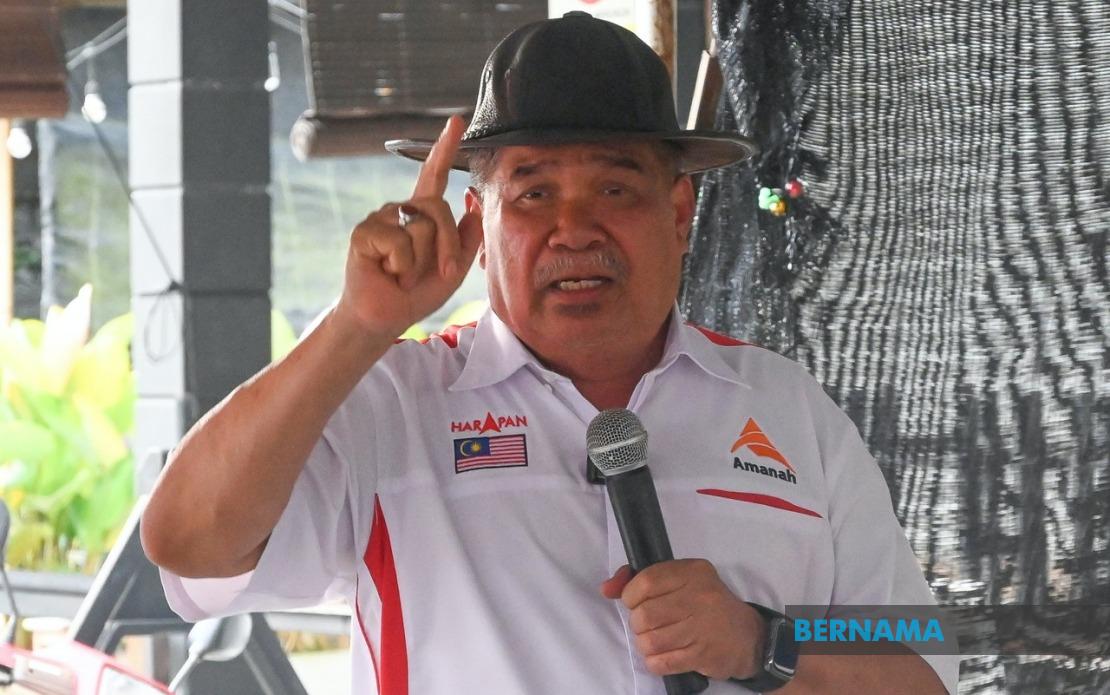
Pakatan Harapan and its constituent party Parti Amanah Negara have reaffirmed their commitment to placing the welfare of ordinary Malaysians at the centre of their political agenda, according to a statement from Amanah President Datuk Seri Mohamad Sabu. The message comes amid growing political manoeuvring in the Malaysian political landscape, where rival coalitions have been strengthening their positions ahead of potential electoral contests. Mohamad Sabu, who also serves as Minister of Agriculture and Food Security, argued that the coalition should respond to these developments with measured confidence rather than reactive anxiety.
The growing cooperation between Barisan Nasional and Perikatan Nasional has prompted speculation about the sustainability of the current government. However, Mohamad Sabu contended that Pakatan Harapan should neither ignore these developments nor allow them to distract from core governance responsibilities. Instead, he called for the coalition to demonstrate political maturity by maintaining focus on delivering tangible benefits to communities across the country. This positioning reflects an attempt by Pakatan Harapan leadership to shift the narrative from defensive posturing to demonstrating competent administration and delivery of policy outcomes.
Central to Mohamad Sabu's remarks is an assertion that Prime Minister Datuk Seri Anwar Ibrahim's approach to defending Malay-Muslim interests differs fundamentally from opposition rhetoric. He emphasised that the government's defence of these communities should operate through substantive policy initiatives that produce genuine material improvements, rather than through fear-mongering or divisive narratives. This distinction carries significant weight in Malaysian politics, where questions about constitutional protections for Bumiputeras, Islam's position as the federation religion, and Malay language preservation remain perpetually sensitive.
Mohamad Sabu specifically highlighted the government's commitment to upholding constitutional provisions regarding Bumiputera rights, the institution of the Malay Rulers, Islam's constitutional status, and the Malay language. These commitments remain foundational to Malaysian political consensus, transcending partisan divisions. By framing these defence mechanisms through policy rather than sentiment, Pakatan Harapan appears to be attempting a recalibration of how it addresses concerns within the Malay-Muslim demographic, a crucial voting bloc whose political loyalties have shifted considerably over recent electoral cycles.
A particularly significant element of Mohamad Sabu's statement involves his critique of political narratives that characterise the Malay community as perpetually vulnerable or under existential threat. He argued that constantly reinforcing messages of weakness ultimately undermines community confidence and resilience. Instead, he advocated for government messaging that emphasises knowledge, dignity, integrity, self-reliance, and competitive capability among Malays. This conceptual shift represents a departure from opposition framing that often relies on threat narratives to mobilise constituencies.
The Amanah president contended that a genuinely strong Malay community does not emerge from fear-based politics but rather from policies and national discourse that build capabilities, foster economic dynamism, and encourage technological mastery. He envisioned a Malay generation characterised by business acumen, technological sophistication, and international competitiveness—qualities he suggested are increasingly evident among younger Malaysians. This aspirational framing attempts to reposition Pakatan Harapan as the coalition offering a forward-looking vision rather than defensive posturing.
Mohamad Sabu's observations about the evolving maturity of the Malay electorate carry implications for understanding contemporary Malaysian politics. He suggested that voters are becoming less susceptible to pure sentiment-driven campaigning and increasingly discerning about substantive governance performance. If this assessment reflects reality, it would represent a significant shift from earlier periods when emotional and identity-based appeals consistently dominated campaign messaging. This potential political evolution could reshape how rival coalitions craft their strategic approaches to winning support among demographic groups.
The coalition's determination to resist entrapment in sentiment-based political games represents a strategic choice to compete on grounds of administrative competence, policy delivery, and institutional stability. Pakatan Harapan's experience in government since 2018 has provided opportunities to demonstrate governance capacity, though its record remains contested depending on political perspective. By emphasising policy-driven approaches to constitutional protections rather than rhetorical mobilisation, the coalition appears to be staking its future prospects on voter appreciation for pragmatic administration.
Mohamad Sabu's emphasis on building self-reliance and competitive capability among Malays also connects to broader economic policy questions facing Malaysia. Concerns about Bumiputera business participation rates, technology sector engagement, and global competitiveness have prompted ongoing policy debates. If Pakatan Harapan can credibly link its continued governance to measurable improvements in these economic indicators, the messaging about strength through capability rather than protection through sentiment becomes more persuasive to pragmatically oriented voters.
The broader context involves Malaysian politics at a potential inflection point where voter preferences may be shifting from identity-based and threat-driven appeals toward performance-based evaluation of governing coalitions. Pakatan Harapan's messaging strategy, as articulated through Mohamad Sabu, suggests the coalition has recognised this potential shift and is repositioning accordingly. Whether this strategic recalibration successfully resonates with voters—particularly within the crucial Malay-Muslim demographic—will significantly influence Malaysia's political trajectory in coming years.

