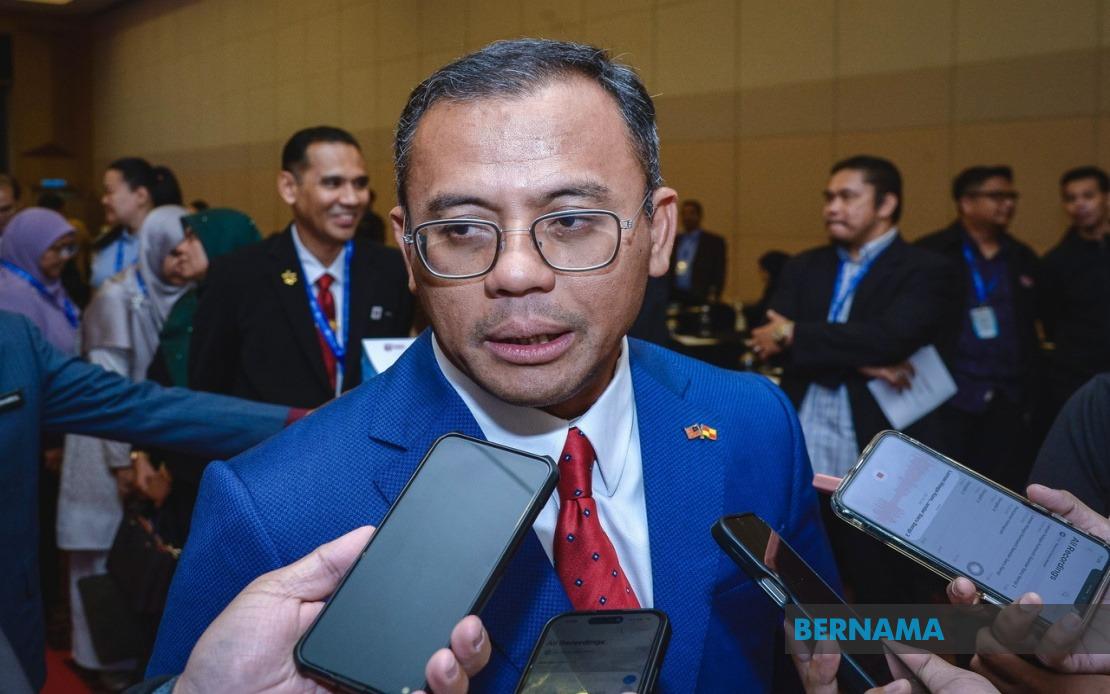
Pakatan Harapan is prepared to explore political partnerships with other parties or coalitions, provided such arrangements serve the dual purposes of maintaining governmental stability and advancing the public interest. This stance was articulated by Datuk Seri Amirudin Shari, a senior figure in PH's Presidential Council and vice-president of PKR, who underscored that the coalition remains fundamentally flexible regarding potential collaborations across the political spectrum.
The remarks from the Selangor Menteri Besar come at a moment when Malaysian politics faces mounting speculation about realignment ahead of critical electoral contests. Rather than restricting cooperation to any particular party or grouping, Amirudin framed PH's approach as principle-driven, suggesting that ideological compatibility around governance priorities would determine whether discussions proceed. This language reflects an acknowledgment that the traditional binary political landscape may no longer suffice for effective coalition-building in contemporary Malaysia.
Amirudin specifically denied recent media reports suggesting that Selangor's PH branch had initiated formal arrangements with Bersatu, one of the parties within Perikatan Nasional. He characterised such speculation as preliminary chatter rather than concrete deliberation, emphasising that no substantive negotiations or commitments had materialised at the state administration level. This clarification appears designed to manage expectations whilst leaving diplomatic channels open.
The decision-making process for any political cooperation, Amirudin insisted, must unfold through proper institutional channels rather than through unilateral action by individual leaders or state-level branches. He acknowledged his own position as Selangor's chief minister carries responsibility within a broader collective structure. Any proposals emerging from discussions at the state administration would necessarily be escalated to the coalition's central leadership, where comprehensive evaluation would occur in light of broader strategic considerations.
Timing represents a critical factor in evaluating potential alliances, according to Amirudin's analysis. The proximity and sequencing of the general election, state elections including the forthcoming Melaka contest, and other electoral cycles will shape the calculus around cooperation. Political movements must be calibrated against electoral cycles to maximise organisational coherence and avoid destabilising shifts that could alienate existing supporters or confuse voters about party positioning.
The broader context reveals anxiety within PH regarding its competitive standing as Malaysia approaches a crowded electoral calendar. Reports suggested that both PH and Bersatu harbour concerns about remaining electorally viable and maintaining sufficient parliamentary or state-level representation. In this environment, cooperation—whether formal or tacit—becomes a potential mechanism for preventing vote splits that could benefit stronger competitors. However, Amirudin's language suggests PH wants such arrangements to appear principled rather than opportunistic.
For Malaysian observers, Amirudin's remarks signal that post-2022 coalition politics remain fluid. The grand bargain that produced the current government depends partly on PH's relationship with other components, yet the landscape continues shifting as Perikatan Nasional asserts itself as an alternative pole of attraction. The question of whether Bersatu—which split from Mahathir's original Bersatu formation—can be rehabilitated as a coalition partner for PH reflects deeper uncertainties about the stability of Malaysian political formations.
The emphasis on rational, central-level evaluation reflects PH's need to manage internal expectations and prevent individual state leaders from making commitments that could disrupt national party discipline. Given PKR's internal diversity and the presence of multiple parties within PH, allowing decentralised decision-making on such consequential matters could generate coordination problems. By insisting on centralised assessment, the coalition's leadership attempts to preserve coherent strategy.
For Selangor specifically, any calculation about cooperation must account for the state's political weight. As Malaysia's most economically developed and highly populated state, Selangor's electoral outcome significantly influences overall parliamentary and national politics. Decisions made regarding local alliances therefore carry implications far beyond state boundaries, explaining why Amirudin repeatedly stressed the necessity of central leadership involvement rather than autonomous state-level action.
The framing around "external ideas or views" stemming from national-level realignments acknowledges that speculation about political cooperation often originates beyond any party's formal deliberation structures. In contemporary Malaysian politics, where media commentary and social discourse substantially shape perceptions of feasibility and acceptability, such external chatter can acquire momentum. Amirudin's effort to distinguish between idle speculation and serious exploration attempts to contain reputational damage or misinterpretation.
Moving forward, PH's approach suggests it will evaluate cooperation opportunities pragmatically rather than doctrinally. The principle of stability and public welfare provides sufficient flexibility to encompass diverse partners. However, this flexibility also creates risk: without clearer ideological anchors or structural commitments, cooperation arrangements remain vulnerable to reversal or reinterpretation as circumstances shift. Malaysian voters accustomed to coalition fluidity may view such adaptability as either prudent leadership or unprincipled opportunism depending on how negotiations unfold.
For the broader Southeast Asian context, Malaysian political dynamics warrant attention because they demonstrate how coalitions in established electoral democracies respond to fragmentation and realignment pressures. The negotiated approach PH articulates—emphasising stability and welfare rather than ideology or patronage—reflects international norms around governance priorities. Whether such principles can anchor sustainable cooperation arrangements, or whether they simply provide respectable language for transactional politics, remains an open question as Malaysia enters its electoral cycle.

