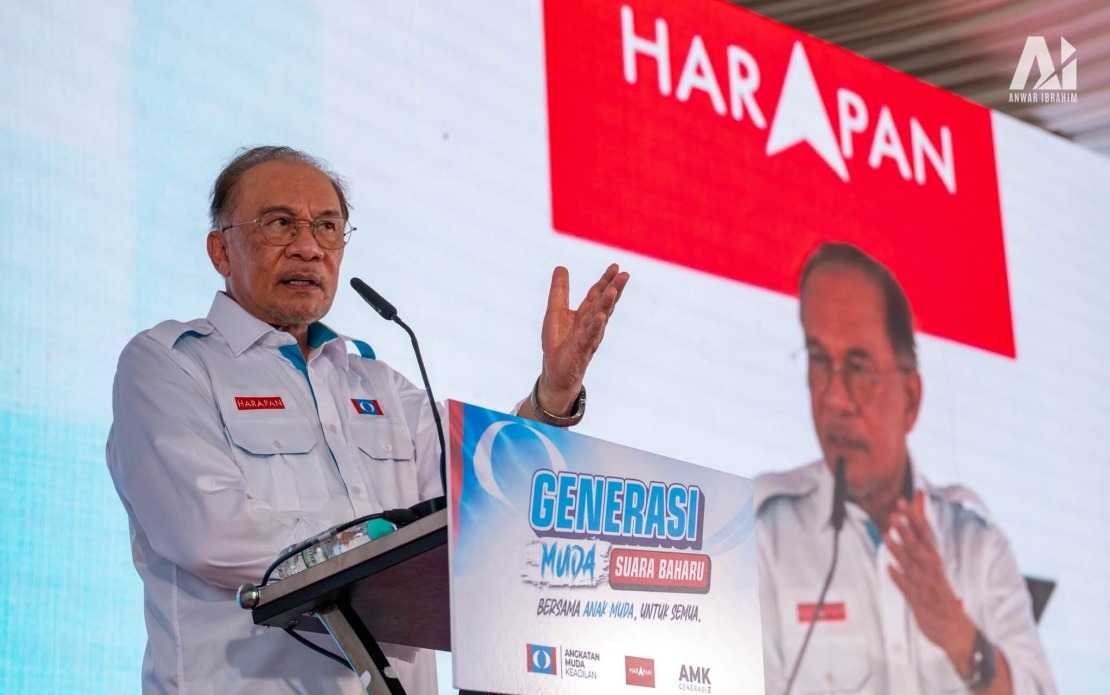
Pakatan Harapan has renewed its commitment to upholding standards of integrity and administrative stability in Negeri Sembilan, appealing to voters to strengthen the coalition's mandate in the state election scheduled for August 1. The pledge comes as the opposition coalition contests the 36 state assembly seats across the state, a critical regional contest that will test PH's ability to consolidate support in a key electoral battleground.
Prime Minister Datuk Seri Anwar Ibrahim, who chairs the Pakatan Harapan coalition, articulated the message through a public statement, calling on Negeri Sembilan residents to entrust the coalition with governance. His appeal emphasises the coalition's track record of delivering administrative competence while rooting the political pitch in shared values of responsibility and ethical conduct. The framing reflects PH's broader electoral strategy of positioning itself as a guardian of institutional reform and public accountability, themes that have resonated across urban and semi-urban constituencies in recent years.
The coalition's candidate distribution across its three component parties reveals a carefully calibrated internal balance designed to maintain harmony within the alliance. PKR, the coalition's largest member party, fields 16 candidates, while the Democratic Action Party contributes 11 contenders. Amanah, the Islamic-oriented member party, brings nine candidates to the slate. This arrangement underscores the ongoing negotiations between PH's constituent parties over seat allocation and the importance of maintaining coalition unity as the bloc seeks to expand its foothold in state-level politics.
Negeri Sembilan holds particular significance within Malaysia's political landscape as a state where coalitions and shifting alliances have historically determined outcomes. The state's mixed demographic composition and its position as a swing state make electoral results here indicative of broader national sentiment. A decisive victory would provide PH with momentum heading toward future national contests, while any setback could prompt internal recalibration within the coalition structure.
The electoral timeline for the contest reflects standard procedures for state elections in Malaysia. Early voting has been set for July 28, allowing frontline workers, security personnel, and other designated groups to cast ballots before the main polling day. The main election on August 1 will determine the composition of the state assembly and establish which coalition or party can command a majority of the 36 seats. This two-stage voting arrangement has become standard practice across Malaysian state elections, facilitating participation among essential workers while maintaining the integrity of the broader electoral process.
PH's messaging strategy incorporates religious and moral dimensions alongside conventional political appeals about governance quality. Anwar's invocation of Quranic principles, specifically referencing Surah Al-Ma'idah, frames the political contest within a framework emphasising cooperation, ethical conduct, and avoidance of conflict. This approach resonates particularly within Negeri Sembilan's religiously diverse but Muslim-majority population, where appeals to shared moral values can influence voter perception of coalition competence and trustworthiness.
The pledge to deliver clean administration addresses voter concerns that have gained prominence across Malaysia in recent years. Corruption and governance failures have featured prominently in public discourse, shaping electoral behaviour and voter expectations of political parties. PH's emphasis on integrity thus represents a direct appeal to voters concerned about the quality and ethical character of state government. This positioning also serves to differentiate PH from other political groupings that voters may associate with governance controversies.
Stability represents another dimension of PH's electoral appeal in Negeri Sembilan. Political instability at state level can disrupt development projects, create administrative uncertainty, and undermine investor confidence. By promising continuity and steady governance, PH addresses practical concerns about whether a change in state administration would translate into improved public services and economic performance. Voters frequently evaluate political parties not merely on ideological grounds but on their demonstrable capacity to deliver functional, responsive government.
The Negeri Sembilan election occurs within Malaysia's broader context of coalition politics and shifting electoral dynamics. The state contest serves as a testing ground for coalition stability, messaging effectiveness, and grassroots mobilisation capacity. Results will provide indicators about PH's organisational strength and its ability to convert political messaging into electoral outcomes across different demographic groups and geographic areas within the state.
For Malaysian voters and regional observers, the Negeri Sembilan contest reflects deeper questions about coalition durability, governance priorities, and the electorate's appetite for continued reform. The state's electoral outcome will contribute to the trajectory of Malaysian politics and the coalition dynamics that shape policy formation at both state and national levels. How voters respond to PH's pledges on August 1 will illuminate evolving public preferences regarding political leadership and administrative standards.

