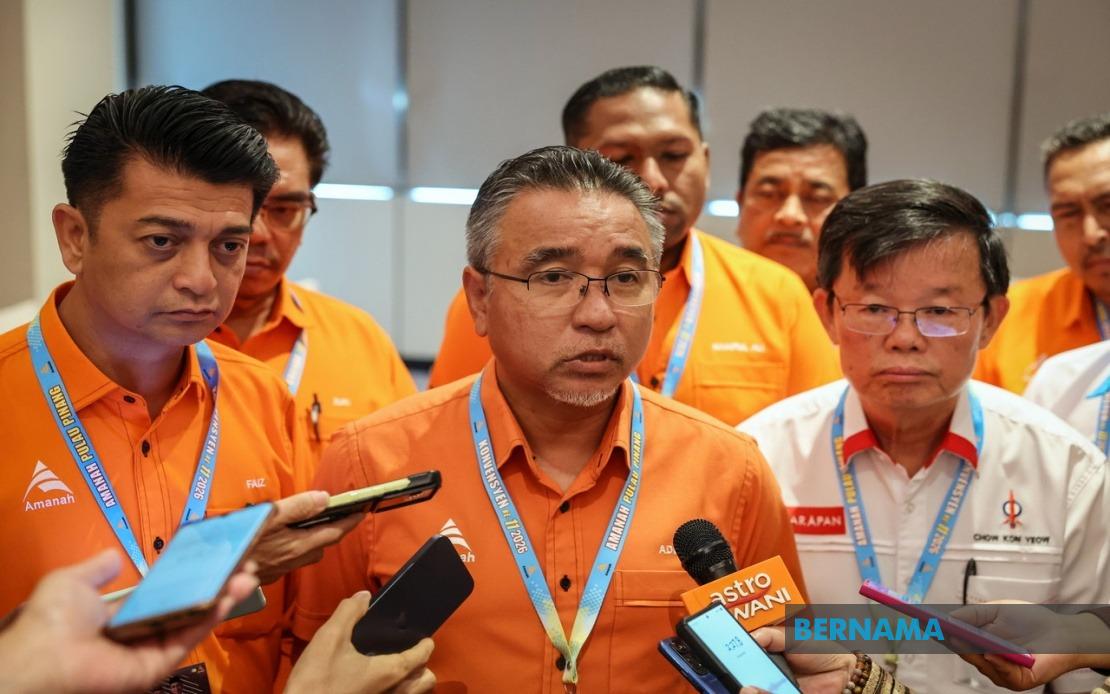
Pakatan Harapan has reaffirmed its commitment to principles-driven governance and effective administration in the face of disappointing results in recent state elections, signalling the coalition intends to maintain its political foundation rather than abandon its core identity. Speaking at the Penang Amanah Convention in Bukit Mertajam, Amanah vice-president Adly Zahari outlined the coalition's determination to pursue a political model anchored in values and integrity whilst simultaneously undertaking a comprehensive review of its tactical approach to better navigate Malaysia's shifting electoral dynamics. This dual commitment reflects PH's apparent belief that voter perceptions centre on practical governance matters—the rising cost of living, employment opportunities, educational standards, and tangible government service delivery—rather than symbolic gestures alone.
The coalition's strategy pivot comes against the backdrop of significant setbacks in consecutive state polls that have exposed vulnerabilities in PH's political machinery and messaging. In yesterday's Negeri Sembilan election, Barisan Nasional emerged as the clear victor, securing 18 of 36 state seats and reasserting its dominance in a traditionally competitive electoral ground. Pakatan Harapan's tally of 11 seats represents a considerable underperformance relative to earlier expectations, whilst Perikatan Nasional's seven seats signal the continued fragmentation of the anti-establishment vote. When combined with earlier results from Johor, these outcomes have prompted serious introspection within PH leadership regarding both strategic direction and grassroots mobilization capacity.
Adly emphasised that whilst PH will continue anchoring its political project in institutional competence and ethical governance, the coalition recognises it must substantially enhance how it communicates government performance to the electorate. This acknowledgement reveals a critical gap between what the coalition believes it has accomplished and public perception of those achievements. Strategic messaging around economic policies, infrastructure development, social welfare initiatives, and job creation programmes appears to have failed resonating with voters in these elections, suggesting either inadequate communication channels or a credibility deficit that mere messaging cannot overcome. The coalition's leadership appears cognisant that technical policy success divorced from effective public articulation translates to electoral vulnerability.
The post-mortem analysis Adly referenced indicates PH plans comprehensive strategic refinement extending beyond communication frameworks. By convening on August 8 to evaluate not only the Negeri Sembilan results but also earlier Johor election performance, Penang PH chairman Chow Kon Yeow signalled the coalition recognises systemic rather than isolated problems requiring examination. This deliberative pause suggests PH leadership understands that consecutive electoral disappointments demand thorough recalibration rather than incremental adjustments. For Malaysian voters and political observers, this introspection period will be closely monitored as an indicator of whether PH possesses adaptive capacity or has become institutionally rigid.
The coalition's focus on refocusing voter attention toward government service delivery and welfare outcomes rather than abstract principles reflects sophisticated political calculation. By emphasizing tangible improvements in cost of living management, employment generation, and public sector responsiveness, PH attempts repositioning itself around measurable outcomes rather than aspirational rhetoric. This approach implicitly acknowledges that voters in Negeri Sembilan and Johor may have concluded that PH's governing record—particularly regarding economic management during inflationary periods—falls short of its campaign promises. The electoral punishment administered in these contests suggests that many Malaysians prioritise immediate material wellbeing over ideological positioning.
For Southeast Asian observers, PH's predicament illustrates broader regional challenges confronting reformist coalitions attempting to consolidate power following initial electoral breakthroughs. The coalition's 2018 general election victory raised expectations regarding institutional transformation and policy innovation, yet governing constraints, factional tensions, and economic headwinds have complicated implementation of that reform agenda. The gap between voter aspirations formed during opposition campaigning and actual governing capacity frequently precipitates disillusionment, rendering coalition maintenance increasingly difficult. PH's current difficulties reflect this common pattern in transitional democracies where opposition movements built on anti-incumbent sentiment struggle translating that sentiment into sustained governing coalitions.
The prospective early general election referenced by Chow adds urgency to PH's strategic reassessment, as a federal poll could occur before the coalition completes its internal review and implements revised approaches. This temporal compression means PH must simultaneously conduct strategic analysis whilst maintaining operational coherence and public-facing momentum. Failing to demonstrate renewed energy or messaging clarity by the time federal elections are called risks compounding recent losses into a more catastrophic rejection. Conversely, should the coalition manage to articulate compelling narratives around specific policy achievements and present credible plans addressing cost of living pressures, it might stabilise its political position heading into higher-stakes national contests.
The emphasis on integrity and values-based governance, despite electoral setbacks, suggests PH retains confidence in the fundamental appeal of its positioning relative to established alternatives. The coalition appears unwilling to sacrifice ethical and institutional commitments in pursuit of short-term electoral gains, even as those commitments have not translated into consistent electoral success. This principled stance differentiates PH from transactional political competitors but also constrains flexibility in responding to voter demands. Whether this principled approach ultimately strengthens PH's long-term political brand or proves electorally limiting remains contested among Malaysian political analysts.
For Malaysian voters evaluating PH's trajectory, the coalition's self-critical posture offers modest encouragement regarding institutional accountability whilst raising questions about whether internal review translates into meaningful operational improvement. The August 8 meeting will become a critical test of whether PH's leadership can translate acknowledgement of problems into coherent strategic responses. The coalition's ability to revitalise grassroots engagement, improve communication effectiveness, and demonstrate renewed policy focus on immediate voter concerns will determine whether recent electoral losses represent a temporary stumble or the beginning of terminal decline.

