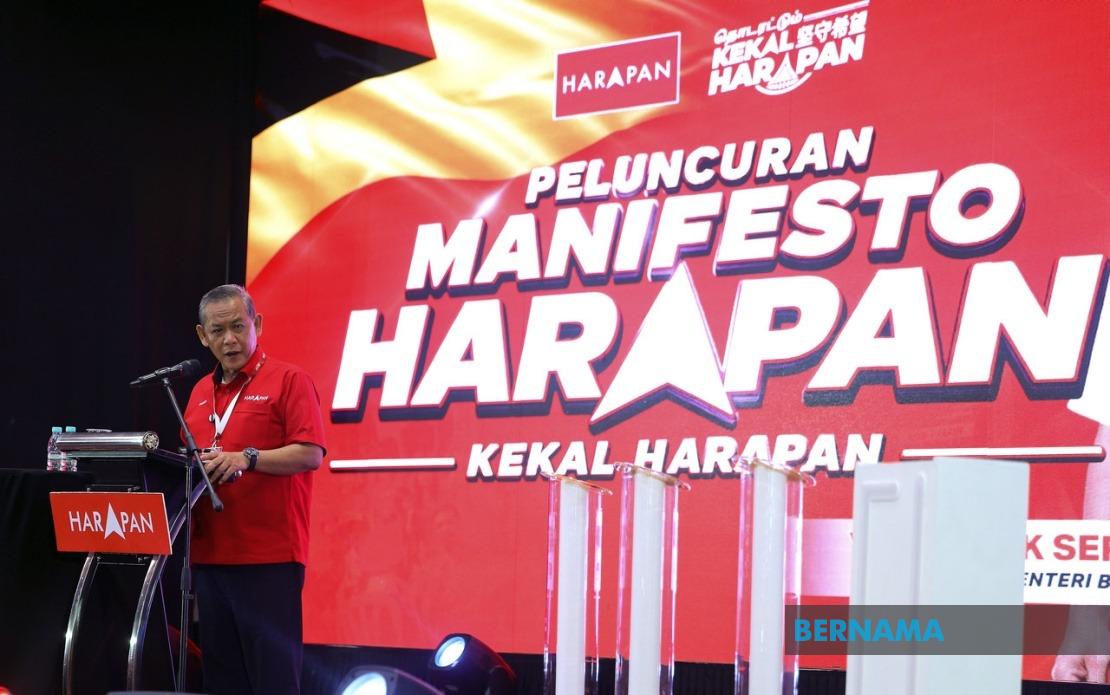
Pakatan Harapan has outlined an ambitious blueprint for Negeri Sembilan's future, presenting a manifesto built around 10 substantive commitments aimed at shaping voter sentiment ahead of the state election. Launched in Seremban by Menteri Besar Datuk Seri Aminuddin Harun, who leads the coalition's Negeri Sembilan branch, the platform carries the thematic banner 'Negeri Sembilan Kekal Harapan'—positioning continuity and hope as central to the coalition's electoral narrative.
At the foundation of PH's campaign lies a promise to deliver governance characterised by stability, cleanliness, and responsiveness to ordinary citizens. This positioning reflects broader efforts across Malaysian politics to differentiate competing visions of state administration, particularly following heightened public discourse around transparency and institutional integrity. The emphasis on people-centricity signals an attempt to anchor the manifesto in lived experience rather than abstract policy frameworks, a rhetorical strategy increasingly common in Southeast Asian electoral competition.
Economic dynamism forms a pillar of PH's platform, with the coalition committing to cultivate a competitive economy capable of generating 30,000 high-income employment opportunities. This jobs pledge arrives at a moment when Malaysian state governments face mounting pressure to address underemployment and wage stagnation, particularly among younger demographics entering the labour market. The specificity of the 30,000 figure represents a quantifiable commitment against which PH's record can be measured, a tactical choice that raises expectations but also establishes clearer accountability metrics.
The manifesto allocates significant weight to housing affordability, pledging construction of 20,000 new homes while simultaneously addressing longstanding land disputes that have frustrated homebuyers and investors across the state. This dual commitment acknowledges a persistent challenge in Malaysian urban development: even as supply expands, property ownership remains inaccessible to middle and working-class households. For Negeri Sembilan specifically, where Seremban has experienced property market pressures, this pledge targets a constituency experiencing genuine economic stress.
Educational quality receives explicit attention within PH's framework, reflecting recognition that school performance remains a primary concern among Malaysian parents and shapes long-term perceptions of state governance. The coalition's commitment to ensuring quality education for all populations positions learning accessibility as a distributional justice issue, implicitly critiquing existing disparities in educational resources across urban and rural constituencies within Negeri Sembilan.
The manifesto extends its reach into social protection through promises to strengthen the People's Wellbeing Scheme (SSR), suggesting PH intends to deepen the welfare infrastructure established during its previous governance period. By emphasising continuity and expansion of existing programmes rather than wholesale reform, the coalition appeals to constituencies that have benefited from current safety-net arrangements while signalling fiscal responsibility to taxpayers concerned about programme sustainability.
Youth empowerment, women's advancement, and family support emerge as cross-cutting themes woven through multiple manifesto commitments. This reflects demographic realities in Malaysia, where youth constitute an expanding electoral segment while women's economic participation and political representation remain contested terrain. The prominence accorded these constituencies suggests PH calculates electoral advantage in explicitly addressing gender and generational concerns that rival coalitions may treat as peripheral.
Tourism and cultural heritage development represent economic diversification priorities within the platform. Negeri Sembilan possesses distinctive cultural resources—from its Minangkabau architectural heritage to natural attractions—that remain underexploited relative to neighbouring states. By elevating tourism to manifesto prominence, PH positions cultural preservation and economic opportunity as complementary rather than competing objectives, a framing that resonates across urban and rural voters with different priorities.
Agricultural modernisation paired with food security guarantees reflects both immediate concerns and structural vulnerabilities within Negeri Sembilan's economy. Malaysia's agricultural sector faces chronic productivity challenges and generational workforce attrition, making technological renewal and supply-chain resilience pressing priorities. PH's integration of these issues into the manifesto acknowledges that state-level governments, while constrained by federal policies, possess meaningful discretion in supporting farmer livelihoods and ensuring domestic food availability.
Healthcare quality and strategic infrastructure investment round out PH's platform, addressing fundamental service expectations that cut across demographic lines. In Malaysian electoral competition, the adequacy of health facilities and transport connectivity operates as baseline governance legitimacy—voters increasingly penalise governments perceived as neglecting these essential services. The manifesto's explicit commitment here reflects awareness that such constituencies cannot be taken for granted.
The inclusion of interfaith unity promotion within a state election manifesto signals conscious positioning around Malaysia's religious and ethnic complexity. Negeri Sembilan, like other states, encompasses diverse communities with distinct concerns and allegiances. By explicitly committing to interfaith cooperation rather than treating it as implicit or secondary, PH attempts to construct a multicultural coalition narrative that distinguishes its vision of state identity from potentially more communitarian positioning by rival coalitions.
Implementation of the Federal Land Development Authority (Felda) Development Plan represents an anchor commitment bridging state and federal governance responsibilities. Felda settlements occupy significant portions of Negeri Sembilan's landscape, and their economic trajectory—marked by transformation from smallholder prosperity to contemporary financial challenges—constitutes a political microcosm reflecting broader Malaysian agricultural challenges. PH's commitment to Felda development engages directly with constituencies experiencing economic precarity while signalling coordination with federal frameworks.
Collectively, the manifesto constructs a comprehensive governance platform spanning economic dynamism, social protection, service delivery, and cultural identity. Rather than proposing radical transformation, PH positions itself as continuing and deepening existing policy directions while expanding access to opportunities and services. This gradualist framing carries electoral risks if voters perceive insufficient differentiation from the status quo, yet offers advantages by making the platform appear pragmatic and implementable rather than utopian.

