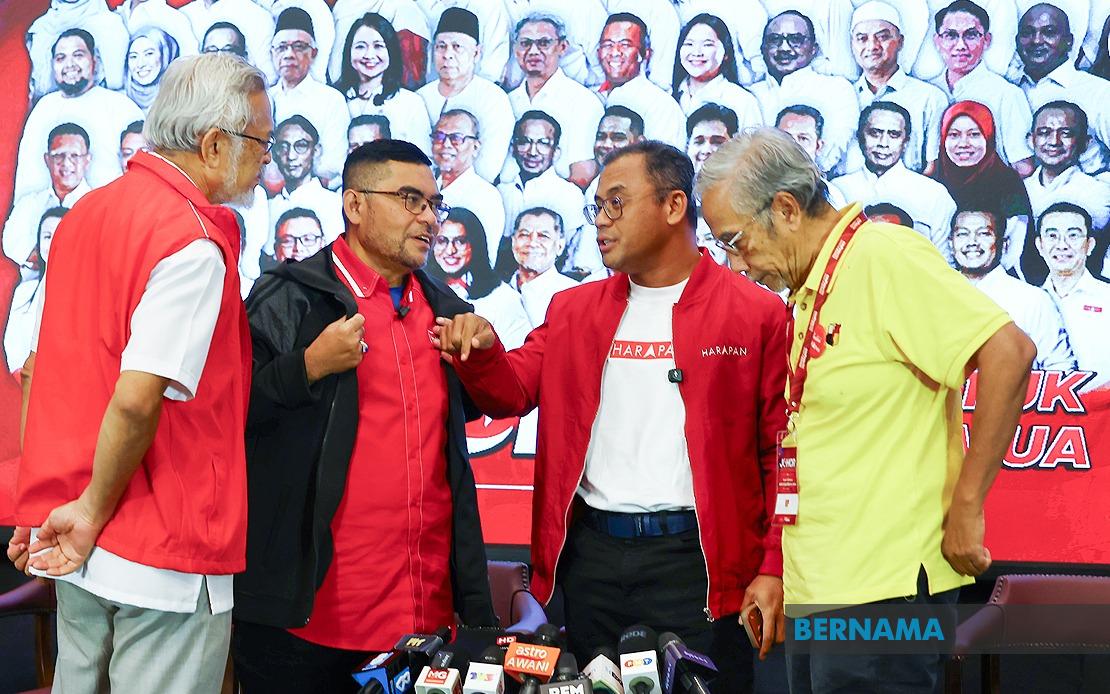
Pakatan Harapan will undertake a thorough examination of the Johor state election outcome to recalibrate its political machinery and electoral strategy before contesting the Negeri Sembilan polls. Speaking at the coalition's operations centre in Johor Bahru, Datuk Seri Amirudin Shari, who holds the positions of Selangor Menteri Besar and PKR Election Co-director, outlined the coalition's approach to learning from the recent Johor results and applying those lessons to the next state battle on the peninsula.
The comprehensive review will delve into multiple dimensions of the Johor election dynamics, including the underlying factors that shaped voter behavior across different constituencies, shifts in electoral patterns compared to previous contests, and crucially, the level of backing that PH managed to secure among younger demographics. These analytical elements are essential for any political coalition seeking to understand where it lost ground and how it might recover in subsequent elections. Amirudin acknowledged that final results were still being confirmed at the time of his remarks, suggesting that drawing definitive conclusions prematurely would be premature and potentially misleading for campaign planning purposes.
Barisan Nasional emerged from the Johor state election with clear numerical dominance, capturing 29 of the 56 state seats that were contested in what constituted the 16th Johor State Election. This result delivered to BN considerably more than half of all available seats—a commanding position that gives the coalition unfettered control over the state administration and legislative process. Election Commission chairman Datuk Seri Ramlan Harun confirmed that this translated into a majority exceeding 50 percent of the seats in contention, providing BN with substantial political capital heading into subsequent state contests.
Despite the disappointment in Johor, Amirudin projected considerable optimism regarding PH's prospects in Negeri Sembilan, expressing confidence that the coalition would retain control of the state government. The foundation for this confidence rests on the incumbent administration's governance record under Menteri Besar Datuk Seri Aminuddin Harun, whose tenure has apparently generated sufficient positive outcomes and accumulated achievements that party strategists believe can form a winning platform. PH's argument essentially rests on presenting Negeri Sembilan voters with a choice between continuity and change, leveraging the track record established over the previous administration's term.
To operationalize this strategy, PH convened discussions on candidate selection for the Negeri Sembilan election scheduled for the following day. These deliberations were designed to enable the coalition to refine both its overall electoral approach and its selection of nominees, ensuring that individuals chosen to represent PH constituencies would align with voter expectations and demographic preferences within Negeri Sembilan. The full slate of PH candidates was slated for official announcement on July 14, providing time for internal vetting and strategic positioning.
The political landscape across Peninsular Malaysia is becoming increasingly fragmented, with state elections unfolding sequentially and creating distinct battlegrounds where different coalitions compete for supremacy. Unlike the federal sphere, where Pakatan Harapan holds prime ministerial authority through Datuk Seri Anwar Ibrahim, the state-level contests present opportunities for rival coalitions to demonstrate alternative governance models and policies. Negeri Sembilan thus represents a crucial test case for whether PH can maintain its state-level presence while defending its federal position.
For Malaysian political observers, the divergence between federal and state electoral outcomes is noteworthy. While PH commands the federal government, its performance in state elections has proven mixed, with Johor particularly demonstrating BN's continued electoral appeal in certain regions. This pattern reflects broader dynamics about how Malaysian voters may differentiate between federal and state governance, rewarding different coalitions at different levels. Negeri Sembilan's results will provide further data about whether voters view state and federal contests as connected or as largely separate political decisions.
Amirudin also addressed concerns about whether state-level political developments might destabilize the federal government. He offered assurances that all component parties within the federal coalition—encompassing both PH and BN—had committed to maintaining the current administration's integrity through the remainder of its constitutional term. This stability guarantee, attributed to mutual understanding among senior political figures, suggests that despite competitive state elections, the federal political architecture remains sufficiently robust to withstand localized electoral setbacks. The commitment extends to maintaining governmental continuity until Prime Minister Anwar Ibrahim exercises his constitutional prerogative to dissolve Parliament and trigger fresh federal elections.
The presence of Amanah representatives at the press conference—including deputy president Datuk Seri Dr Mujahid Yusof Rawa, vice-president Datuk Dr Mohd Hatta Ramli, and communications director Khalid Abdul Samad—underscored that the coalition's response to Johor's outcome involved consultation across its member parties. This multi-party engagement suggests that PH views the election review as a shared undertaking requiring input from PKR, Amanah, and other coalition components, rather than as a matter for any single party to address independently.
From a Southeast Asian perspective, Malaysia's sequential state elections represent a form of democratic experimentation where electoral outcomes at the sub-national level continuously reshape political alignments and coalitional dynamics. The Johor result, followed by pending contests in Negeri Sembilan and potentially other states, demonstrates how federal systems create multiple arenas for political competition and renewal. For regional observers tracking democratic processes across ASEAN, Malaysia's willingness to conduct these recurring electoral exercises, even when outcomes disappoint particular coalitions, illustrates the resilience of competitive elections as institutional mechanisms for channeling political contestation.

