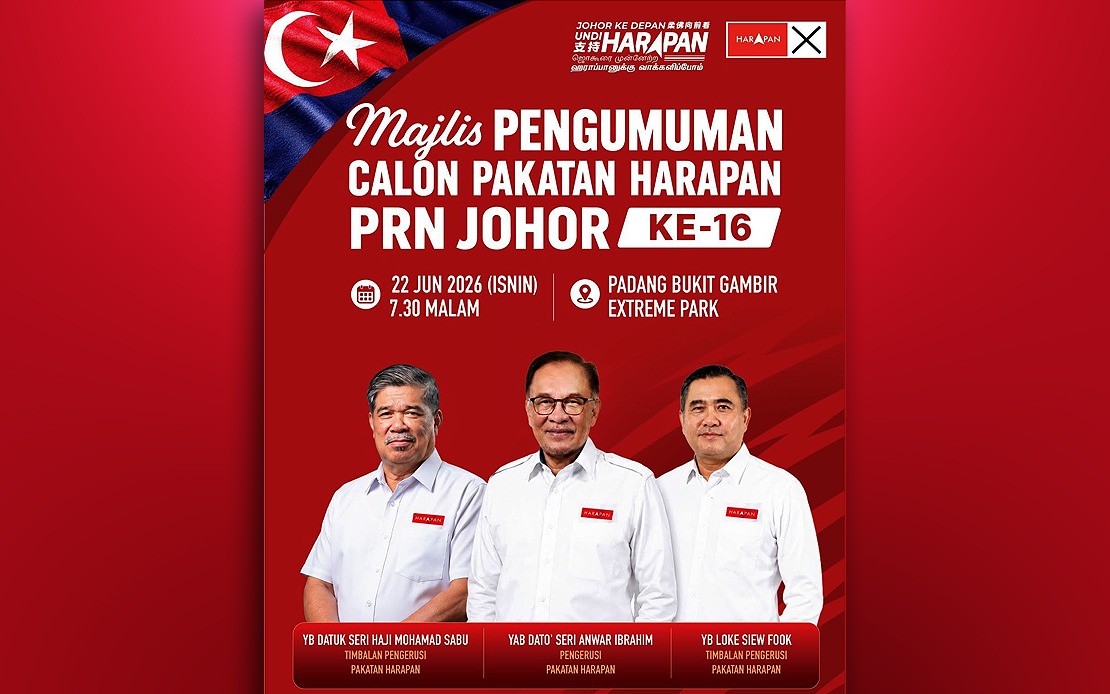
Pakatan Harapan intends to release its manifesto for the Johor state election shortly after the nomination process concludes on June 27, according to PKR vice president Datuk Seri Amirudin Shari. The coalition leadership made this announcement during a candidate presentation event held in Tangkak, signalling that detailed policy proposals will follow rather than precede the formal entry of contenders into the race.
The manifesto, branded under the banner 'Johor Ke Depan', represents a strategic communications choice by the opposition-aligned coalition. Rather than launch policy planks in the conventional pre-nomination window, PH has opted to present its vision after the nomination phase concludes, potentially allowing for a concentrated campaign message focused on candidate quality and coalition unity in the critical early days of the official campaign period.
According to Amirudin, the policy platform will be grounded in tangible achievements rather than aspirational promises. The manifesto will draw substantively from PH's governance record in three states where the coalition currently holds power: Selangor, Penang and Negeri Sembilan. This emphasis on demonstrated performance represents a calculated appeal to Johor voters to evaluate PH based on incumbent track records rather than electoral pledges alone.
The coalition's strategy reflects confidence in its administrative performance across multiple states, each with distinct governance challenges and demographic compositions. Selangor's position as Malaysia's most economically developed state provides a template for urban and suburban governance, while Penang's smaller scale and historical development context offer different lessons. Negeri Sembilan's governance model presents yet another reference point. By leveraging these varied experiences, PH aims to construct a credible framework for governing Johor, which carries significant geopolitical weight as the sultanate's home state.
The Johor election assumes particular importance within Malaysia's broader political landscape. The state has traditionally been a Barisan Nasional stronghold, and a PH victory would represent a symbolic and practical shift in the peninsula's political balance. The nomination day on June 27 initiates the formal campaign phase, with early voting scheduled for July 7 and the main polling day set for July 11. This compressed timeline means that manifesto launch will need to generate immediate traction with voters.
The high-profile presence of senior PH figures at the candidate announcement ceremony underscored the coalition's commitment to the Johor contest. PH chairman Datuk Seri Anwar Ibrahim, DAP secretary-general Anthony Loke, and Amanah president Datuk Seri Mohamad Sabu's attendance signalled unified leadership support. For coalition partners, the Johor election represents a critical test of electoral viability in a state where PH remains a challenger rather than incumbent.
The decision to structure policy announcement around the nomination timeline rather than campaign commencement suggests a deliberate messaging strategy. By releasing the manifesto after candidates enter the race, PH can tie specific policy commitments to named individuals seeking office, creating accountability linkages. This approach differs from releasing manifestos weeks in advance, which can allow messages to fade before voting occurs.
For Malaysian political observers, PH's emphasis on replicable governance from other states reveals confidence in its institutional capacity and administrative execution. The coalition faces the perpetual opposition challenge of demonstrating competence without incumbent advantages. By grounding the Johor manifesto in documented state-level results, PH attempts to address this structural disadvantage through concrete evidence of performance.
The regional context matters considerably. Johor's proximity to Singapore and its position as a critical economic hub means that governance quality directly impacts investor confidence and interstate economic linkages. PH's manifesto will likely address infrastructure, business environment, and fiscal management with particular emphasis on maintaining Johor's competitive position within Southeast Asia's investment hierarchy.
For Malaysian voters increasingly focused on pragmatic governance outcomes rather than ideological positioning, the emphasis on demonstrated track records carries weight. Each state governed by PH operates under distinct fiscal constraints and structural conditions, yet the coalition can point to specific infrastructure projects, administrative reforms, and policy initiatives. This granular accountability differs markedly from broad campaign rhetoric.
The announcement timing also reflects electoral calendar pressures inherent in compressed campaigns. With nominations on June 27, early voting on July 7, and polling on July 11, parties must crystallise messaging rapidly. PH's decision to finalize manifesto details after nomination day allows time for vetting candidate proposals while avoiding the lengthy pre-election campaign periods that can dilute message focus.
As Malaysia's political landscape continues to evolve following the 2022 general election, state-level contests have assumed heightened importance. Johor's election will provide significant data about voter preferences, coalition stability, and the durability of political realignments that have reshaped Malaysian politics over recent years. The manifesto's reception and resonance with voters will offer measurable insight into whether PH's track record claims effectively translate into electoral support in new territory.

