Pakatan Harapan is proceeding with considerable caution as it navigates the dynamics of the Johor state election, particularly in 23 constituencies where Perikatan Nasional has chosen not to contest. The coalition's strategic concern centres on an unpredictable but potentially consequential phenomenon: whether voters who previously backed PN will reallocate their support to competing parties, thereby reshaping the competitive landscape in marginal seats across the state.
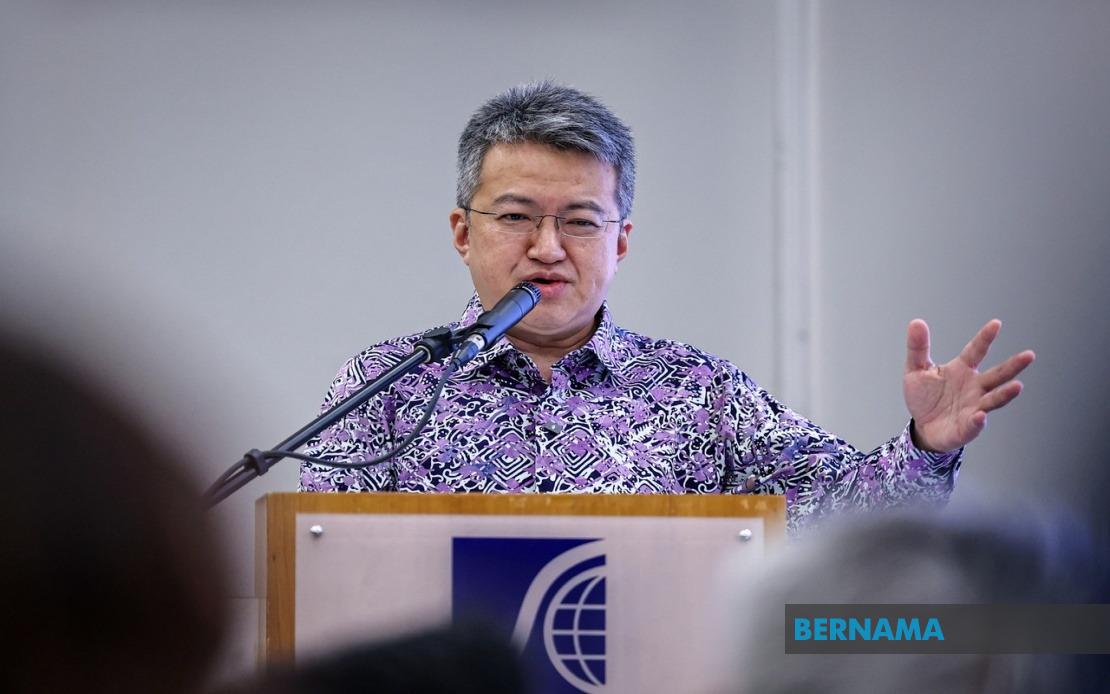
DAP Strategic Director Liew Chin Tong articulated this apprehension during recent remarks, emphasizing that the direction of PN voter migration represents a critical variable that his coalition cannot easily predict or control. The Deputy Finance Minister acknowledged that such electoral transfers pose a tangible threat to PH candidates, especially those running under the DAP banner, in constituencies where victory margins are expected to be narrow. This concern reflects a broader reality in Malaysian politics where voter switching between elections can significantly alter expected outcomes, particularly when a major political force effectively withdraws from certain contests.
The uncertainty surrounding voter behaviour in these 23 uncontested seats underscores a fundamental challenge facing Pakatan Harapan as it seeks to consolidate support in Johor. Liew stressed that every election cycle brings unforeseen risks and opportunities that even experienced political operatives struggle to anticipate fully. This acknowledgment of uncertainty stands in contrast to the confidence politicians typically project publicly, revealing genuine apprehension within PH's leadership about potential defections from PN's traditional voter base. Rather than assuming straightforward consolidation of opposition support in seats where PN is absent, the coalition recognizes that voters may make independent calculations, backing Barisan Nasional or other emerging alternatives.
In response to these dynamics, Liew outlined Pakatan Harapan's strategic approach, emphasizing the need for sustained vigilance, intensive ground campaigning, and the presentation of compelling policy proposals to retain voter confidence. This three-pronged strategy reflects the coalition's understanding that holding support in an uncertain electoral environment requires active engagement rather than passive expectation of support consolidation. The message conveyed is one of recognizing that voter loyalty cannot be taken for granted, particularly in a state like Johor where political realignments have been dramatic in recent years.
Beyond the structural challenge posed by PN's selective participation, Pakatan Harapan has invested considerable effort in fielding what it characterizes as a slate of young and credible candidates tailored to individual constituencies. This candidate-centric approach suggests that the coalition believes competitive advantage derives not merely from broader coalition dynamics but from the quality and appeal of individual representatives. The emphasis on youth and fresh perspectives appears designed to counter any perception that PH represents continuity with older political establishments.
Liew's own decision to step aside from defending the Perling state seat, which he won in the 2022 Johor election, exemplifies the principles guiding DAP's candidate selection. The move aligns with the party's stated policy discouraging elected representatives from simultaneously holding parliamentary and state assembly positions. By relinquishing his Perling seat, Liew has created space for Alan Tee Boon Tsong, a former Senai assemblyman, to emerge as the DAP candidate. Liew characterized this transition as an opportunity to cultivate emerging talent within DAP capable of making meaningful contributions at the state legislative level.
The Perling constituency illustrates the complexity of the electoral environment that Pakatan Harapan confronts. With 109,992 registered voters, Perling is poised for a three-cornered contest featuring Alan Tee representing DAP, P. Pannir Selvam as the Barisan Nasional candidate, and Boo Wei Han representing Parti Bersama Malaysia. This configuration suggests that the traditional two-coalition framework has fragmented, with smaller parties now capable of influencing outcomes in individual constituencies. For Pakatan Harapan, victory in such settings demands not simply outpolling rivals but winning sufficient support to overcome divided opposition.
The timing of the Johor state election, scheduled for July 11 with early voting on July 7, provides all contenders with a compressed campaign period. This condensed timeline increases the importance of pre-election positioning and existing voter sentiment, as traditional campaigns have limited opportunity to reshape public opinion substantially. For Pakatan Harapan, beginning from a position of caution regarding PN voter behaviour means that momentum and narrative control in the opening weeks of campaigning become disproportionately significant.
The broader significance of Pakatan Harapan's cautious posture extends beyond Johor's state assembly races. Johor, as Malaysia's second-largest state by population and a historically significant political battleground, represents a critical testing ground for national coalition dynamics. The performance of PH in uncontested seats—and particularly how effectively it consolidates potential PN voters—will provide indicators of coalition strength that extend to federal politics. A strong showing despite vote fragmentation in these constituencies would suggest resilient support, while disappointing results might indicate slipping appeal among voters previously aligned with PN.
Liew's candid acknowledgment of uncertainty and risk diverges from the triumphalist rhetoric often characterizing political campaigns. By publicly raising concerns about vote transfers and unpredictable voter behaviour, the DAP strategist suggests confidence in his coalition's ability to respond to challenges while avoiding overconfidence that could undermine campaign discipline. This balancing act between acknowledging vulnerabilities and projecting competence represents a delicate communication challenge for opposition coalitions seeking to attract voters while simultaneously managing expectations among their own supporters.
As Johor voters prepare to cast their ballots, the dynamic described by Liew—where traditional political alignments remain fluid and voter decision-making involves multiple competing factors—reflects the contemporary Malaysian electoral landscape. Pakatan Harapan's cautious approach signals recognition that electoral contests have become less predictable, and that victory requires not merely superior organization but genuine appeal transcending coalition mechanics. The specific challenge posed by 23 uncontested constituencies and potential PN voter migration illustrates how modern election campaigns involve managing multiple layers of uncertainty simultaneously.

