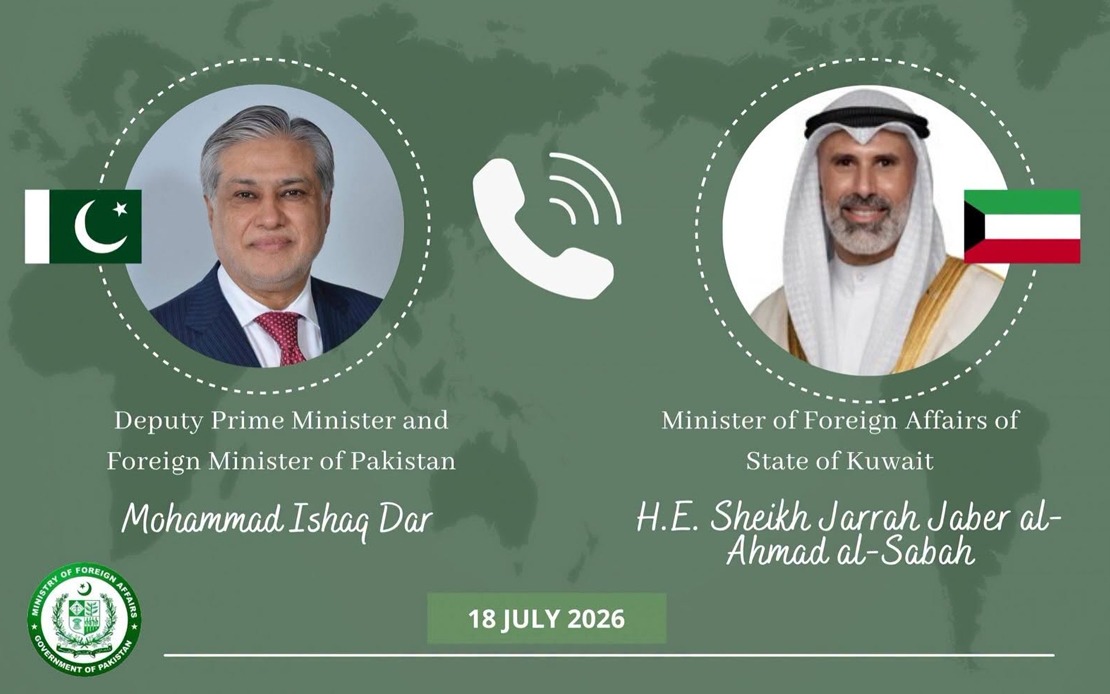
Diplomatic alarm bells are ringing across the Gulf as Pakistan and Kuwait jointly expressed grave concern on Saturday over intensifying military confrontations between Iran and the United States, warning that renewed fighting threatens to destabilise the broader West Asian region. The two nations made their concerns known through a high-level phone conversation between Pakistan's Deputy Prime Minister and Foreign Minister Ishaq Dar and Kuwait's Foreign Minister Sheikh Jarrah Jaber Al Ahmad Al Sabah, highlighting the severity with which regional players view the current security situation.
The escalation comes despite an agreement reached in June to de-escalate tensions. Pakistan's diplomatic messaging emphasised the need for all parties to respect the Islamabad Memorandum of Understanding, which Iran and the United States signed on June 17 specifically to prevent exactly the kind of military confrontation now unfolding. Dar called for both sides to maintain fidelity to their ceasefire commitments and to refrain from actions that could ratchet up hostilities further.
Kuwait's particular concern reflects its precarious geographic position directly across from Iran, making the small Gulf state especially vulnerable to any spillover from US-Iran tensions. Kuwait reported that its critical infrastructure had become a target, with another power generation and water desalination facility sustaining damage from Iranian strikes on Saturday, following an identical attack just the previous day. For an arid nation critically dependent on these facilities, such strikes pose not merely a military threat but an existential threat to civilian survival and economic stability.
The diplomatic intervention from Islamabad underscores the stakes involved for South Asian nations invested in regional stability. Pakistan, a major player in Middle Eastern affairs with significant economic interests in the Gulf, has consistently positioned itself as a voice for restraint and adherence to international agreements. Dar's emphasis on respecting state sovereignty and maintaining the supremacy of regional peace suggests that Pakistan fears a broader conflagration could draw in multiple actors and destabilise not just the Gulf but supply chains and investment patterns affecting South and Southeast Asia.
The current military trajectory is deeply troubling. Iranian military facilities have suffered repeated attacks from United States Central Command operations, prompting Tehran to issue explicit threats of retaliatory strikes against American allies throughout the region. The tit-for-tat nature of these exchanges—where each side justifies new attacks as responses to previous provocations—creates a dangerous escalatory spiral that traditional diplomatic channels struggle to interrupt.
Waterway security has become a flashpoint as well. Iran has taken the extraordinary step of closing the Strait of Hormuz to commercial shipping, a chokepoint through which approximately one-third of global maritime trade passes. Simultaneously, the United States has imposed a naval blockade on Iran, effectively attempting to prevent Iranian maritime commerce and restrict Tehran's access to vital imports. These measures strike at the economic jugular of the region, with implications for oil prices, shipping insurance rates, and global supply chains that extend far beyond West Asia.
For Southeast Asian nations, particularly those with energy security concerns and dependence on stable shipping routes, the trajectory of this conflict carries direct consequences. Malaysia, Singapore, and other regional economies rely heavily on energy imports and uninterrupted maritime commerce through the Indian Ocean and adjacent waters. Disruptions to Persian Gulf shipping automatically transmit economic shocks through global markets and regional economies.
The framework for de-escalation technically exists in the Islamabad Memorandum, yet recent events demonstrate how fragile such agreements become when underlying strategic interests diverge sharply. Kuwait's explicit call for full implementation of the Islamabad MoU suggests that regional mediators believe the framework remains viable but requires renewed political will from both Washington and Tehran to succeed.
Pakistan's diplomatic posture reflects a broader regional consensus that uncontrolled escalation serves no party's long-term interests. The emphasis on territorial integrity and state sovereignty in Dar's comments suggests underlying anxiety that if Iran and the United States continue unleashing military force across the region, smaller states caught in the middle face mounting risks of collateral damage and strategic encroachment. Kuwait's vulnerability to Iranian retaliation makes this concern more than theoretical.
The timing of this diplomatic intervention, weeks after the Islamabad MoU was supposedly established, reveals the agreement's limitations as a conflict-prevention mechanism. Both Pakistan and Kuwait are essentially pleading with the parties to resurrect a framework that has already shown signs of collapse. Whether such appeals will gain traction remains uncertain, as both Iran and the United States appear locked in a cycle where each views the other's military actions as unwarranted aggression justifying further response.

