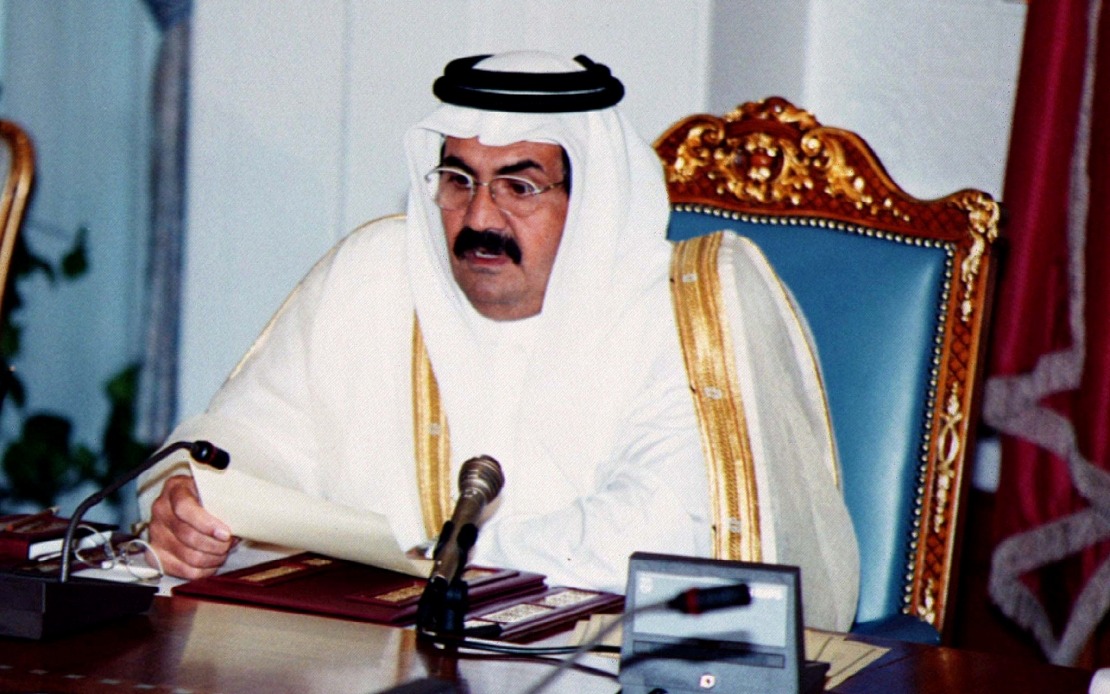
High-level delegations from Pakistan and the Maldives arrived in Qatar on Monday to express their condolences to the ruling family following the death of former Emir Sheikh Hamad Bin Khalifa Al Thani, who passed away at 74. Pakistan's Prime Minister Shehbaz Sharif undertook a single-day visit to the Gulf nation to pay his respects to current Emir Sheikh Tamim Bin Hamad Al Thani and members of the royal household, signalling the importance both countries place on their diplomatic ties with one of the region's most influential states.
Shehbaz Sharif's delegation carried considerable political weight, including his brother and former prime minister Nawaz Sharif, alongside Deputy Prime Minister and Foreign Minister Senator Ishaq Dar and Information Minister Attaullah Tarar. The composition of the Pakistani contingent underscored the significance of the moment, with the inclusion of senior figures from both the current administration and the previous government demonstrating national unity in honouring the departed leader. Similarly, President Mohamed Muizzu of the Maldives made the journey independently, reflecting the Indian Ocean nation's strong bilateral relationship with Qatar and the shared regional interests that bind Gulf and South Asian states.
Sheikh Hamad Bin Khalifa Al Thani's tenure as emir fundamentally transformed Qatar's position on the global stage. His rule from 1995 until his abdication in 2013 oversaw an extraordinary period of national development, during which Qatar transitioned from a relatively modest Gulf state into a major international player with substantial financial and soft power influence. The former emir's decision to step down after nearly two decades at the helm represented a significant moment in Gulf succession politics, setting precedent for orderly transitions of power in the region—a matter of considerable interest to neighbouring monarchies and to analysts of Middle Eastern governance.
International responses to Sheikh Hamad's passing have been notably warm and reflective of his outsized impact on global affairs. World leaders in their formal condolence messages have credited him with stewarding Qatar's remarkable economic ascent and institutional development, transforming the nation's infrastructure, educational capacity, and international standing. Bangladesh Prime Minister Sheikh Hasina emphasized that Sheikh Hamad's contributions to regional peace, economic advancement, education initiatives, and frameworks for international cooperation would endure as a lasting legacy respected across generations. The breadth of these tributes reveals how deeply his influence extended beyond Qatar's immediate neighbourhood into South Asia and beyond.
The timing of these condolence visits carries particular significance for Pakistan's domestic political context. Shehbaz Sharif's leadership of the delegation, coupled with Nawaz Sharif's participation, demonstrates continuity in Pakistan's foreign policy even amid the nation's complex internal political dynamics. Pakistan and India both declared Monday as a day of national mourning, a relatively rare occurrence in South Asian diplomatic practice that underscores the reverence in which Sheikh Hamad was held across the subcontinent. For Pakistan particularly, maintaining robust relations with Qatar—a major source of energy resources and foreign investment—remains strategically vital as the nation navigates economic challenges and seeks to expand its options for development partnerships.
Maldives President Muizzu's attendance speaks to the interconnected nature of Indian Ocean geopolitics and the small island nation's reliance on relationships with wealthy Gulf states. The Maldives, positioned at a geographic and strategic crossroads between South Asia and the Middle East, has long cultivated strong ties with Gulf monarchies for economic support, tourism connections, and regional stability. Sheikh Hamad's role in positioning Qatar as a constructive player in regional affairs would have been valued by Maldivian policymakers seeking reliable partners in an increasingly multipolar Asian landscape.
Sheikh Hamad's legacy extends significantly into matters that resonate with Southeast Asia, including his stewardship of Qatar's role in diplomatic mediation, his investment in global institutions, and his vision of education and modernization. His philanthropic and institutional initiatives created frameworks that influenced how smaller nations conceptualized development and international engagement. The emphasis in condolence messages on his contributions to regional peace reflects a recognition that his era marked an important chapter in Gulf stabilization during turbulent periods of Middle Eastern geopolitics.
For Malaysia and broader Southeast Asia, Sheikh Hamad's passing represents the departure of a figure who shaped the contemporary Gulf's relationship with the wider Asian region. Qatar's investments in Asian economies, its educational partnerships, and its role in regional forums all bear the imprint of decisions made during his long tenure. The successor leadership under Sheikh Tamim Bin Hamad Al Thani has continued many of these strategic orientations, suggesting continuity in how Doha engages with Southeast Asian partners and the broader Asian community.
The formal condolence visits underscore how states in South Asia and beyond maintain diplomatic protocols that reflect cultural values and geopolitical realities. Such missions, particularly when led by senior figures, communicate respect for the deceased and commitment to sustained relations with the surviving leadership. For Pakistan and the Maldives, these gestures also serve domestic constituencies by demonstrating their governments' capacity to maintain high-level international engagements and to participate meaningfully in regional diplomatic life.
As Qatar transitions under Sheikh Tamim's continued leadership, the international community's reflection on Sheikh Hamad's achievements may influence how the current emir's own legacy develops. The former emir's emphasis on economic diversification, institutional strength, and regional engagement has established expectations that observers will use to evaluate his successor's stewardship. For nations across Asia seeking to understand Gulf politics and Qatar's future trajectory, the circumstances surrounding this succession moment provide important signals about institutional continuity and the kingdom's commitment to the development paths established over the previous generation.

