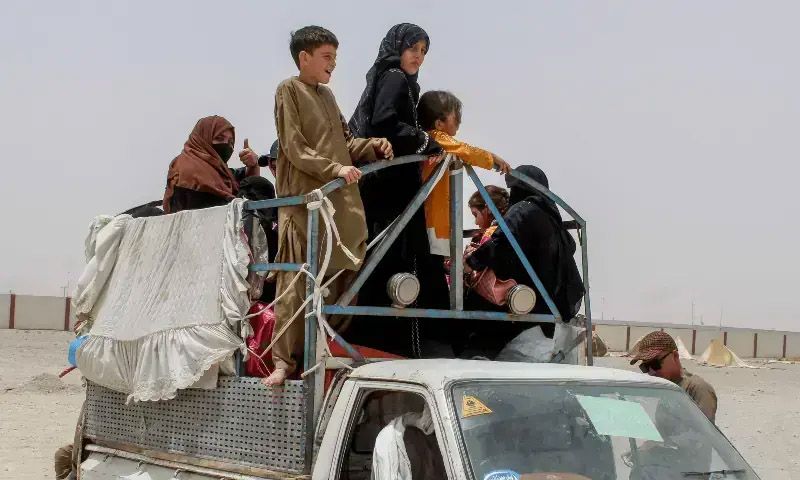
Pakistan has ramped up enforcement of its immigration laws in a massive deportation operation that has removed 2.59 million undocumented Afghan nationals since the beginning of 2023. The scale of the undertaking reflects a coordinated effort between federal authorities and provincial governments, particularly Punjab, which has emerged as the focal point of the campaign to expel residents lacking valid travel documentation.
The Punjab government's role in the operation has been substantial, with provincial authorities establishing an extensive network of holding facilities to process and detain undocumented migrants before their return to Afghanistan. Across its 36 operational detention centres spread throughout the province, Punjab has so far processed and deported 138,342 Afghan nationals. Currently, the provincial home department's foreign national security cell maintains approximately 53 detainees in these centres, continuing what officials characterize as a necessary enforcement operation to address unauthorised residence within the province.
Government officials have articulated a clear rationale for the deportation campaign, emphasizing that immigration law permits no exceptions for individuals lacking proper visa documentation. According to a spokesman for the home department, the policy framework governing entry and residence in Pakistan is straightforward: those without valid visas have no legal basis to remain in the country and must face deportation proceedings. This position reflects a hardening stance on irregular migration that has gained momentum across the region as governments grapple with large displaced populations.
The logistical operation supporting these deportations has required significant investment in surveying, documenting, and processing detainees. Home department officials report that their agency has completed comprehensive surveys of commercial markets and residential areas, identifying undocumented residents for arrest and detention. Rather than immediate expulsion, detainees are brought to holding centres where they undergo registration procedures designed to establish their identity and immigration status before deportation arrangements are finalised. The authorities have established the Torkham border crossing as the primary transit point through which deported individuals re-enter Afghanistan.
The mechanics of detention and deportation involve providing basic care to those held in government facilities while their documentation is processed. The home department has committed to ensuring that individuals in these centres receive accommodation during their stay pending deportation. While the statement emphasises the provision of these services, the scale of the operation—involving hundreds of thousands of people—suggests substantial resource allocation to maintain the detention infrastructure.
Public participation has been integrated into the enforcement strategy, with authorities actively encouraging residents to report suspected undocumented Afghans. The Punjab government has publicised an emergency hotline, numbered 15, through which citizens can notify authorities of individuals they believe are residing illegally. In an apparent effort to encourage reporting without deterring informants, officials have pledged that the identities of those making reports will be kept confidential and not disclosed to any third party.
The timing and scale of this operation carry significance for the broader South Asian context. Afghanistan's political instability and the Taliban's return to power in 2021 created conditions that drove large numbers of Afghans to seek refuge and employment opportunities in neighbouring countries. Pakistan, sharing a long border with Afghanistan and having historically hosted substantial Afghan refugee populations, has borne considerable humanitarian and economic pressures from this migration. The current deportation campaign represents a policy shift toward stricter enforcement after decades of relatively tolerant approaches to undocumented Afghan residents working in Pakistan's informal economy.
For Malaysia and other Southeast Asian nations, Pakistan's experience offers important lessons about immigration policy implementation. The operation demonstrates both the technical challenges and the political dimensions of large-scale deportation campaigns. Maintaining 36 detention facilities and processing hundreds of thousands of people requires sustained bureaucratic capacity, coordination across multiple agencies, and significant financial resources. The reliance on public reporting as an enforcement tool reveals the practical limits of government surveillance capacity in developing economies, where informal employment and residential patterns make systematic identification difficult.
The humanitarian dimensions of the campaign warrant consideration. While Pakistani officials present the deportations as enforcement of established legal principles, the scale of removals and the conditions in detention facilities raise questions about vulnerable populations. Afghan children born in Pakistan, individuals with long-standing family and economic ties to Pakistani communities, and those facing security risks in Afghanistan upon return represent complex cases that rigid enforcement policies may not adequately address.
Regional stability also enters into the calculation. Afghanistan's economic situation remains precarious, and the sudden arrival of hundreds of thousands of additional people could strain services and security. Pakistan's government has presumably coordinated with Taliban authorities to manage these returns, yet the trajectory of returnee integration into Afghan society remains uncertain and potentially destabilising.
Looking forward, the success of Pakistan's deportation campaign will likely depend on sustained political commitment and resource allocation. Historical experience suggests that immigration enforcement efforts often face compliance challenges, public fatigue, and bureaucratic inconsistencies over time. How the Pakistani government maintains momentum in this operation, addresses humanitarian concerns while enforcing immigration law, and manages regional diplomatic consequences will shape not only bilateral Pakistan-Afghanistan relations but broader patterns of labour migration across South Asia.

