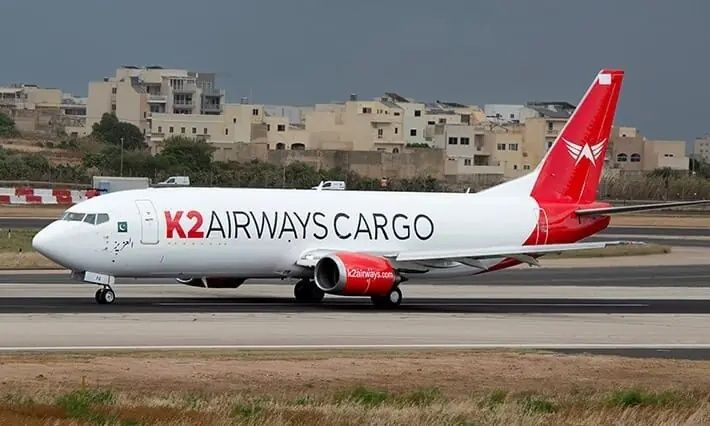
Pakistan mobilised an extensive search operation on Wednesday following the disappearance of a K2 Airways Boeing 737-400 freighter off its southern coast, with Prime Minister Shehbaz Sharif formally confirming that the aircraft had crashed into the Arabian Sea carrying five crew members. The incident represents another aviation tragedy for a nation whose civil aviation sector has struggled with a troubling safety record despite recent international reforms.
The cargo aircraft was en route from Sharjah in the United Arab Emirates to Karachi when it began experiencing difficulties on Tuesday evening. According to the Pakistan Airports Authority, radar data detected the plane "rapidly descending" while simultaneously changing direction sharply. The vessel reported a navigational system malfunction to air traffic control before communication was suddenly severed approximately 155 nautical miles west of Karachi, leaving authorities to piece together the circumstances of what would become a full-scale maritime and air rescue effort.
Flightradar24, a real-time flight tracking service, provided crucial insight into the aircraft's final moments through preliminary telemetry data transmitted before contact was lost. The sequence showed an initial loss of altitude, followed by a brief climb, and then a catastrophic and abrupt second descent that indicated either a structural failure, control system malfunction, or severe operational emergency. This erratic flight pattern has become a critical focus for investigators attempting to understand what triggered the crisis.
Prime Minister Shehbaz Sharif released a formal statement expressing profound sorrow over the tragedy and extended condolences to the families of the deceased crew members. In a demonstration of the gravity with which authorities treated the incident, Sharif directed Pakistan's civil aviation regulator, navy and air force to marshal all available assets and intensify search operations, signalling that no resource constraints would hamper rescue efforts regardless of the slim prospects of locating survivors in the Arabian Sea's depths.
The search operation itself drew participation from multiple branches of Pakistan's armed forces and maritime sector. Navy vessels and merchant ships coordinated alongside military aircraft to conduct systematic sweeps of the area where the plane disappeared, attempting to locate wreckage or any indication of the aircraft's final resting place. The involvement of merchant vessels alongside official military units highlighted the regional coordination required for such operations in busy maritime zones.
K2 Airways, the aircraft's operator, is a privately held Pakistani cargo carrier that conducts both scheduled and charter operations throughout Pakistan and internationally. As a cargo specialist, the airline fulfils a crucial logistics role for the region's commerce, particularly in time-sensitive freight movements between Gulf states and South Asia. The loss of this aircraft would likely impact the carrier's operational capacity during what is typically a busy summer shipping season.
The Boeing 737-400 itself carried significant history before its fatal flight. Manufactured in 1999, the airframe initially served as a passenger aircraft for major carriers including Aeroflot and Garuda Indonesia before being retired from passenger service and undergoing conversion to cargo configuration in 2012. Such conversions are common practice in aviation, extending aircraft lifespans by decades, but the structural modifications and extended service history of older frames remain subjects of ongoing safety scrutiny within the industry.
Pakistan's aviation sector has been shadowed by a succession of catastrophic incidents over the past decade, creating a perception of elevated risk that has concerned international regulators. The European Union's decision to impose a four-year flight ban on Pakistan International Airlines, the country's flagship national carrier, stemmed directly from documented concerns about safety standards, maintenance practices, and licensing compliance. Though the EU lifted this punitive restriction in 2024 following assessed improvements in regulatory oversight and operational procedures, the historical pattern demonstrates how deeply systemic safety issues had penetrated Pakistan's aviation establishment.
The disappearance of the K2 Airways aircraft represents a sobering reminder that safety challenges persist across Pakistan's aviation sector beyond its largest carriers. Cargo operators, often working with older airframes and operating under commercial pressures to maintain flight schedules, may face particular vulnerabilities if maintenance standards or crew training protocols are not rigorously maintained. The navigational system failure reported by the K2 Airways crew suggests either inadequate maintenance or a systemic design vulnerability that warrants investigation.
For Malaysian aviation observers and the broader Southeast Asian region, this incident reinforces the importance of continuous investment in maintenance infrastructure, crew training standards, and regulatory oversight regardless of international certification status. Regional carriers operating vintage aircraft—particularly in cargo operations where margins are thin and replacement costs are substantial—must balance operational efficiency against the non-negotiable imperative of safety. The loss of this aircraft and its crew underscores how rapidly a navigational malfunction can cascade into catastrophe when aircraft systems fail in sequence.
The investigation into this crash will likely prove complex, requiring coordination between Pakistani authorities, the aircraft manufacturer, and potentially international aviation safety bodies. Recovering the aircraft's flight data recorders from the Arabian Sea floor will be technically challenging but essential for understanding the precise sequence of failures. Until then, Pakistan's aviation community and its regional partners remain confronted with an uncomfortable question about whether recent regulatory improvements have genuinely transformed systemic safety cultures or merely satisfied international bureaucratic requirements on paper.
For families of the five crew members lost in the Arabian Sea, and for Pakistan's aviation authorities, the immediate priority remains locating the wreckage and determining exactly what sequence of events transformed a routine cargo flight into a maritime tragedy. The broader implications for Pakistan's aviation renaissance—and whether it can overcome decades of safety perception challenges—will unfold as investigation details emerge.

