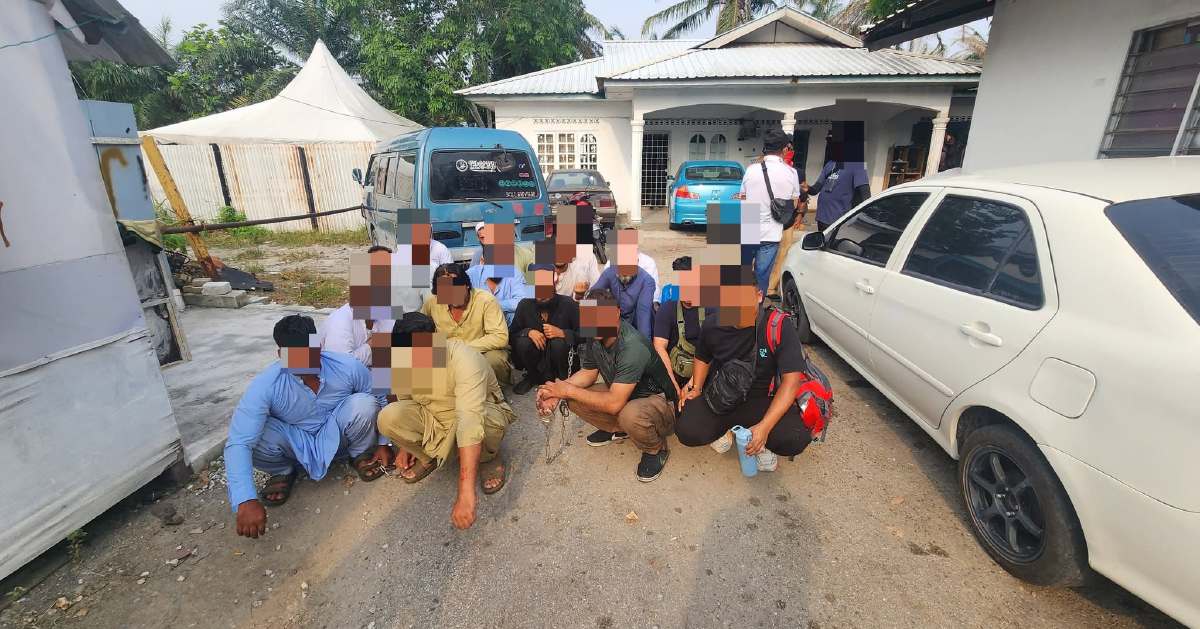
A major operation by Malaysia's Immigration Department has resulted in the arrest of 20 suspects linked to an auto parts trafficking syndicate operating out of Klang, with investigators identifying a Pakistani national as the ringleader orchestrating the illegal enterprise. The enforcement action, conducted at a location on Jalan Kapar in the industrial zone, marks a significant disruption to what authorities describe as a well-organised criminal network engaged in systematically dismantling and trafficking stolen vehicle components.
The syndicate's operational model involved acquiring vehicles—through means authorities are continuing to investigate—before systematically stripping them of valuable components for resale in the black market. This approach represents a sophisticated adaptation of vehicle theft in Malaysia, where organised criminals target high-value parts including engines, transmissions, electronic systems, and chassis components that command substantial prices from unscrupulous repair shops and intermediaries. The scale of the operation, suggested by the number of arrests and the coordination required, indicates this was not a casual criminal endeavour but rather a structured enterprise with defined roles and distribution channels.
The Immigration Department's successful identification and apprehension of the alleged foreign mastermind underscores the transnational character of auto theft networks operating in Southeast Asia. The involvement of a Pakistani national aligns with established patterns of international criminal migration, where foreign operatives establish themselves in transit hubs like Malaysia to coordinate activities leveraging local vulnerabilities, corrupt connections, and supply chain routes. Such networks frequently exploit the region's porous borders, relatively lenient penalties for certain offences, and the difficulty of coordination between national law enforcement agencies.
The Klang industrial corridor, spanning Selangor's western manufacturing belt, has emerged in recent years as a hotspot for organised vehicle crime. The area's sprawling warehouse complexes, high traffic volume masking suspicious activities, proximity to Port Klang facilitating exports, and concentration of auto-related businesses create ideal conditions for parts dismantling operations. Criminal syndicates specifically target this geography because enforcement presence, while present, is often stretched across a large geographic area with numerous industrial premises to monitor.
Vehicle parts trafficking represents a substantial but often under-publicised drain on Malaysia's economy and insurance sector. When stolen components flood the grey market, insurance fraud becomes endemic as workshops utilise cheap illicit parts while claiming genuine replacements, ultimately raising premiums for legitimate consumers. Simultaneously, stolen components circulating through repair networks pose safety risks, as parts of unknown provenance may have structural defects or compatibility issues that create hazards for vehicle occupants.
The syndicate's international orientation reflects broader organised crime trends in Malaysia, where foreign criminal networks increasingly embed themselves within local communities and exploitative labour systems. Many foreign participants in such operations occupy precarious immigration statuses, often trafficked themselves into labour arrangements where criminal activity represents their economic livelihood. Understanding this dimension complicates straightforward law-and-order narratives while highlighting the human trafficking elements frequently inseparable from organised crime in the region.
The successful execution of this raid represents effective inter-agency coordination, suggesting that the Immigration Department worked closely with police units focused on organised crime and vehicle theft. Such collaboration remains essential in combating transnational criminal enterprises, which exploit jurisdictional boundaries and fragmented intelligence-sharing between different government departments. The operation's success may encourage enhanced information-sharing protocols and joint enforcement strategies across Malaysia's security apparatus.
The investigation's continuation will likely reveal the distribution networks through which stolen parts reached retail markets. Authorities will pursue questions regarding which legitimate businesses knowingly or unknowingly purchased components, how the syndicate maintained financial operations, and whether any port officials, corrupt law enforcement, or transportation facilitators enabled the enterprise. Such downstream investigations often prove as important as arrests, as they target the systemic vulnerabilities enabling smuggling.
For Malaysian motorists and businesses dependent on vehicle integrity, this bust offers temporary respite. However, the speed with which new syndicates typically emerge following successful enforcement actions suggests that without addressing underlying structural vulnerabilities—porous borders, insufficient port security, corruption within enforcement agencies, and limited penalties—the fundamental problem persists. The arrest of the alleged Pakistani mastermind may disrupt this particular operation, but it underscores the necessity for regional cooperation and legislative strengthening to address organised vehicle crime comprehensively.

