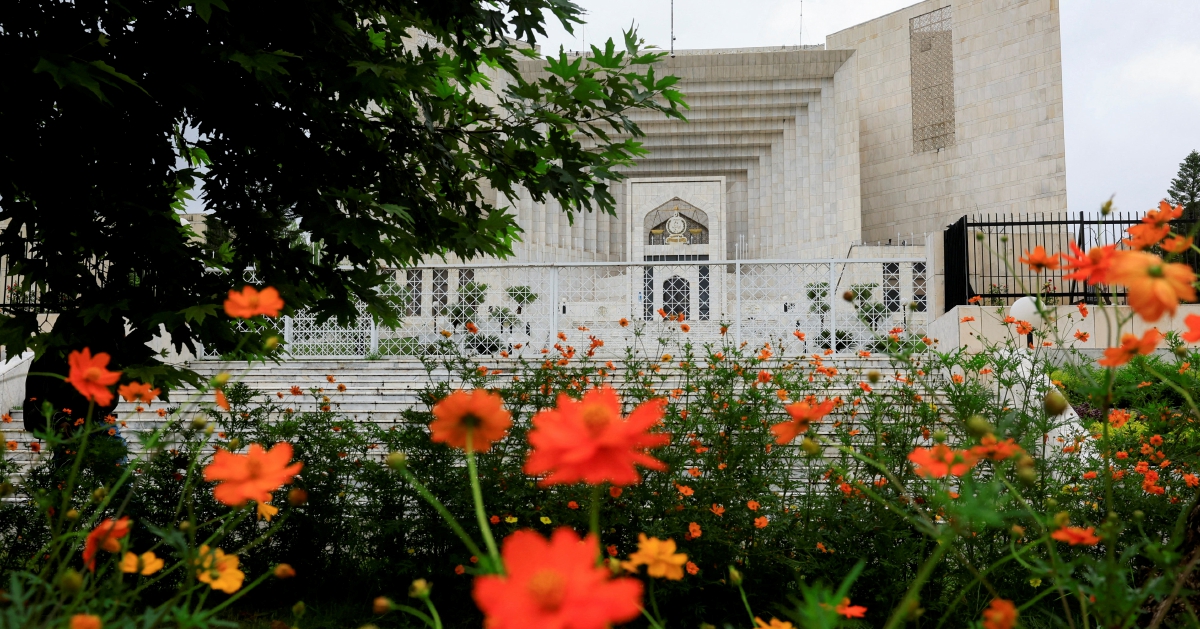
Imran Khan, Pakistan's most politically influential figure currently behind bars, has been transferred from his detention facility to a hospital for comprehensive medical evaluation following a directive from the nation's highest court. The Pakistan Tehreek-e-Insaf party disclosed the development in the early hours of Friday, underscoring the mounting attention focused on the former premier's wellbeing during his incarceration.
The Supreme Court's intervention in Khan's medical situation reflects the high-profile nature of his case and growing concerns about his health status whilst in custody. Such court-ordered medical assessments often signal judicial scrutiny of detention conditions and prisoner treatment, particularly when the detainee commands significant political support and public sympathy. The timing of the order indicates ongoing tension between Pakistan's judicial, executive, and political establishments regarding Khan's continued imprisonment.
Khan's detention has become increasingly controversial within Pakistan, with his party and supporters arguing that his case represents political persecution rather than legitimate criminal prosecution. The arrangement highlights how elite prisoners in Pakistan's judicial system sometimes receive intervention from higher courts when their circumstances attract sufficient political and public concern. The movement from jail to hospital also provides a rare moment of visibility for Khan, whose incarceration has otherwise limited his ability to communicate directly with the public.
The former prime minister's popularity among Pakistan's electorate remains robust despite his legal predicaments, making him an enduring factor in the country's turbulent political landscape. His PTI party continues to mobilise supporters and challenge the government, deriving significant legitimacy from Khan's status as a jailed opposition figure. The Supreme Court's decision to order his medical evaluation suggests the judiciary recognises the case's sensitive political dimensions and the potential consequences of any deterioration in Khan's health whilst imprisoned.
Pakistan's legal system has faced international criticism over detention conditions and prisoner treatment, particularly concerning high-profile political detainees. Khan's case exemplifies broader concerns about the weaponisation of the legal system against political opponents, a persistent complaint from opposition parties and human rights organisations monitoring Pakistani affairs. The hospital transfer may also serve tactical purposes for multiple stakeholders—the court can demonstrate procedural fairness, authorities can document Khan's condition, and his supporters gain evidence regarding his treatment.
The medical evaluation process will likely extend beyond routine testing, as Khan's legal team and party representatives will scrutinise any findings for evidence supporting claims of mistreatment or inadequate detention conditions. Hospital reports from high-profile prisoners often become contested documents in Pakistan's intensely polarised political environment, with different parties interpreting identical medical findings through sharply divergent ideological lenses. The PTI has previously alleged that Khan's rights have been violated and that his detention lacks proper legal justification.
This development carries implications for Pakistan's broader governance and democratic health at a moment when the nation grapples with institutional conflicts and political uncertainty. Regional observers have noted Pakistan's recurring cycles of political confrontation, incarceration of rivals, and judicial interventions that fail to resolve underlying tensions. Khan's case encapsulates these structural challenges, as does the Supreme Court's need to order medical assessments—suggesting neither the government nor opposition has developed stable mechanisms for managing political competition.
For neighbouring Southeast Asia and the broader region, Pakistan's political instability remains relevant to security and economic cooperation discussions. Khan's continued imprisonment and the uncertainty surrounding his legal fate reflect Pakistan's difficulty in establishing predictable governance frameworks. The country's inability to manage political transitions peacefully or accommodate powerful opposition figures without resorting to detention creates ongoing regional concerns about stability.
The hospital transfer also underscores the informal nature of Pakistan's actual political processes beneath formal constitutional structures. Despite constitutional provisions and legal procedures, the country's most consequential outcomes often emerge through court orders, military-bureaucratic decisions, and elite negotiations rather than transparent parliamentary processes. Khan's movement to hospital exemplifies how even basic matters affecting prominent detainees emerge through exceptional measures rather than routine procedures.
Moving forward, the medical evaluation's findings will likely influence Khan's legal trajectory and the PTI's opposition strategies. Should doctors report health concerns related to his detention conditions, Khan's legal team would gain ammunition for habeas corpus petitions and appeals to higher courts. Conversely, findings of good health would bolster authorities' position that Khan's imprisonment involves no human rights violations. The stakes for both sides justify the intense attention this relatively routine medical procedure has attracted.
Khan's case ultimately reflects Pakistan's unresolved questions about rule of law, separation of powers, and political tolerance. The Supreme Court's order to move him to hospital represents judicial acknowledgment that his detention remains a matter of national significance requiring institutional oversight. Whether this intervention leads to meaningful changes in his legal status remains uncertain, but the transfer itself demonstrates that no Pakistani leader, regardless of their current circumstances, can be entirely removed from public and judicial attention.

