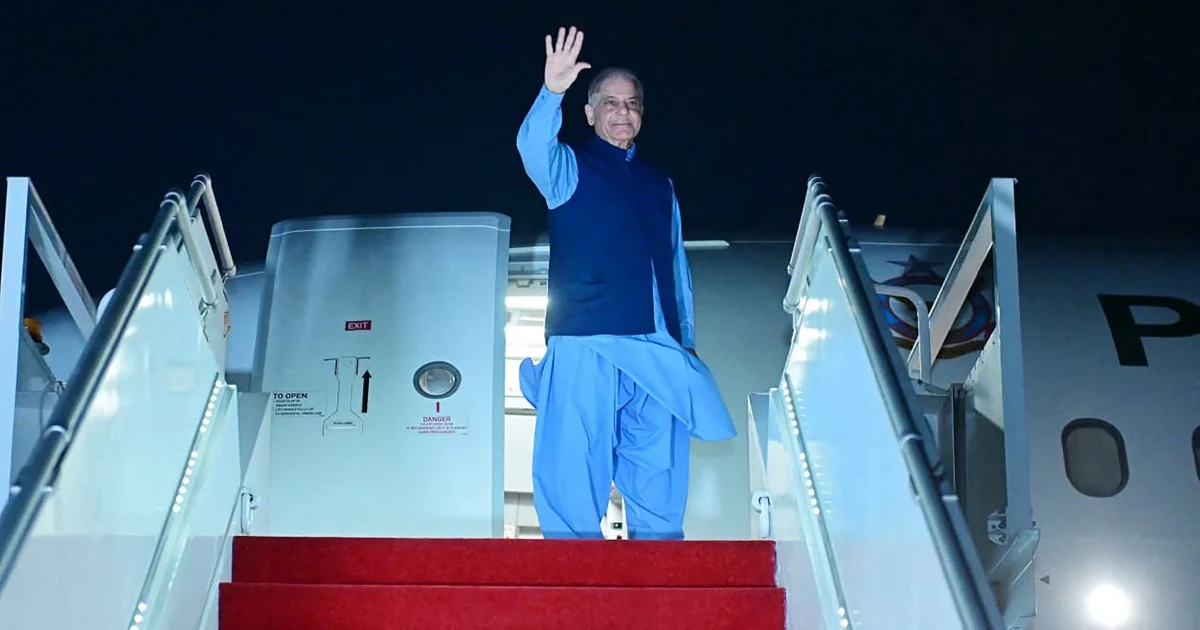
Pakistan's Prime Minister Shehbaz Sharif touched down in Switzerland on Sunday morning, marking Islamabad's engagement in a critical diplomatic initiative aimed at reducing military tensions in the Middle East. The premier's participation in the technical-level discussions between Washington and Tehran underscores the region's deepening concerns over the conflict's trajectory and its broader implications for global stability.
The presence of a senior Pakistani official at these talks reflects Islamabad's strategic interest in stabilising the wider Middle Eastern landscape. Pakistan, as a nation with significant historical ties to both Iran and traditionally close relations with Gulf Arab states, occupies a delicate geopolitical position. Any escalation in US-Iran hostilities carries potential consequences for Pakistan's own security environment, particularly given the country's existing vulnerabilities to regional proxy conflicts and terrorism emanating from volatile zones across its borders.
These technical-level negotiations represent a shift towards substantive dialogue after months of rising tensions. Rather than high-profile summitry that often attracts media scrutiny and hardline rhetoric, the focus on technical discussions suggests both sides may be seeking quieter channels for addressing specific grievances. Such an approach allows negotiators to explore practical solutions without the domestic political pressures that accompany public negotiations—a methodology increasingly favoured in complex diplomatic standoffs.
Pakistan's diplomatic involvement carries particular weight given its established channels with Iran and its historically significant relationship with American administrations. Islamabad has consistently advocated for conflict resolution mechanisms and has previously mediated in regional disputes, leveraging its position as a bridge between Middle Eastern powers and Western nations. The decision to send Sharif to participate demonstrates Islamabad's commitment to preventing further deterioration in an already volatile region.
The timing of these talks assumes additional significance in the context of ongoing regional instability. The Middle East continues to grapple with interconnected conflicts spanning multiple nations and proxy forces, each with distinct agendas and external backers. Any resolution framework between the US and Iran would necessarily have cascading effects across these overlapping theatres of conflict, from Yemen to Syria to Iraq and beyond.
For Malaysia and Southeast Asian nations, the implications of successful de-escalation remain material. Global energy security, shipping routes through sensitive waterways, and the broader economic climate affecting regional trade all depend partly on maintaining relative stability in the Persian Gulf. Disruptions stemming from US-Iran tensions can indirectly impact Southeast Asian economies through oil price fluctuations and supply chain disruptions affecting manufacturing and export sectors.
Pakistan's mediation efforts align with broader patterns of smaller and mid-sized powers attempting to influence outcomes in great power competitions. Rather than remaining passive observers, countries like Pakistan recognise that proactive diplomacy—even at technical levels—can shape trajectories toward de-escalation or escalation. The technical focus of these discussions suggests that negotiators are concentrating on specific protocols, verification mechanisms, or confidence-building measures rather than engaging in foundational ideological disagreements.
The diplomatic engagement also illustrates the limitations of purely military approaches to regional conflict. After years of military posturing and periodic incidents, both the US and Iran appear willing to explore negotiated pathways. Technical discussions offer opportunities to clarify misunderstandings, establish communication protocols, and agree on measures that reduce the likelihood of accidental escalation—a particular concern given the region's history of miscalculation triggering wider conflicts.
Pakistan's role extends beyond symbolic participation. As a nation with a substantial Iranian diaspora and historical cultural ties to Persian civilisation, coupled with its strategic partnership interests with Gulf states and Western powers, Islamabad can offer perspectives that purely external mediators might lack. The country's experience managing its own complex geopolitical balancing act provides practical insights into negotiating frameworks that accommodate multiple actors with competing interests.
The success or failure of these technical-level discussions will likely determine whether more comprehensive negotiations become feasible. Substantive progress at this stage could pave the way for higher-level diplomatic engagement, while stalemate might reinforce hardline positions within both camps. Pakistan's presence suggests that regional stakeholders view this moment as a genuine opportunity rather than a mere diplomatic ritual.
Looking forward, these discussions represent a critical inflection point for Middle Eastern stability. The involvement of Pakistani leadership underscores how intricately connected regional security challenges have become, with consequences for nations far beyond the immediate zone of conflict. Whether these technical talks catalyse meaningful de-escalation or merely delay further military confrontation remains to be determined, but the diplomatic effort itself signals that alternative pathways to continued antagonism remain viable.

