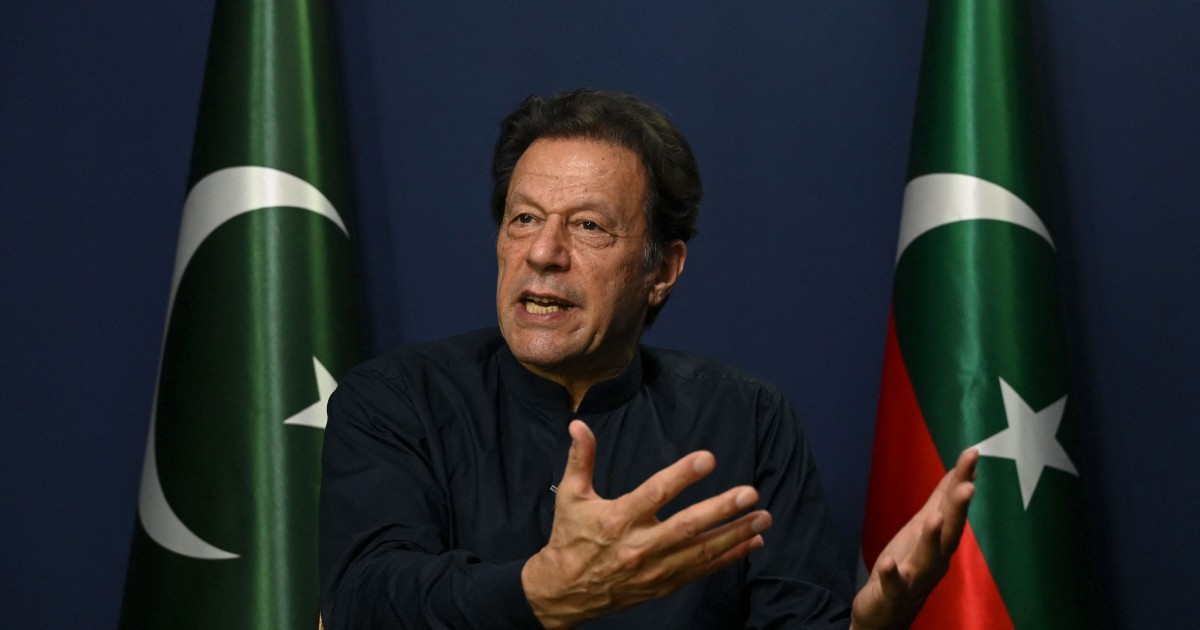
Pakistan's Supreme Court has intervened in a high-stakes political case by ordering the immediate transfer of former Prime Minister Imran Khan from jail to hospital, a decision that represents a significant development in the former leader's legal ordeal. The directive, announced on Tuesday, marks a turning point for the Pakistan Tehreek-e-Insaf party, which has campaigned relentlessly for medical attention to be provided to its incarcerated chief, arguing that his continued detention in prison facilities was jeopardising his health.
Imran Khan's imprisonment has become a focal point of political contention in Pakistan since his detention last year. His party and family members have repeatedly raised alarms about his physical condition, citing deteriorating wellbeing and insufficient access to adequate medical care within the prison system. These concerns have resonated beyond his immediate circle, generating broader public debate about the standards of care available to detainees in Pakistani facilities and the treatment of political figures within the justice system.
The Supreme Court's decision to order hospitalisation reflects judicial recognition of the legitimacy of these health concerns. Such interventions by the apex court indicate the serious nature of allegations regarding prison conditions and medical access, prompting the court to take preventative action before any irreversible harm could occur. This move demonstrates how Pakistan's judicial system can act as a check on executive authority, particularly when fundamental questions about human welfare arise.
For Malaysian observers, the situation underscores how political institutions in neighbouring South Asian democracies navigate tensions between maintaining rule of law and ensuring basic humanitarian standards for detainees. Pakistan's experience offers comparative insights into how courts in developing democracies balance judicial independence with political pressures, a challenge that resonates across the region.
Imran Khan's legal troubles began following his removal from office in 2022 amidst accusations of financial impropriety and constitutional violations. Since his arrest, he has faced multiple charges in various courts, creating an extraordinarily complex legal landscape. The former cricket star-turned-politician has maintained his innocence and characterised the proceedings as politically motivated persecution aimed at eliminating him as a political force.
The Pakistan Tehreek-e-Insaf party has seized upon the hospitalisation order as validation of its position, using it to strengthen its narrative that the state apparatus has been weaponised against Khan. However, the situation remains contested, with government critics questioning whether the hospital transfer will provide genuine respite or merely represent a superficial response designed to deflate international scrutiny regarding prison conditions.
Imran Khan's detention has sparked significant international attention, with human rights organisations and international observers monitoring developments closely. Several countries have raised questions about due process and fair treatment, adding diplomatic dimensions to what is fundamentally a domestic legal matter. The Supreme Court's intervention may partly reflect awareness of such international attention and the reputational implications for Pakistan's standing within the global community.
The hospital transfer also carries practical implications for Khan's legal defence. Access to better medical facilities, cleaner environments, and potentially improved communication channels with his legal team could strengthen his ability to mount an effective defence across multiple cases. Conversely, authorities may view hospitalisation as an opportunity to maintain secure custody whilst appearing responsive to humanitarian concerns.
Politically, the decision reflects ongoing factionalism within Pakistan's military-judiciary-civilian government triangle. Different institutional actors have distinct interests in how Khan's case proceeds, with the Supreme Court's interventions sometimes viewed as attempts to assert autonomy from other power centres. The hospital order may signal the court's determination to maintain its institutional prerogatives and demonstrate that no one, regardless of political status, remains beyond constitutional protections.
For the broader South Asian region, including Malaysia's diplomatic calculations toward Pakistan, these developments illustrate the fragility of institutional checks within hybrid political systems. The region continues to grapple with questions about how to preserve democratic forms while navigating intense political competition and entrenched elite rivalries. Pakistan's trajectory remains closely watched by others navigating similar institutional challenges.
Imran Khan's supporters view the Supreme Court decision as a partial vindication, though they continue demanding his complete exoneration and release. The hospital transfer represents a transitional outcome—neither the unconditional freedom his allies seek nor the indefinite incarceration his opponents may prefer. How this episode evolves will have considerable bearing on public confidence in Pakistan's judicial independence and its capacity to protect vulnerable detainees from state overreach.

