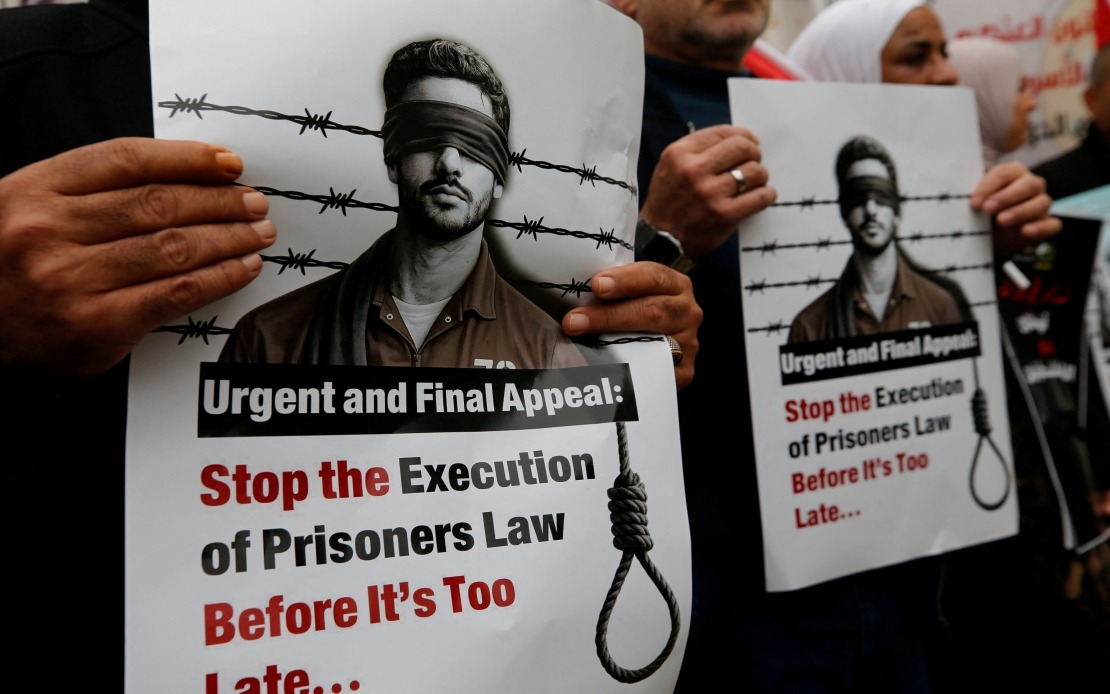
The Palestinian government has escalated its accusations against Israeli authorities, releasing a detailed report claiming widespread detention of Palestinians without legal charges and documenting what it characterises as systematic human rights violations within Israeli prisons. According to Situation Report #92 issued by the Palestine Prime Minister's Office, the detention practices represent a continuation of longstanding grievances that have become a focal point in the broader Israeli-Palestinian conflict.
The report identifies 3,376 Palestinian administrative detainees currently in custody without formal charges or trial proceedings, a significant figure that underscores tensions surrounding due process rights in the occupied territories. Beyond this primary cohort, the documentation specifically highlights the detention of 360 Palestinian children, a distinction that carries particular weight under international humanitarian law regarding the treatment of minors in conflict zones. The inclusion of this demographic in the report reflects broader concerns about juvenile justice procedures in disputed jurisdictions.
According to the Palestinian government's allegations, detainees face a troubling array of abusive practices that the report categorises as systematic. These documented methods include physical violence through beatings, psychological torture via prolonged stress positions and sleep deprivation, electrical shock applications, starvation protocols, and sexual assault. The breadth of these allegations suggests patterns rather than isolated incidents, a distinction that carries legal implications under international humanitarian conventions to which various parties have subscribed.
Prison conditions themselves are depicted in the report as deliberately degrading, with claims of inadequate nutritional and water provisions, intentional disease transmission, and obstruction of medical treatment. The Palestinian government specifically addresses the situation of three pregnant detainees, asserting they endure starvation, interrogation procedures described as harsh, forced strip searches, and denial of adequate prenatal medical support. These allegations regarding maternal health care denial represent a distinct category of concern under pregnancy-related protections in international law.
The cumulative toll extends beyond those currently detained. The report documents that hundreds of released detainees experience severe physical and psychological consequences following their imprisonment, with documented cases of individuals dying shortly after release. This pattern suggests that alleged abuses produce lasting health deterioration that sometimes proves irreversible. The report provides broader statistics indicating that over 9,500 Palestinian detainees have been registered in the West Bank including occupied Jerusalem, contextualising the 3,376 figure within a larger detention apparatus.
The human cost of the broader conflict emerges starkly in the casualty statistics presented alongside detention allegations. Since early October 2023, the report asserts that at least 73,054 Palestinians have died in Gaza, including 21,638 children, with an additional 173,480 injured. The West Bank figures show 1,175 Palestinians killed including 246 children, and 12,919 injured as of late June. These numbers underscore the scale of violence that characterises the contemporary conflict environment, creating a backdrop for detention policy disputes.
Beyond immediate casualty figures, the report documents collateral impacts on civilian infrastructure and professional communities. At least 1,700 health workers have been killed alongside 262 journalists and media workers, figures that suggest systematic targeting or severe collateral damage affecting critical civilian sectors. Additionally, 11,200 Palestinians are reported missing, a category suggesting unresolved fates that compound families' uncertainty and trauma. For Malaysian observers, these statistics illustrate the humanitarian dimensions of conflicts that extend well beyond military confrontation.
The Palestinian Cabinet has simultaneously advanced administrative reform initiatives that the government frames as strengthening institutional capacity. President Mahmoud Abbas approved amendments to Value Added Tax legislation intended to enable comprehensive financial sector modernisation within the Finance Ministry. These changes reportedly aim to establish improved revenue collection mechanisms, establish governance oversight bodies, and align administrative procedures with international standards while combating tax evasion and smuggling that undermines public service delivery.
Telecommunications and digital infrastructure feature prominently in the Cabinet's modernisation agenda, with approval granted for a sectoral policy framework spanning 2026 through 2028. This initiative targets acceleration of digital transformation across government services, enhancement of digital governance capacity, and improvement of public-facing technology systems. The timing suggests Palestinian authorities view technological modernisation as integral to institutional strengthening despite ongoing conflict circumstances.
Healthcare digitalisation represents another administrative priority, with the government endorsing replacement of conventional paper-based health insurance documentation with smart card systems. This transition ostensibly improves data security architecture, facilitates future expansions of digital health service delivery, and modernises healthcare administration mechanisms. Collectively, these parallel initiatives suggest Palestinian governance structures are attempting to advance institutional development even amid the contentious detention and violence allegations that dominate international attention.
The juxtaposition of detention allegations and administrative reform announcements reflects the complex reality of Palestinian governance, where authorities simultaneously document alleged violations while pursuing institutional development. For regional observers including Malaysia, which maintains significant diplomatic engagement across Middle Eastern affairs, these competing narratives underscore the multifaceted nature of Palestinian institutional challenges. The detention figures and abuse allegations represent immediate humanitarian concerns, while administrative reforms address longer-term governance legitimacy and service delivery capacity.
The scale of allegations in the Palestinian report—involving thousands of detainees and systematic abuse patterns—has prompted ongoing scrutiny within international human rights frameworks and diplomatic forums. Malaysian observers engaged with Middle Eastern affairs recognise that such allegations, whatever their verification status, substantially influence regional diplomatic positioning and international legal accountability discussions that have become central to contemporary Palestinian advocacy strategies.

